Managing Acreage in Bull Valley: Prairie Restoration, Oak Communities & Private Conservation
Owning acreage in Bull Valley comes with something increasingly rare in northern Illinois: room to work with the land rather than simply landscape around a house.
Large lots, old fields, wooded edges, wetlands, ponds, horse properties, and remnants of the region’s historic prairie and oak ecosystems all contribute to Bull Valley’s rural character. But maintaining several acres can also become expensive and time-consuming, especially when large portions of a property are managed as conventional lawn, unmanaged pasture, or brushy woodland.
For private landowners, ecological restoration offers a different approach.
Instead of mowing every acre, repeatedly battling invasive vegetation, or forcing turf into wet and shaded areas where it struggles, portions of the property can be transitioned into native prairie, meadow, oak savanna, woodland understory, and wetland-edge plant communities that are better suited to the land itself.
The result is not an unmanaged landscape. Done well, it is a property that feels more intentional, more resilient, and more connected to the natural character of Bull Valley.
Why Bull Valley Is Especially Well Suited to Native Land Management
Bull Valley has long placed a strong emphasis on open space, natural resources, and conservation-minded land use. The Village’s planning documents address protection of natural-resource areas, restoration, conservation easements, and native landscaping as tools for maintaining the community’s rural and ecological character.
That larger landscape context matters.
A private property does not exist in isolation. Prairie, woodland, wetlands, hedgerows, ponds, and field edges can all contribute to a broader network of habitat and open space. Even a relatively small restoration project can improve connectivity between existing natural areas while also making the individual property easier to manage.
For landowners, that means ecological restoration can serve both practical and conservation goals.
Stop Managing Every Acre the Same Way
One of the biggest mistakes on large properties is applying a single maintenance strategy everywhere.
A five-, ten-, or twenty-acre property may include:
- Formal lawn around the home
- Former pasture
- Wet depressions
- Pond edges
- Mature woodland
- Sunny field edges
- Shaded understory
- Gravel drives and drainage swales
- Horse paddocks or riding areas
- Areas that are rarely used but still routinely mowed
Each of those zones functions differently.
The goal of ecological land management is to match the vegetation and maintenance strategy to the conditions of each area.
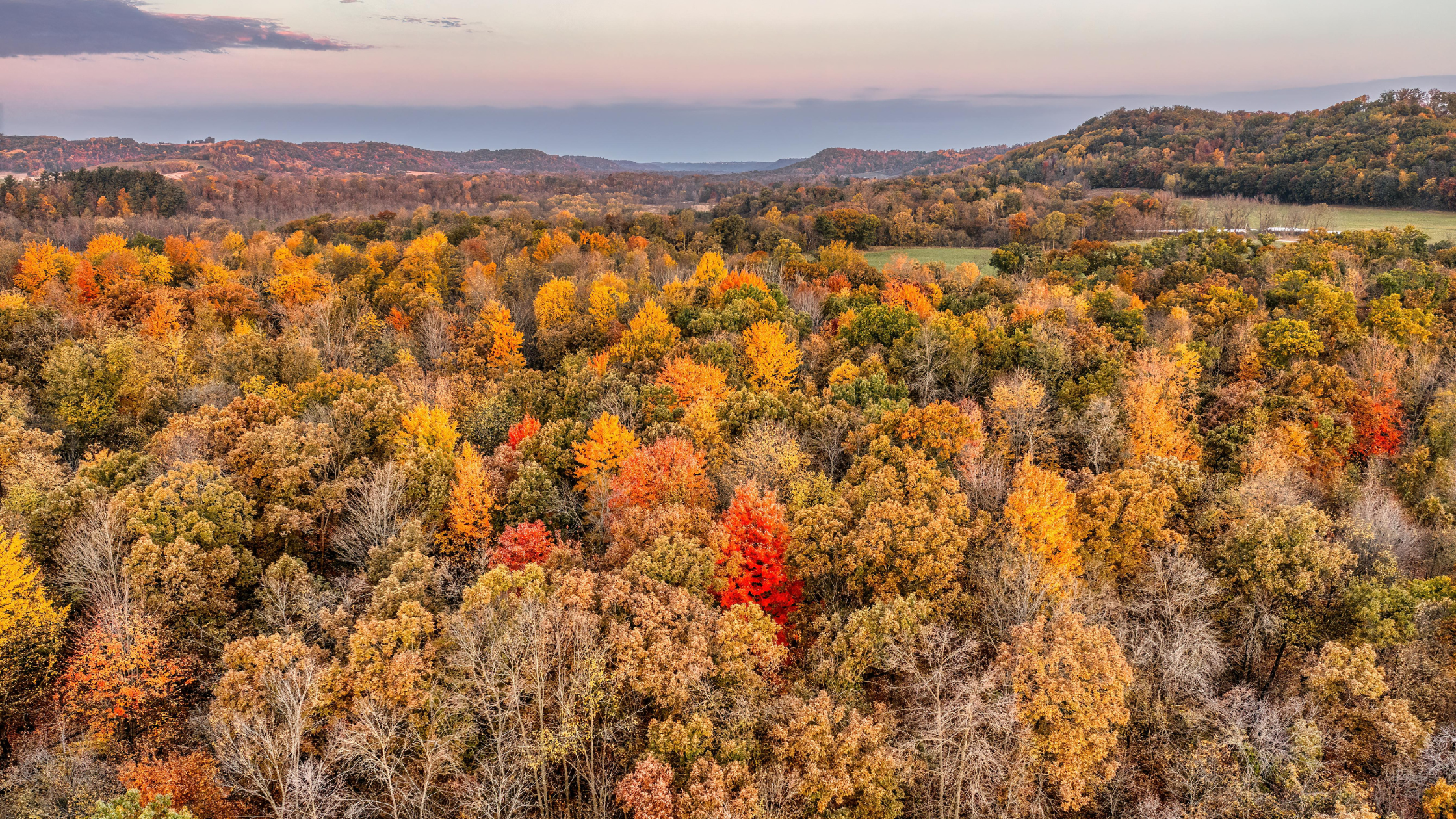
A well-planned Bull Valley property might include manicured lawn close to the home, native meadow farther out, restored woodland under mature trees, wet-tolerant vegetation in drainage areas, native buffers along ponds, and mowed paths through taller prairie.
That approach preserves usability while reducing the amount of land that requires conventional weekly maintenance.
Reduce Mowing Without Losing a Maintained Appearance
Large-acreage mowing can consume enormous amounts of time, fuel, equipment wear, and contractor expense.
Converting low-use turf or old field areas to native vegetation can significantly reduce that maintenance burden once the planting is established.
The important distinction is that native does not need to mean neglected.
Design tools such as:
- Mowed borders
- Defined paths
- Strategic sightlines
- Lower-growing species near roads and homes
- Taller prairie in interior areas
- Clean transitions between lawn and meadow
can make a native landscape feel purposeful and well cared for.
For many landowners, the best design keeps traditional lawn where it is actively used and transitions the rest into vegetation that requires less intensive management.
Restore Prairie Where Open Ground Makes Sense
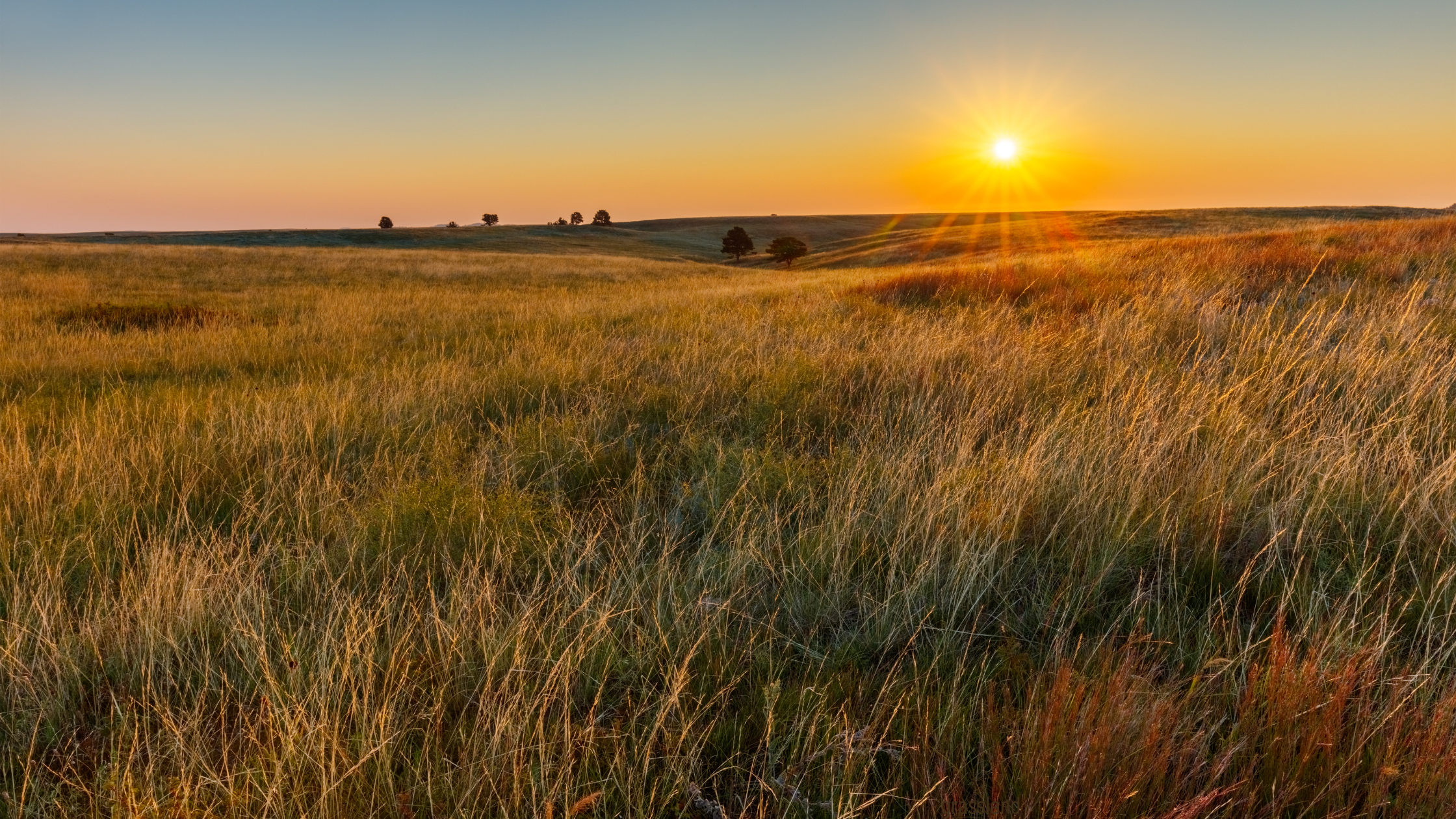
Open sunny acreage is often a strong candidate for prairie or meadow restoration.
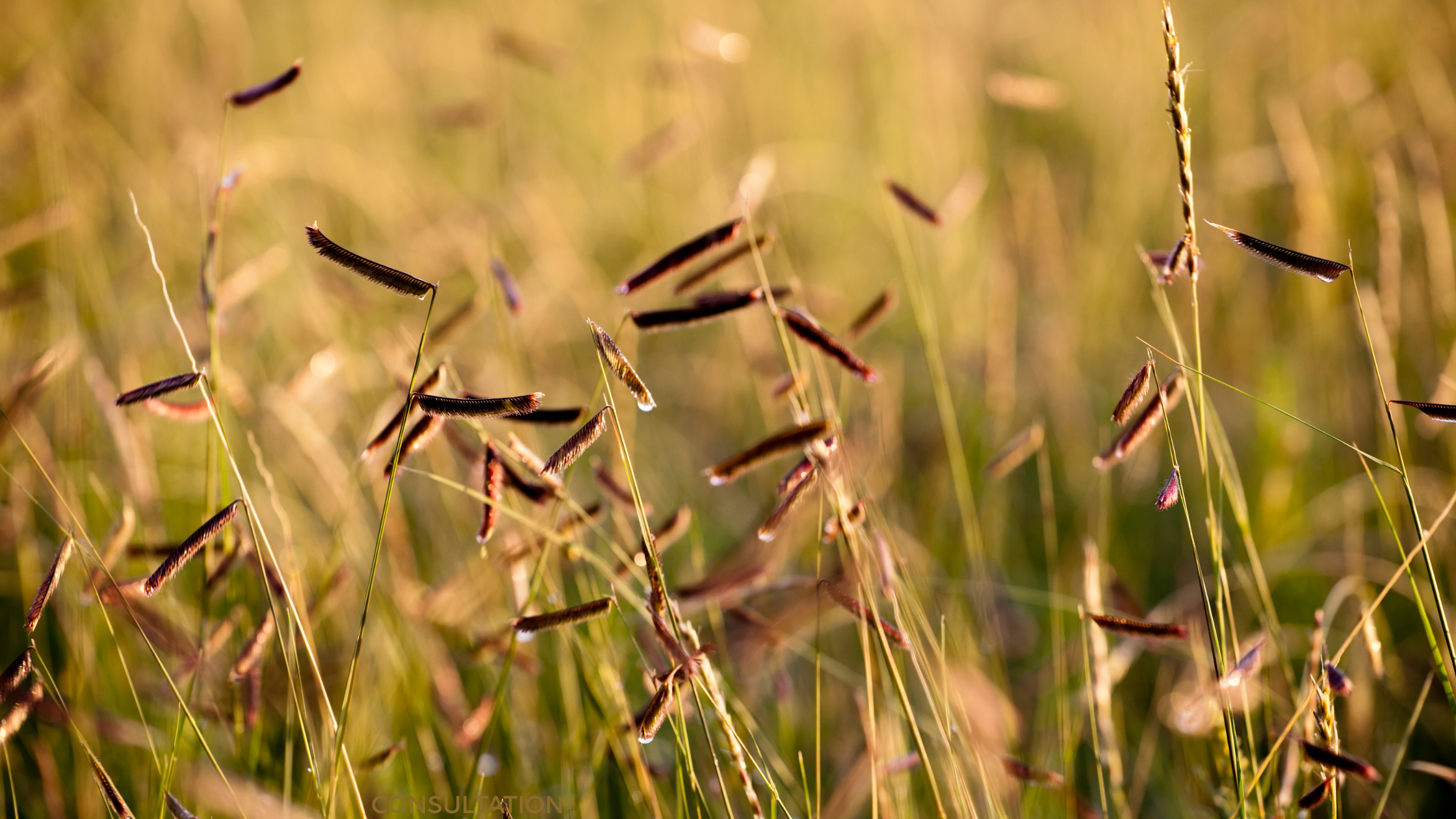
Native prairie species are adapted to the climate and soils of northern Illinois and can provide deep roots, seasonal color, habitat, and long-term soil stability.
Depending on the site, a planting might include combinations of:
- Little bluestem
- Big bluestem
- Indiangrass
- Prairie dropseed
- Purple prairie clover
- Wild bergamot
- Black-eyed Susan
- Blazing star
- Mountain mint
- Goldenrods
- Asters
- Milkweeds
The exact mix should depend on soil moisture, existing vegetation, sunlight, slope, management goals, and how formal or naturalistic the landowner wants the finished landscape to appear.
For large acreage, seed is often the most economical establishment method.
Plugs can then be added strategically near homes, driveways, paths, property entrances, ponds, or other places where faster visual impact matters.
Bring Back Oak Savanna and Woodland Structure
Bull Valley’s wooded properties also present opportunities for restoration.
Many wooded areas in northern Illinois are not functioning as healthy woodlands. They may contain mature oaks but have dense invasive shrub layers beneath them, very little native understory, and limited regeneration.
Removing invasive shrubs such as buckthorn is an important first step, but removal alone does not complete the restoration.
Once brush is cleared, exposed soil and increased sunlight can create ideal conditions for another wave of weeds unless native vegetation is deliberately re-established.
A more complete oak woodland or savanna plan may include:
- Native sedges
- Woodland grasses
- Ferns
- Spring ephemerals
- Summer woodland forbs
- Native shrubs
- Oak regeneration where appropriate
- Controlled transitions between woodland and prairie
This is especially important on properties where mature trees are one of the defining landscape features.
Restoration helps preserve those trees while rebuilding the plant community beneath them.
Manage Wet Areas According to Their Hydrology
Many large properties include areas that are difficult to mow because they hold water seasonally or remain saturated after rain.
Trying to maintain conventional turf in these areas can lead to rutting, compacted soil, mower damage, and repeated reseeding.
Native wet meadow, sedge meadow, rain-garden, and wetland-edge species are much better suited to these conditions.
The goal is not to promise that native plants will eliminate every drainage problem. Serious hydrologic issues may still require engineering or drainage work.
But where the problem is simply that a low area is too wet for turf, selecting vegetation adapted to wet soils can provide a far more durable solution.
Native Buffers Around Ponds and Drainage Corridors
Pond edges and drainage areas are another major opportunity.
A native buffer can help stabilize soil, filter runoff, soften the transition between water and upland landscape, and reduce the amount of shoreline that must be string-trimmed or mowed.
Different moisture zones should be planted differently.
A pond-edge design may transition from emergent or wet-tolerant species at the waterline to sedges and wet meadow plants upslope, followed by prairie species on drier ground.
That creates a more natural and visually cohesive landscape while matching plants to the conditions they are likely to survive in.
Seed Mixes & Plug Quantities for Bull Valley Properties
Not all native seed mixes are interchangeable.
One of the most common causes of poor establishment is using a generic prairie mix without accounting for hydrology, shade, soil, or competition from existing vegetation.
Useful categories for Bull Valley acreage include:
- Dry-Mesic Prairie Mixes — For sunny, well-drained open ground
- Mesic Prairie & Meadow Mixes — For average soils and larger turf conversions
- Wet Meadow & Sedge Mixes — For low areas, drainage corridors, and pond edges
- Woodland Edge Mixes — For transitional areas between trees and open fields
- Shade & Woodland Understory Mixes — For wooded properties and oak restoration
- Low-Growing Native Mixes — For highly visible areas where a shorter, more maintained appearance is desired
For plug installations, general planning densities may include:
| Application | Plug Density | Purpose |
|---|---|---|
| Rain garden or bioswale | 4–6 plugs/sq. ft. | Faster coverage and weed suppression |
| Meadow border or entry feature | 2–3 plugs/sq. ft. | Seasonal color and intentional appearance |
| Pond or wet slope | 3–4 plugs/sq. ft. | Soil stabilization and dense root structure |
| Sunny turf conversion | 2–3 plugs/sq. ft. | Often combined with seed |
| Woodland understory | 2–3 plugs/sq. ft. | Sedges, ferns, and woodland forbs |
These numbers are starting points, not universal specifications. Plant density should be adjusted according to site conditions, budget, existing vegetation, and establishment goals.
Site Preparation Matters More Than Most Landowners Expect
Native restoration is often won or lost before anything is planted.
Simply broadcasting seed into existing lawn or pasture usually produces disappointing results because established grasses and weeds outcompete young native seedlings.
Proper preparation may involve:
- Repeated mowing
- Herbicide applications
- Smothering
- Prescribed burning where appropriate and permitted
- Mechanical removal
- Invasive-species control
- Targeted soil disturbance
- No-till drilling
- Dormant seeding
- Strategic plug installation
The correct method depends entirely on the existing vegetation and site.
That is why a restoration plan should begin with site evaluation rather than seed selection.
The First Three Years Are Critical
Native landscapes often become lower-maintenance over time, but the establishment period requires active management.
Year one may involve establishment mowing and targeted weed control.
Year two often requires continued monitoring, spot treatment, and identification of developing native seedlings.
By year three, the plant community generally begins to show more of its long-term structure, but invasive species still require attention.
A clear stewardship schedule helps landowners avoid two common mistakes:
- Neglecting the site completely after planting
- Managing it like conventional turf
Neither approach works.
Long-Term Stewardship Can Be Much Simpler
Once established, native landscapes generally shift from frequent routine maintenance to periodic ecological management.
A typical schedule may include:
| Season | Key Management |
| Early Spring | Cut or mow standing vegetation before active growth begins |
| Late Spring | Spot-treat invasive weeds and evaluate thin areas |
| Summer | Monitor invasive species and assess establishment |
| Fall/Winter | Leave native stems and seed heads standing where appropriate |
Some sites may also benefit from prescribed burning, rotational mowing, selective brush control, overseeding, or other periodic interventions.
The point is not that native landscapes require no work. It is that the work becomes more targeted and less repetitive.
Work With the Equipment and Crew You Already Have
One of the strongest opportunities for Bull Valley landowners is DIY or contractor-assisted restoration.
Many acreage owners already have:
- Tractors
- Mowers
- Sprayers
- Utility vehicles
- Grounds crews
- Landscape contractors
- Property caretakers
The missing piece is often not labor.
It is ecological expertise.
Natural Communities can provide the technical plan behind the project so the landowner or existing contractor knows:
- What vegetation to remove
- How to prepare the site
- Which seed mix to use
- How much seed to order
- How many plugs are needed
- Where each plant community belongs
- When to plant
- How to manage weeds during establishment
- When to mow
- What should be left alone
That allows property owners to retain control over implementation while avoiding the trial-and-error that often makes restoration projects expensive.
Contractor-Ready Installation Plans
For landowners who prefer to bid the work to a landscape contractor, Natural Communities can develop clear ecological specifications.
A contractor-ready plan may include:
- Site-preparation standards
- Vegetation-removal requirements
- Exact seed mixes by zone
- Plug species and quantities
- Planting densities
- Mulch requirements
- Establishment irrigation
- Installation timelines
- Photo-documentation requirements
- Establishment expectations
- Seasonal management schedules
Instead of asking several contractors to each invent their own version of a native landscape, the landowner can bid one consistent ecological plan.
That makes proposals easier to compare and gives the contractor a clearer performance standard.
Conservation Value Beyond the Property Line
For Bull Valley landowners, native restoration can also contribute to a larger landscape.
Prairie, woodland, ponds, wetlands, and native corridors can provide habitat and movement opportunities for birds, pollinators, and other wildlife while strengthening connections between natural areas.
Landowners interested in permanent land protection may also wish to explore conservation easements or other conservation tools with qualified land trusts, attorneys, and tax professionals.
Those decisions are separate from restoration itself, but restoring native habitat can be an important part of a broader long-term conservation strategy.
Ready to Create a Plan for Your Bull Valley Property?
Whether you're managing a private estate, several acres of open land, an HOA common area, woodland, or stormwater landscape, you don't necessarily need to outsource the entire project.
Natural Communities offers ecological consulting that gives landowners, property managers, HOA boards, and their existing contractors the specifications and professional guidance needed to implement native landscapes successfully.
Start Here: Initial Virtual Stewardship Consultation
Get direct access to a Restoration Ecologist. We'll assess your site, recommend the right mixes, and develop a contractor-ready plan. 100% of your reservation fee is returned as store credit after your consultation.
→ Book Your Initial Consultation
Ongoing Support: Quarterly Land Stewardship Consulting
Seasonal check-ins to keep your planting on track. Ideal for landowners in the first 1–3 years of establishment when weed pressure and contractor oversight matter most.
→ Learn About Quarterly Consulting
Full-Service Partnership: Annual Land Stewardship Consulting
Year-round guidance for landowners managing multiple zones, phased installations, or complex stormwater systems. Your board gets a dedicated ecological partner for every decision.
READ OUR REVIEWS
Daniel
Daniel
★★★★★
Natural communities and specifically Nick has been an
excellent and knowledgeable entity to work with on my big project. With the
help of my school, my students, many community partners, and Natural
Communities, we are in the process of restoring an area on a high school campus
to a natural prairie/pond area. Nick has come out to do site visits, he has
recommended various plant species that would work best for us, and he has been
able to get us what we want wholesale. Our site is not an easy project because
we are restricted to only native plants and native seeds and Natural
Communities has excelled in meeting our needs on this. Overall, I am so glad we
ended up working with Natural Communities because they have helped so much.
Ron
Ron
★★★★★
Our company has worked with Nick Fuller since before he
became Chief Ecological Officer for Natural Communities, LLC. His
knowledge of native plants and native seeds is remarkable. Nick was the
original steward of our 4-acre wildflower/wild grass prairie and has served us
as a reliable consultant ever since 2006. His continuing insights have
helped us to maintain and grow a healthy ecosystem.
Kathy
Kathy
★★★★★
I am extremely pleased with the one hour consultation I had
with Nick Fuller regarding our wetland creek. We have invasive plants and
grasses that have taken over our creek bed and we needed guidance on how to
both effectively remove the invasives and restore the area with native
plants suitable for the creek. Nick asked pertinent questions that allowed Nick
to identify plants and shrubs suitable for the area with a timeline for
planting. Nick also provided a detailed outline of the steps needed to remove the
invasives. I highly recommend Nick to anyone seeking help with their native
plant garden or to anyone interested in growing a native plant garden.
Shane
Shane
★★★★★
Spoke to owner in depth regarding a couple of different
projects I’m working on- very knowledgeable and professional. I plan on
purchasing seed for my projects through Natural Communities and will follow up
in the future if necessary. Highly recommend for native/natural projects!