


Solar Pollinator Mix
Solar Pollinator Mix
How many plants do you need?
Calculate plants & flatsEstimate quantities from your planting area and species-appropriate spacing, then round up to whole flats.
How much seed do you need?
Calculate seed quantitiesEnter your planting area and the rate for this species, or add species to plan a custom mix.
Mix and match eligible native plants and seed mixes. The discount applies automatically in your cart.
Available
Subject to confirmation.
Couldn't load pickup availability
Quick View - Seed Mix Specifications
Quick View - Seed Mix Specifications
Seeding Rate: 10 lb/acre (55.1 seeds/square foot).
| Common Name | Scientific Name | % of Mix | Seeds/ft2 | Total | |||||||||
|
Grasses Sideoats Grama |
Bouteloua curtipendula | 32.50% | 7.2 | 3.250 PLS lb | |||||||||
| Prairie Brome | Bromus kalmii | 5.00% | 1.5 | 0.500 PLS lb | |||||||||
| Slender Wheatgrass | Elymus trachycaulus | 10.00% | 2.5 | 1.000 PLS lb | |||||||||
| Virginia Wild Rye | Elymus virginicus | 11.50% | 1.8 | 1.150 PLS lb | |||||||||
| Little Bluestem | Schizachyrium scoparium | 15.00% | 8.3 | 1.500 PLS lb | |||||||||
| Sand Dropseed | Sporobolus cryptandrus | 0.50% | 6.4 | 0.050 PLS lb | |||||||||
| Prairie Dropseed | Sporobolus heterolepis | 0.50% | 0.3 | 0.050 PLS lb | |||||||||
|
Sedges & Rushes Bicknell's Sedge |
Carex bicknellii | 0.50% | 0.3 | 0.050 PLS lb | |||||||||
| Plains Oval Sedge | Carex brevior | 3.00% | 3.2 | 0.300 PLS lb | |||||||||
| Troublesome Sedge | Carex molesta | 0.50% | 0.5 | 0.050 PLS lb | |||||||||
| Brown Fox Sedge | Carex vulpinoidea | 1.00% | 3.7 | 0.100 PLS lb | |||||||||
|
Forbs Common Yarrow |
Achillea millefolium | 0.10% | 0.7 | 0.010 PLS lb | |||||||||
| Anise Hyssop | Agastache foeniculum | 0.20% | 0.7 | 0.020 PLS lb | |||||||||
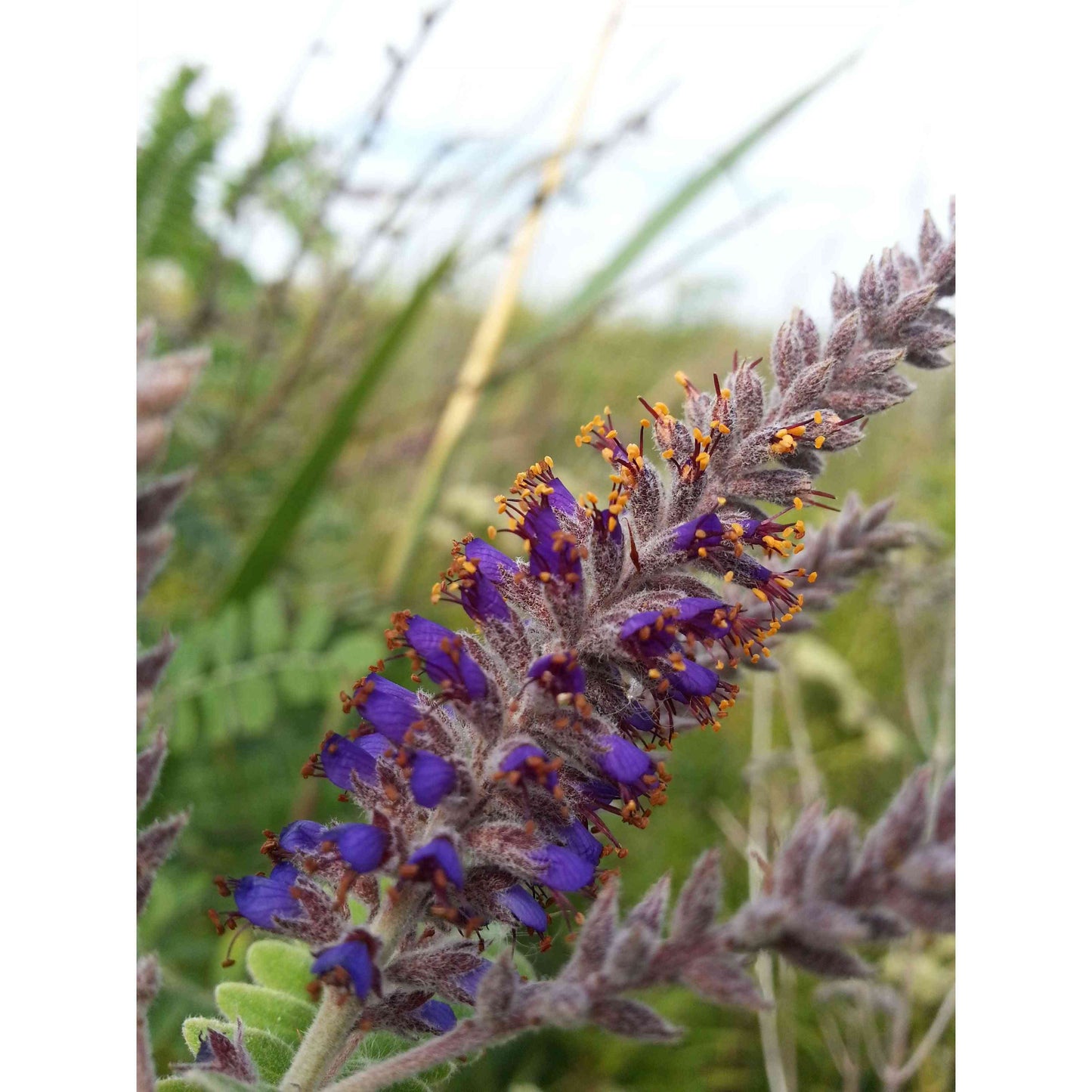
| Lead Plant | Amorpha canescens | 1.00% | 0.6 | 0.100 PLS lb | |||||||||
| Canada Anemone | Anemone canadensis | 0.20% | 0.1 | 0.020 PLS lb | |||||||||
| Wild Columbine | Aquilegia canadensis | 0.10% | 0.1 | 0.010 PLS lb | |||||||||
| Common Milkweed | Asclepias syriaca | 1.20% | 0.2 | 0.120 PLS lb | |||||||||
| Butterfly Milkweed | Asclepias tuberosa | 0.40% | 0.1 | 0.040 PLS lb | |||||||||
| Canada Milkvetch | Astragalus canadensis | 1.00% | 0.6 | 0.100 PLS lb | |||||||||
| Partridge Pea | Chamaecrista fasciculata | 6.00% | 0.6 | 0.600 PLS lb | |||||||||
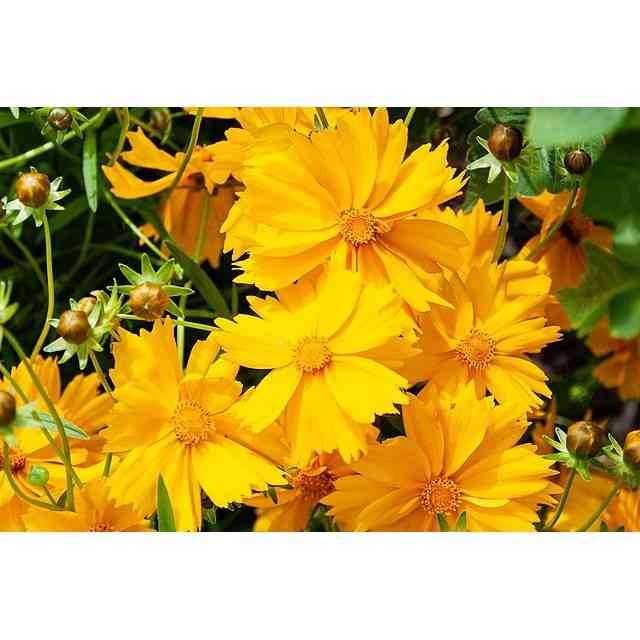
| Lanceleaf Coreopsis | Coreopsis lanceolata | 0.80% | 0.6 | 0.080 PLS lb | |||||||||
| White Prairie Clover | Dalea candida | 2.60% | 1.8 | 0.260 PLS lb | |||||||||
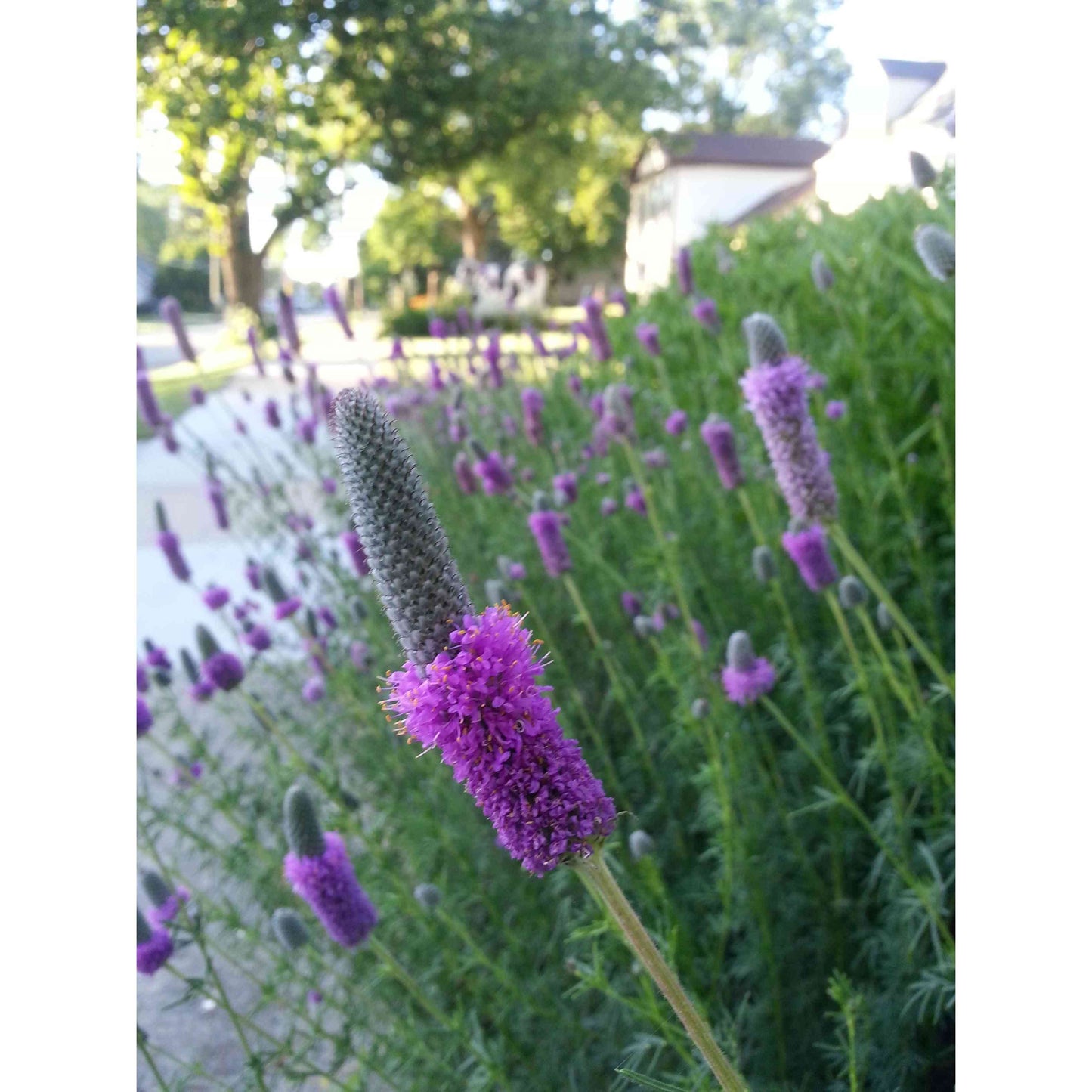
| Purple Prairie Clover | Dalea purpurea | 3.00% | 2.0 | 0.300 PLS lb | |||||||||
| Prairie Cinquefoil | Drymocallis arguta | 0.20% | 1.7 | 0.020 PLS lb | |||||||||
| Spotted Bee Balm | Monarda punctata | 0.10% | 0.3 | 0.010 PLS lb | |||||||||
| Foxglove Beardtongue | Penstemon digitalis | 0.60% | 2.9 | 0.060 PLS lb | |||||||||
| Virginia Mountain Mint | Pycnanthemum virginianum | 0.20% | 1.6 | 0.020 PLS lb | |||||||||
| Black-eyed Susan | Rudbeckia hirta | 0.50% | 1.7 | 0.050 PLS lb | |||||||||
| Gray Goldenrod | Solidago nemoralis | 0.20% | 2.2 | 0.020 PLS lb | |||||||||
| Sky Blue Aster | Symphyotrichum oolentangiense | 0.20% | 0.6 | 0.020 PLS lb | |||||||||
| Ohio Spiderwort | Tradescantia ohiensis | 0.40% | 0.1 | 0.040 PLS lb | |||||||||
| Hoary Vervain | Verbena stricta | 0.20% | 0.2 | 0.020 PLS lb | |||||||||
|
Golden Alexanders |
Zizia aurea | 0.80% | 0.3 | 0.080 PLS lb | |||||||||
| Substitutions may be made based on availability at the time of order. |
Pure Live Seed
Pure Live Seed
Seed is provided in Pure Live Seed (PLS) unless otherwise stated.
Pure Live Seed (PLS) expresses the viable seed content of a seed lot using its purity and germination or viability test results. It helps you compare seed lots and calculate how much bulk seed is needed to meet a specified PLS planting rate.
PLS weight and bag weight
PLS weight is not the same as the total weight of seed in a bag. For example, a lot with 80% purity and 75% viability contains 60% PLS: 80 × 75 ÷ 100 = 60. Supplying 10 lb PLS from that lot requires about 16.67 lb of bulk seed.
Use the current seed test and the stated basis of the mix specification. Germination calculations may include applicable hard or dormant seed. Seed-count estimates also require the number of seeds per pound; PLS alone does not provide a seed count.
What to check when buying a mix
Check whether each rate is stated in PLS pounds, bulk pounds, or a combination. A mix with both bases should not be described as having an all-PLS total.
PLS does not remove weed seeds or guarantee establishment. Review the seed label and analysis for weed content, and match site preparation, planting conditions and follow-up management to your project.
Sources: USDA NRCS, Understanding Pure Live Seed and The Importance of Seed Quality for Natural Resource Conservation.
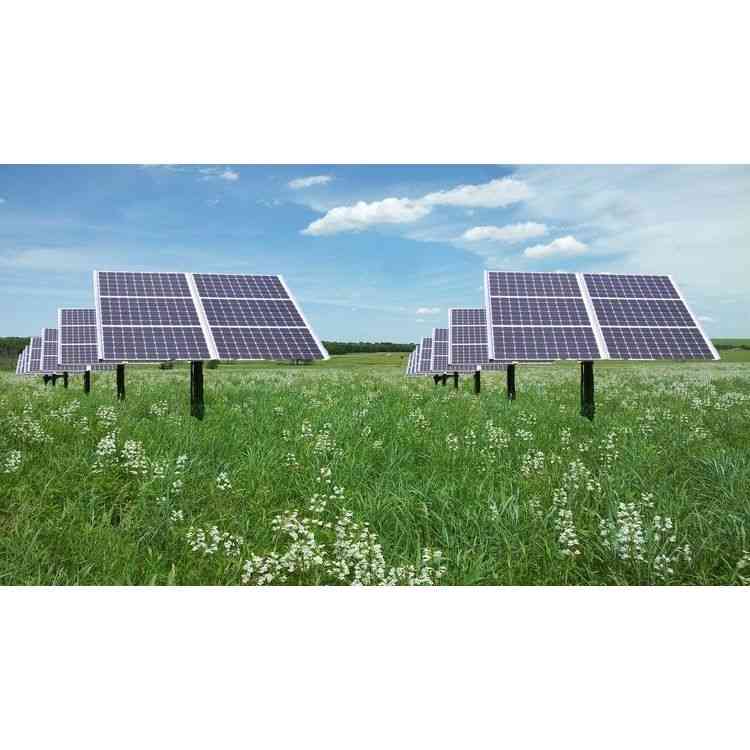
Plan native vegetation around the practical needs of your solar site. This Solar Pollinator Mix is a starting point for normal to drier soils, with the opportunity to customize species for the site's moisture variation, panel clearance and maintenance plan.
Provide your plant-height limits, soil and drainage information, seeding season, habitat objectives and budget when requesting a mix. Solar layouts and stormwater requirements vary, so the recipe and establishment plan should be checked against the project's specifications. A short-vegetation design goal is not a guarantee of one maximum height in every setting.
Site conditions
Light: Open solar-site conditions, accounting for panel shade.
Soil moisture: Normal to drier soils; customize for wetter areas.
Planting and establishment
Prepare the site and manage existing weeds before seeding. Germination requirements vary among the ingredients. Some native species benefit from cold, moist conditions; follow the mix-specific sowing guidance rather than treating every ingredient the same. For background, read native seed stratification guidance.
Ordering details
Listed options: 1 Acre.
Please specify any mixing instructions when ordering. Species and proportions may vary with availability; confirm the agreed recipe, quantity and seed-quality basis for your order.
Returns: All sales are final Natural Communities, LLC reserves the right to deny a return or to charge a restocking fee.
Shipping & Care
Shipping & Care
Seed ships all year and typically ships within a week of an order being placed.
We have attempted to put together some basic information regarding native seed installation, establishment, and maintenance. We hope you find it helpful. If you need further assistance on native seed establishment, please schedule a free consolation call here.
Consultation Services
Ecosystem Restoration Considerations
Native Seed Establishment Best Management Practices
Native Seed Stratification Best Management Practices
Solving a Site Problem? Get Expert Advice + Get Store Credit
Whether you're fighting severe erosion, replacing invasive species, designing a pollinator haven, or seeding large acreage, choosing the wrong species wastes time and money. Talk 1-on-1 with a restoration ecologist to map out the exact species, plug counts, or seed mixes for your soil and goals. Book a consultation and get all or a portion credited directly back to your order.