


Carya illinoiensis (Pecan)
Carya illinoiensis (Pecan)
Couldn't load pickup availability
$30 minimum per species for seed.
$30 minimum per species for seed.
Each species requires a minimum of $30 of seed to proceed with checkout.
Pure Live Seed
Pure Live Seed
Seed is provided in Pure Live Seed (PLS) unless otherwise stated.
Pure Live Seed (PLS) refers to the percentage of a seed lot that consists of the desired species and is viable (capable of germination).
Here's why PLS is crucial for native seeds:
-
Accurate Planting:
- PLS helps determine the actual number of viable seeds in a given weight or volume of seed.
- This ensures you plant the correct amount of seed to achieve the desired density and success rate.
-
Cost-Effectiveness:
- By knowing the PLS, you can avoid overspending on seed that may not germinate.
- This is especially important for native seeds, which can be more expensive than some cultivated varieties.
-
Weed Control:
- PLS helps minimize the presence of weed seeds within the seed lot.
- This reduces competition for resources and ensures the successful establishment of the desired native plants.
-
Ecological Restoration:
- Using high-quality native seeds with a high PLS is essential for successful ecological restoration projects.
- It helps to re-establish diverse and resilient plant communities that support local wildlife.
Weight Conversions lbs. to oz.
Weight Conversions lbs. to oz.
0.01 pounds = 0.16 ounces
- 0.1 pounds = 1.6 ounces
- 0.25 pounds = 4 ounces
- 0.5 pounds = 8 ounces
- 0.75 pounds = 12 ounces
- 1.00 pounds = 16 ounces
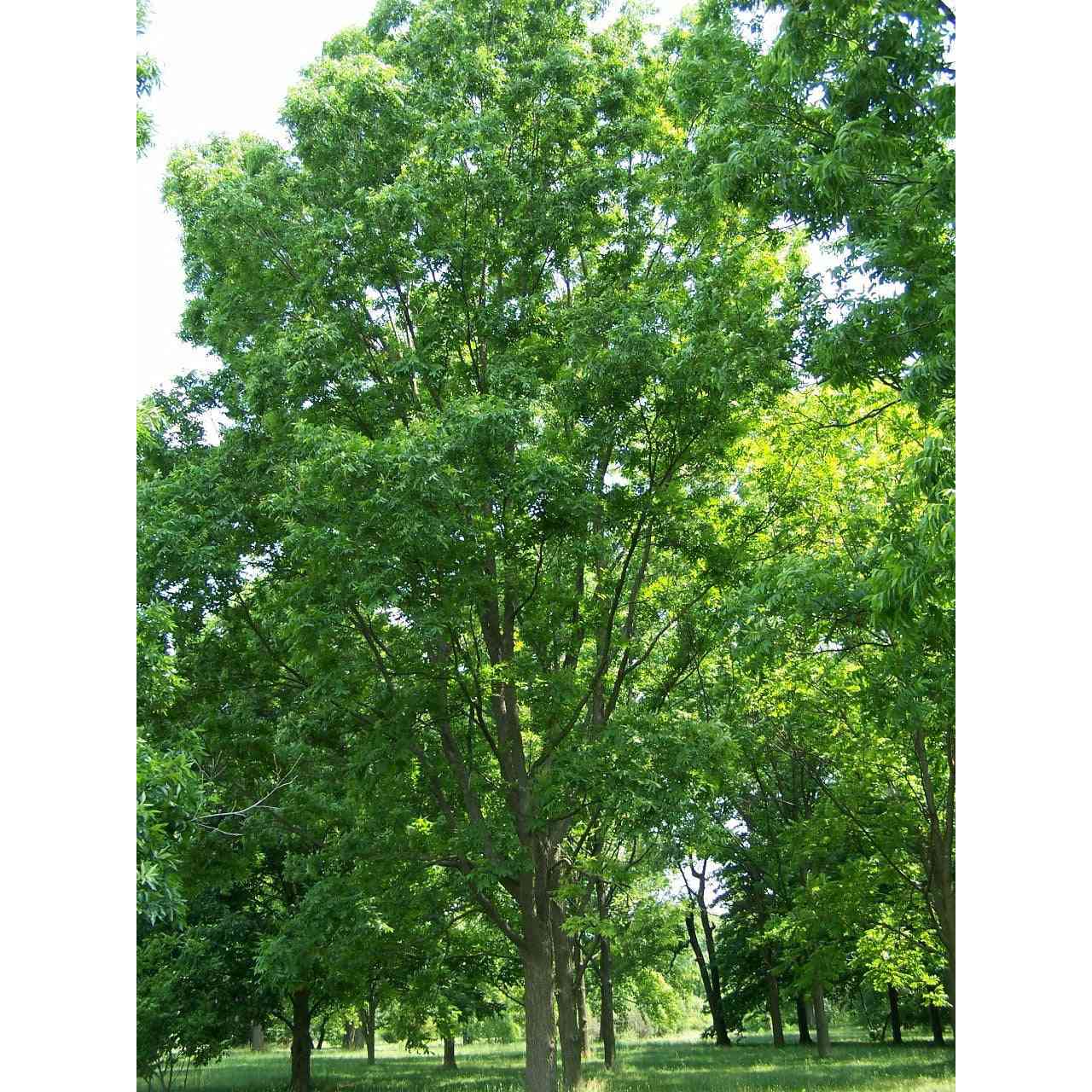
Pecan (Carya illinoinensis) is a long-lived tree that needs room for a large crown and root system. Deep, well-drained alluvial soil is its strongest natural setting. Choose an expansive site rather than a cramped bed, and avoid assuming that tolerance of a river floodplain means tolerance of prolonged waterlogging.
Check the product options above for the available format and quantity.
Plant specifications & ecological relationships
Key growing facts
| Sunlight | Full sun to partial shade |
|---|---|
| Height | Usually 70–100 ft; exceptional trees to 130 ft (NC State) |
Show / hide ▾Growing & planting details
| Soil pH | 4.5–7.5 |
|---|---|
| Drought tolerance | Low |
| Salt tolerance | None |
Plant identification & seed reference
| Botanical name | Carya illinoinensis |
|---|---|
| Seed germination | USDA lists cold stratification as required; duration is not specified. |
| Plant family | Juglandaceae |
| Seeds per pound — reference estimate | 130 |
Plant characteristics
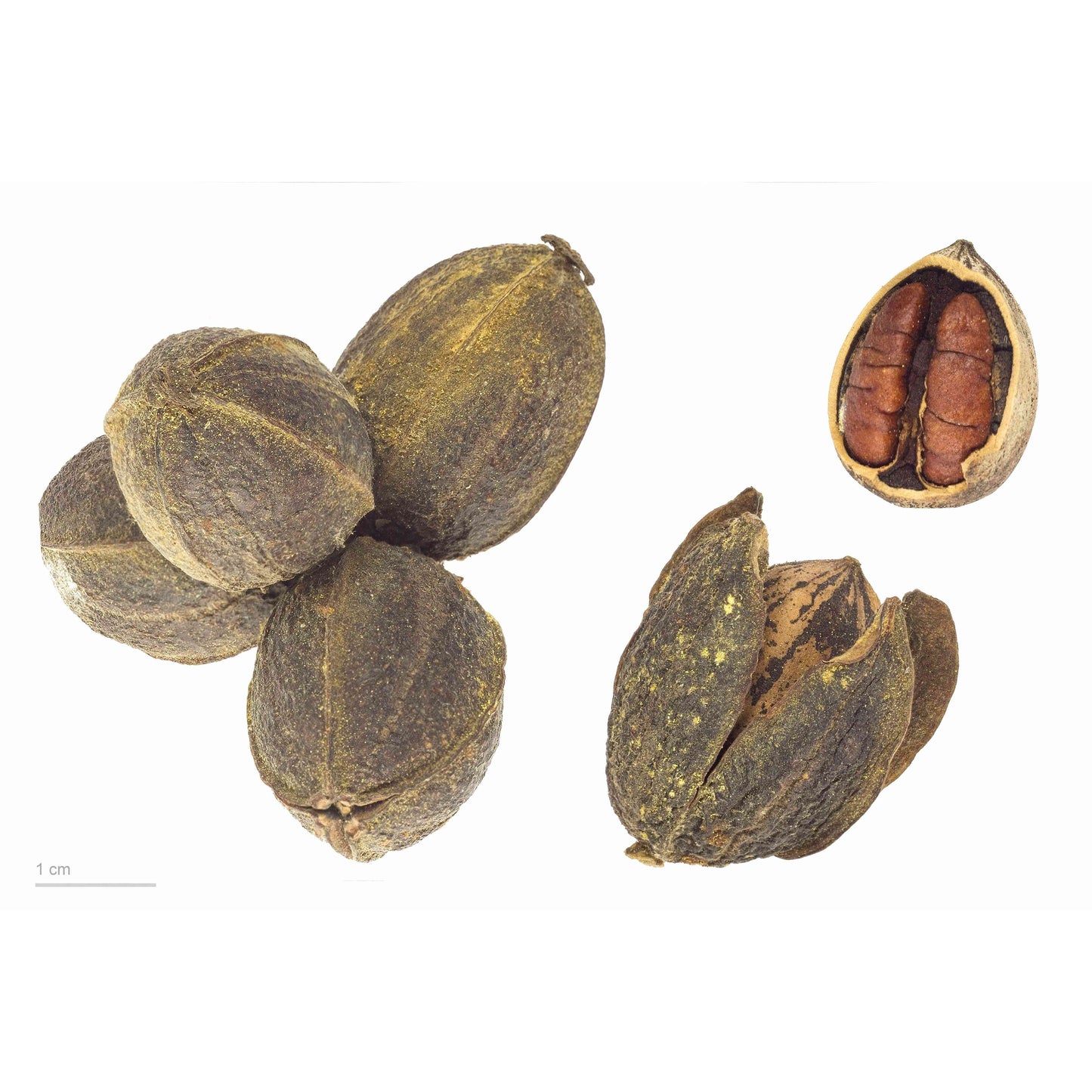
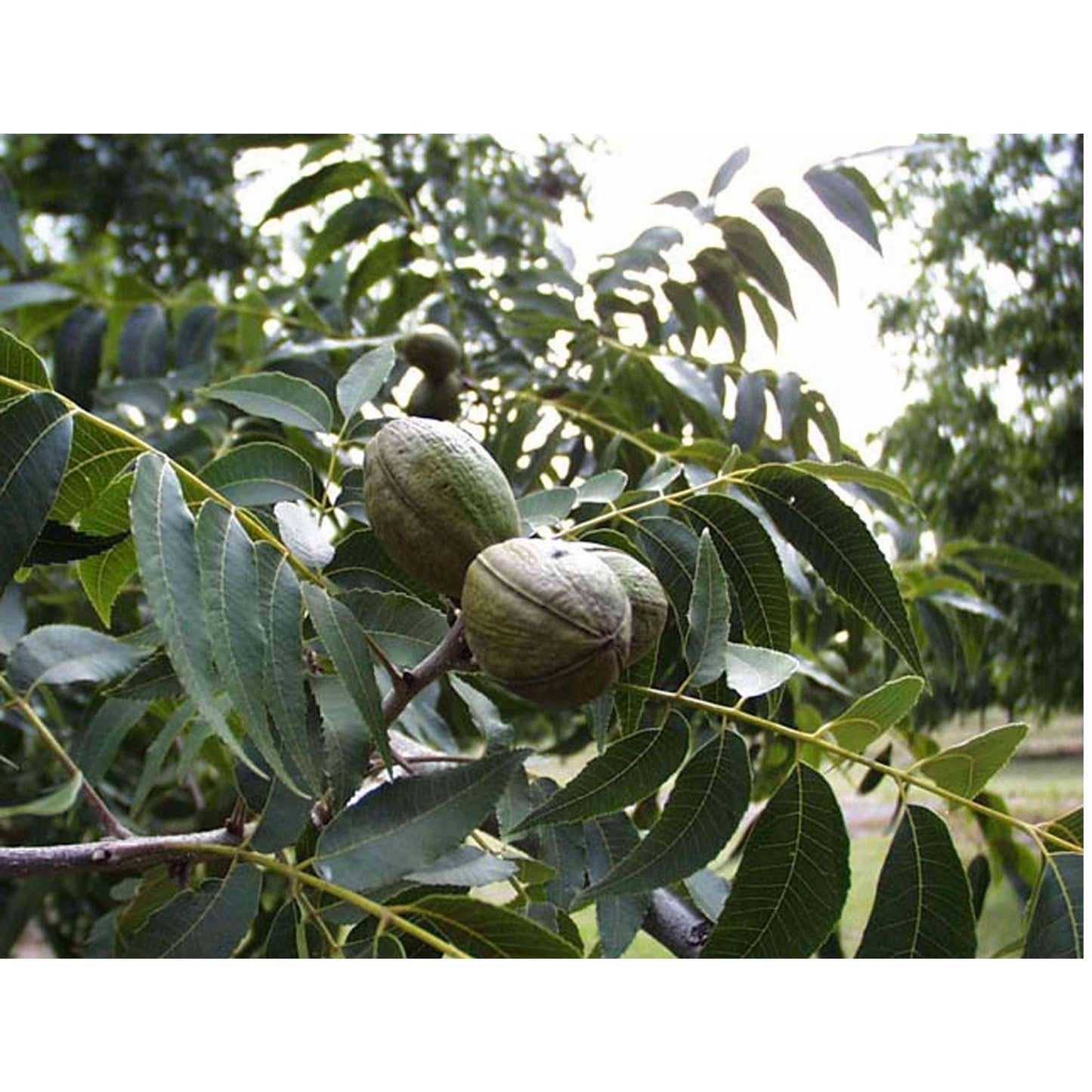
A tree highly sought-after for its delicious nuts, the Pecan is also native to the southern Midwest including southern and western Illinois. This tree can produce nuts in as little as 6 to 10 years. It is a member of the hickory genus and has a similar look to black walnut. In nature, you would find these along major river valleys such as the Mississippi River and cultivation is similar as it likes its feet a little wet and higher organic soils. These trees can live up to 300 years and grow very large, up to 150 feet tall. Give them some room to grow into their surroundings.
Show / hide ▾Native range & C-value
| Wetland indicator — NWPL 2022 Midwest | FACW |
|---|---|
| Native range — U.S. states | Arkansas; Illinois; Indiana; Iowa; Kansas; Kentucky; Louisiana; Mississippi; Missouri; Oklahoma; Tennessee; Texas |
| County nativity | Not yet verified; occurrence records do not establish nativity. |
Show / hide ▾Plant communities & associates
Other regional plant communities
These plants are named with this species in published vegetation accounts. Each list keeps its community and region; some records describe a shared vegetation type rather than neighboring plants in a measured plot. They are ecological records, not a planting recipe, and may include plants unsuitable for a particular garden.
- Gallery, floodplain and bottomland forests (Great Plains): Celtis occidentalis.
Show / hide ▾Pollinators & wildlife
Caterpillars & other plant-feeding insects
This plant has published caterpillar host records for the butterflies and moths listed below. These are larval feeding relationships, separate from adult nectar visits. The records span a North American literature compilation and do not establish that every insect occurs locally or uses only this plant.
Butterflies & skippers
- Strymon melinus — Gray Hairstreak
Moths
- Acharia stimulea — Saddleback Caterpillar Moth
- Acrobasis caryivorella — Pecan Nursery Casemaker, Hickory Shoot Moth
- Acrobasis evanescentella
- Acrobasis exsulella — Cordovan Pyralid, Cordovan Acrobasis
- Acrobasis juglandis — Pecan Leaf Casebearer
- Acrobasis latifasciella
- Acrobasis nuxvorella — Pecan Nut Casebearer
- Acrobasis palliolella — Pecan Leaf Casebearer Moth, Mantled Acrobasis
- Actias luna — Luna Moth
- Blastobasis taurusella
- Catocala epione — Epione Underwing
- Citheronia regalis — Royal Walnut Moth, Hickory Horned Devil
- Coelodasys unicornis — Unicorn Caterpillar Moth
- Cossula magnifica — Pecan Carpenterworm Moth
- Cydia caryana — Hickory Shuckworm, Pecan Shuckworm
- Eulogia ochrifrontella — Broad-Banded Eulogia
- Euzophera semifuneralis — American Plum Borer
- Gretchena bolliana — Pecan Bud Moth
- Hyphantria cunea — Fall Webworm
- Iridopsis humaria — Small Purplish Gray
- Lophocampa caryae — Hickory Tussock Moth, Hickory Tiger Moth
- Megalopyge opercularis — Southern Flannel Moth, Puss Caterpillar
- Monoleuca semifascia — Pin-Striped Vermilion Slug
- Phyllonorycter olivaeformis
- Pococera subcanalis — Cloaked Pococera Moth
- Synanthedon geliformis — Pecan Bark Borer Moth
- Synanthedon scitula — Dogwood Borer, Pecan Borer
Leafhopper hosts
The INHS revision lists this plant as a host for the following Eratoneura leafhoppers. These plant-feeding insects are distinct from caterpillars and flower visitors.
- Eratoneura osborni
- Eratoneura sorota
Host names follow the 2010 taxonomic revision. Its distribution records do not establish a host observation at your planting site.
Show / hide ▾Frequently asked questions
What are the ideal growing conditions for Pecan?
Carya illinoiensis performs best in partial sun to light shade with mesic (deep rich bottomland soils) conditions. It thrives in authentic regional soil types ranging from sandy loam to well-drained clay loams.
How do I germinate and establish Pecan from seed?
Seed of Carya illinoiensis has a germination code of C(30). For best results, sow seed in late fall/winter for natural outdoor freeze-thaw stratification, or cold-moist stratify in refrigeration for 30 to 60 days before spring indoor propagation.
Is Pecan deer and herbivore resistant?
Yes. Native plants adapted to Midwestern habitats naturally produce protective secondary compounds and fibrous textures that make them highly resistant to deer, rabbits, and other grazing herbivores.
When should I expect Pecan to emerge and bloom?
Established plants break dormancy in spring as soil temperatures warm, developing vigorous foliage before blooming in their seasonal window to provide vital nectar when native pollinators need it most.
Show / hide ▾Sources & ecological notes
Plant communities: USDA Forest Service, Fire Effects Information System (FEIS): Celtis occidentalis. Selected association facts regrouped in original wording; regional scope retained. No source photographs or captions reproduced.
Caterpillar host records: Shropshire, K.J. & Tallamy, D.W. (2025), Lepidoptera of North America, Supplement 1. Contains information from this database made available under the Open Database License (ODbL 1.0). Natural Communities selected species-level records and screened source qualifications. The complete selection and transformation instructions for this page are available below under the same license.
Leafhopper records: Dmitriev, D.A. & Dietrich, C.H. (2010), Review of New World Erythroneurini IV: Eratoneura, Illinois Natural History Survey Bulletin 39(3):79–258. © 2010 University of Illinois Board of Trustees; CC BY 4.0. Explicit host treatments selected and regrouped by Natural Communities. PDF treatment pages: Eratoneura osborni, Eratoneura sorota.
Appearance and site selection: USDA Forest Service FEIS. Selected botanical facts checked 7 September 2026; introduction written by Natural Communities.
State nativity: World Checklist of Vascular Plants, Royal Botanic Gardens, Kew, 4 June 2026 release; taxon Carya illinoinensis. © The Trustees of the Royal Botanic Gardens, Kew. CC BY 3.0; selected and reformatted. Only records marked native, not extinct and not doubtful are included. Kew cannot warrant the quality or accuracy of these data; no Kew endorsement is implied.
Chicago-region nativity, U.S. state nativity and county occurrence are separate assessments. County nativity has not yet been verified for this listing. These records do not describe the origin of the stock offered for sale.
Sources checked September 5, 2026. Regional assessments and growing observations apply to their stated settings. Unverified fields are omitted; missing information does not mean an ecological relationship is absent.
- NC State Extension Gardener Plant Toolbox. Limited botanical facts presented in Natural Communities’ own wording. Source-specific observations retain their stated scope; photographs, original descriptive prose and compiled relationship tables are excluded. Supports: Botanical Name; Height; Plant Family; Sun Exposure; Sunlight Exposure.
- USDA NRCS PLANTS — taxon profile and characteristics. USDA NRCS PLANTS Database, checked September 5, 2026. Numeric and categorical taxon-level facts only; no photographs or third-party guide prose reproduced. Supports: Drought Tolerance; Germination Code; Salt Tolerance; Seeds per pound — USDA reference estimate; Soil pH Range.
- USACE National Wetland Plant List 2022 — Midwest. U.S. Army Corps of Engineers, 2022 National Wetland Plant List, Midwest region; effective February 13, 2024. Federal data. Supports: Wetland Indicator Status.
Historical botanical names remain visible where used by the source. These regional accounts supplement the available Chicago Flora evidence.
Regional assessment details
C-value: Unavailable. Chicago-region status: Chicago Flora assessment unavailable for this listing.
Verified state nativity: Arkansas; Illinois; Indiana; Iowa; Kansas; Kentucky; Louisiana; Mississippi; Missouri; Oklahoma; Tennessee; Texas (WCVP taxon: Carya illinoinensis)
County nativity: Not yet verified for this listing. County occurrence is not a county-native assessment.
Reusable research data
{"title":"Natural Communities selected host records for Carya illinoinensis","source":"Shropshire, K.J. & Tallamy, D.W. (2025). Lepidoptera of North America, north of Mexico: an annotated list containing geographic ranges and host-plant records. Supplement 1.","source_doi":"https://doi.org/10.3897/zookeys.1261.160796.suppl1","download":"https://binary.pensoft.net/file/1478226","source_sha256":"250a11ec19c89f81374af3bc632f6897491cbe540edb09ccdaf298dc73bf9472","license":"ODbL-1.0","license_url":"https://opendatacommons.org/licenses/odbl/1-0/","method":"Complete machine-readable selection and alteration file under ODbL section 4.6(b). In source worksheet UDELep May 2025, select only rows whose column A UDLepID appears in selection. Each selection entry contains [retained source plant names, selected insect IDs]. Create one record per selected ID and retained plant name; these are reported larval hosts. Scientific insect name is the first two whitespace-separated tokens of column H; common name is E; source category is AB. Other source fields are unchanged and are not part of this derived table. No other rows or host pairs are used on this page. Group Butterfly and Skipper categories together, and other categories as moths; retain exotic category labels. Display names are sorted by scientific insect name.","plant":"Carya illinoinensis","scope":"Host literature synthesis; no county nativity or local insect occurrence inferred.","selection":[[["Carya illinoinensis"],["200078","200178","200187","200188","200191","200194","200197","200200","200359","201828","202420","203012","203103","203536","203719","205360","205865","206494","207218","207394","207899","208205","208490","210086","210286","211907","212160","212179"]]]}
Plant Shipping & Care
Plant Shipping & Care
We want to ensure that our customers get what they want, a native backyard oasis. To do that, we need to follow a few simple guidelines and give you some information and pointers to make sure you get your plants delivered in a healthy state.
As a reminder, you will receive an email to confirm your pickup or shipping window just before the plants are ready. See Order Fulfillment below for seasonal fulfillment windows.
Choices to Receive Your Plants & Accessories
- Retail - We only offer shipping & shipping is calculated at check out*
- We do not offer retail pick up
- Wholesale - Delivery is customized based on order size and location
- Wholesale - Pickup is free
Order Fulfilment - When Your Plants or Other Items Will Be Ready
We take orders all year long and seed is shipped all year, but we only provide the plants to you in certain fulfillment windows to ensure healthy plants.
Wholesale Orders
- Shipped or are Ready For Pick Up As Requested.
Retail & Website Orders
- Seed Typically Ships Out Within One Week Of Order All Year Long
- Typically, single species flats ship when ready, sometimes as soon as early to mid-April (depends on weather) through early-October.
- Mixed species kits are batched and shipped as indicated on the product page.
- If a plant order is placed while outside of the plant fulfillment window your plants will be reserved through your payment, however, the order will not be fulfilled and shipped until the following spring. We don't want to provide you plants when they won't be happy during the cold winter months.
- Early in the spring and later in the fall certain species may be dormant or partially dormant with brown leaves, however they will return to grow healthy next growing season.
- Your order may arrive in several different shipments.
- If certain plants within an order will not be available until a later date, we may choose to hold the full order until all are ready. In certain circumstances, we may choose to send them in two separate shipments
- Fulfillment is always dependent upon plant availability. We try our best but sometimes plants do not overwinter well and perish. If a plant is on back order you will receive an email indicating the estimated shipping date. If we can not provide the plant we will first notify you and give you an option of substitution or a refund of that individual species.
- Plants are typically only packaged and shipped on Mondays to ensure they do not sit in the harsh delivery facility for extended periods of time over the weekend. You will receive a confirmation email once your delivery has been shipped and to estimate your delivery date.
- Apparel & accessories are ready typically within one to two weeks. See product page for holiday shipping.
Where We Ship

What to Expect When Receiving Your Delivery
- Your plants will be packaged with the utmost care
- We will need to cut back certain plants prior to shipping. This seems counter-intuitive, however, the fewer leaves the less water the plants can lose during shipping, resulting in healthier plants for you. This also enables the plants to fit within the protective packaging and shipped safely.
Shipments
- Larger plant shipments will look similar to the picture below with a tray of your plants and a cardboard box to protect them during shipping.

What to Do With Your Plants After Receiving Your Delivery
- Unpack your order IMMEDIATELY
- Inspect for damage and report any issues immediately to Natives@NaturalCommunities.net
- Water your plants
- Install your plants as quickly as possible and water the entire garden area thoroughly
- If you cannot install your plants immediately
- Some plants may not be in a container, put them into some kind of a container such as a paper cup with loose soil until installation
- Make sure each plant is receiving the appropriate amount of light.
- Continue to water daily each morning and possibly again in the afternoon
- No additional fertilizer is needed

Seed Shipping & Care
Seed Shipping & Care
There is a minimum order requirement of $30 for each seed species. Seed ships all year and typically ships within a week of an order being placed.
We have attempted to put together some basic information regarding native seed installation, establishment, and maintenance. We hope you find it helpful. If you need further assistance on native seed establishment, please schedule a free consolation call here.
Consultation Services
Ecosystem Restoration Considerations
Native Seed Establishment Best Management Practices
Native Seed Stratification Best Management Practices
Solving a Site Problem? Get Expert Advice + Get Store Credit
Whether you're fighting severe erosion, replacing invasive species, designing a pollinator haven, or seeding large acreage, choosing the wrong species wastes time and money. Talk 1-on-1 with a restoration ecologist to map out the exact species, plug counts, or seed mixes for your soil and goals. Book a consultation and get all or a portion credited directly back to your order.