
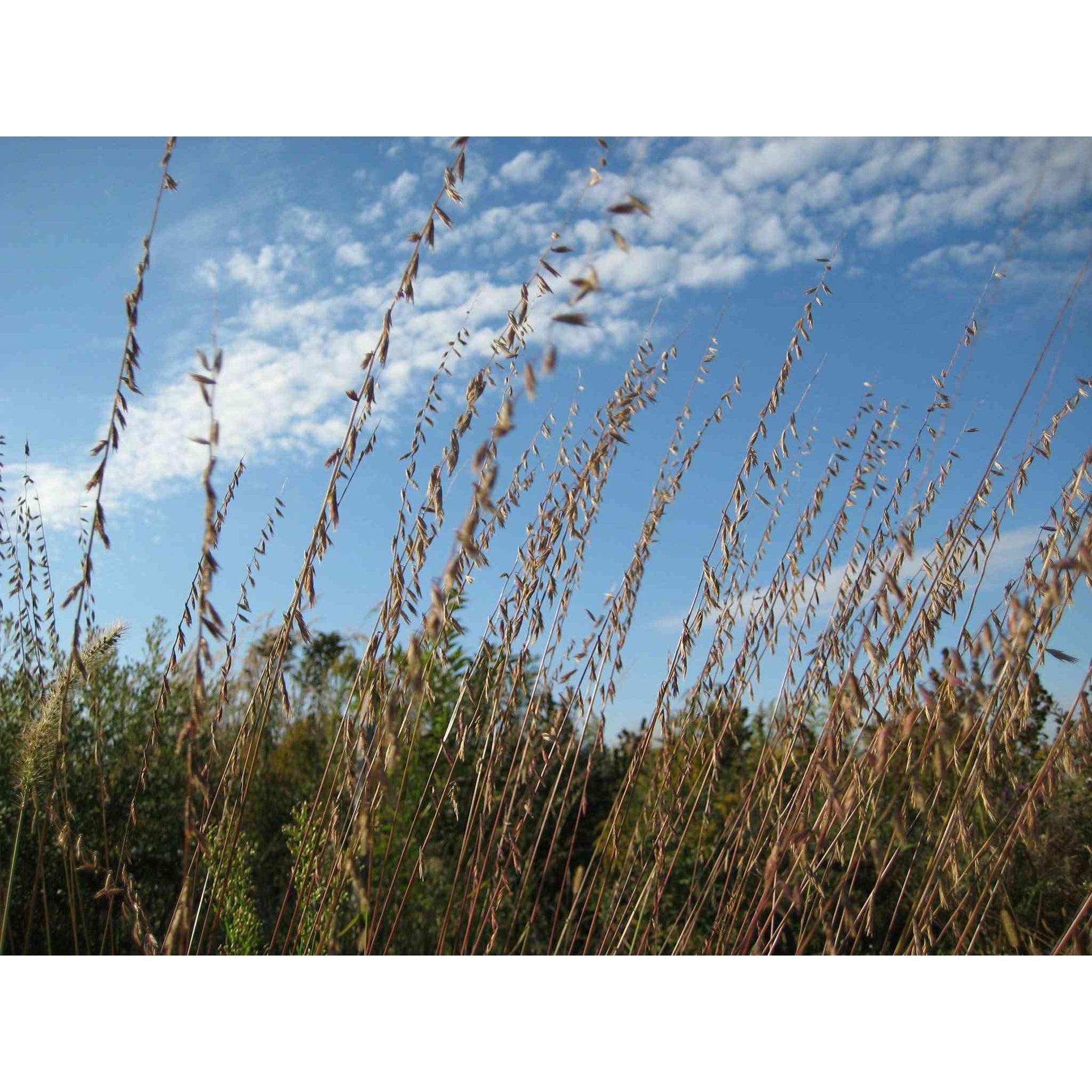
Cover Crop - Native Cover Bouteloua curtipendula (Side Oats Grama)
Cover Crop - Native Cover Bouteloua curtipendula (Side Oats Grama)
How many plants do you need?
Calculate plants & flatsEstimate quantities from your planting area and species-appropriate spacing, then round up to whole flats.
Available
Subject to confirmation.
Couldn't load pickup availability
How much seed do you need?
Calculate seed quantitiesEnter your planting area and the specified seeding rate for this mix.
Seed + Warrior project planner
Seed + Warrior project planner
Choose a seed mix on its product page to use its saved recommendations.
Edit these two numbers, then calculate.
Open a seed mix to start with its product and coverage selection.
Recommendation alignment is an editorial planning guide, not a success probability or a scientific seed-to-plug equivalence.
Plant roles, quantities & planning details
A suitable foundation seed mix provides broad coverage on prepared ground. In an existing planting, additional seed and targeted plugs can enrich suitable gaps. Place Warrior plugs intentionally in suitable microsites; the per-acre density applies only to the targeted treatment area, not an instruction to space plants evenly across the site.
Below 50% seed stays red; 50% to below 100% stays yellow. Extra diversity or plugs never offsets underseeding. For the full-diversity benchmark, a full-rate foundation starts light green, foundation + Expanded reaches its upper end, and a foundation with both add-ons starts the dark-green optimal zone. Maximum can be chosen with or without Expanded. The benchmark does not mean that every component is required for every site, and it does not assess existing vegetation. Verified, appropriate Warrior density raises alignment smoothly within the applicable diversity band. Extra seed above 100% adds no rating credit.
Flywheel Ecology: site investigation through ongoing monitoring
Read the current mix specification
Detailed seed quantities & custom-quote calculator
Quick View - Seed Mix Specifications*
Quick View - Seed Mix Specifications*
Pure Live Seed
Pure Live Seed
Seed is provided in Pure Live Seed (PLS) unless otherwise stated.
Pure Live Seed (PLS) expresses the viable seed content of a seed lot using its purity and germination or viability test results. It helps you compare seed lots and calculate how much bulk seed is needed to meet a specified PLS planting rate.
PLS weight and bag weight
PLS weight is not the same as the total weight of seed in a bag. For example, a lot with 80% purity and 75% viability contains 60% PLS: 80 × 75 ÷ 100 = 60. Supplying 10 lb PLS from that lot requires about 16.67 lb of bulk seed.
Use the current seed test and the stated basis of the mix specification. Germination calculations may include applicable hard or dormant seed. Seed-count estimates also require the number of seeds per pound; PLS alone does not provide a seed count.
What to check when buying a mix
Check whether each rate is stated in PLS pounds, bulk pounds, or a combination. A mix with both bases should not be described as having an all-PLS total.
PLS does not remove weed seeds or guarantee establishment. Review the seed label and analysis for weed content, and match site preparation, planting conditions and follow-up management to your project.
Sources: USDA NRCS, Understanding Pure Live Seed and The Importance of Seed Quality for Natural Resource Conservation.
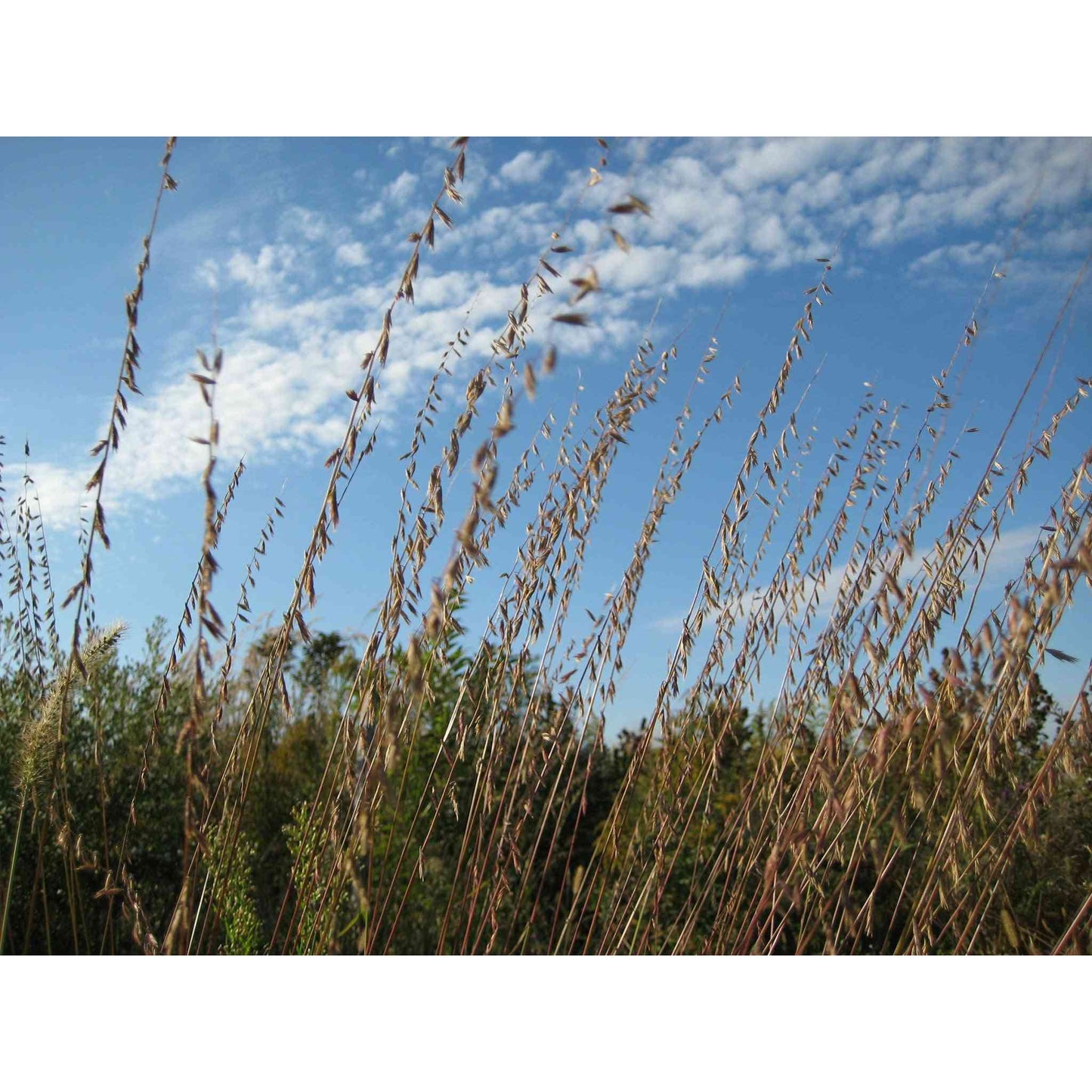
This side-oats grama listing is offered for native cover plantings. Bouteloua curtipendula favors full sun and dry ground, with small flower spikes arranged along one side of the stem.
Its usual reported height is about 2–2½ feet. Tight bunches of stems develop from rhizomes, although plants can also occur more sparsely. Compare that growth pattern with the structure you want in the planting and with the other species in the seed recipe. Recorded habitats range from prairie and savanna to dry woodland edges, glades and rocky bluffs.
For an establishment project, specify the role of this grass and calculate its quantity within the actual planting recipe. The cover-planting label does not make it interchangeable with every temporary nurse crop. Keep the current seed information and application instructions with the order, and consider the mature grass as part of the planting that will develop over time.
Plant specifications & ecological relationships
Key growing facts
| Sunlight | Full sun |
|---|---|
| Soil moisture | Dry |
| Height | About 2–2½ ft |
| Bloom season | Mid-summer to early fall |
Show / hide ▾Growing & planting details
| Growth habit | Usually forms tight bunches of stems from rhizomes; also occurs as scattered plants |
|---|---|
| Root form | Fibrous roots; Rhizomes |
| Soil pH | 5.5–8.5 |
| Drought tolerance | Strong drought resistance reported |
| Salt tolerance | Low |
Plant identification & seed reference
| Botanical name | Bouteloua curtipendula |
|---|---|
| Other common names | side-oats grama |
| Plant family | Poaceae |
| Seeds per pound — reference estimate | 96000. Clean seeds per pound; approximate species average, not a seed-lot test or PLS percentage.
Reference taxon: Bouteloua curtipendula. USDA NRCS Iowa Native Seed Calculator (2024), species reference table, PDF p. 16; 6000 seeds/oz × 16; https://efotg.sc.egov.usda.gov/api/CPSFile/47969/Native_Seeding_Calculator_2024 Reviewed: 2026-09-26 |
Plant characteristics
Bouteloua curtipendula (Side Oats Grama) is a native grass that germinates and grows quickly. This mix is a powerful tool in Fly-Wheel-Ecology and Integrated Pest Management to reduce herbicide use.
What sets Side Oats Grama apart as a cover crop from our native rye cover crop is this is a warm-season grass. Being a warm season grass, it can add "fuel" nearly immediately to your restoration project to get it burnable quickly to aid in the control of invasive woody resprouts and other invasive species.
Also use it to help with the erosion of the soil and your precious seed. Use this cover crop to help compete against weeds and as an indicator crop to help determine if your seeding was successful. It also can be used as a carrier to help spread seed more evenly.
We recommend seeding this for spring and summer installations as a cover crop and anytime as a carrier.
Please contact us for Quantities larger than 20 lbs.
Show / hide ▾Plant communities & associates
Documented Illinois communities
Mature dry sand prairie — burned
Lost Mound — Jo Daviess County, Illinois; 2005 survey.
Other native plants recorded in this survey area: Amorpha canescens, Andropogon gerardii, Anemone cylindrica, Asclepias verticillata, Asclepias viridiflora, Aster ericoides, Bouteloua hirsuta, Ceanothus americanus, Coreopsis palmata, Dalea purpurea, Eragrostis spectabilis, Helianthus occidentalis.
Selected species from the ground layer. The survey includes disturbance and succession; these records do not specify immediate neighbors or planting proportions.
Illinois plant communities
These regional accounts place this plant and the plants below in the same type of natural community. A community list does not mean that every species grew together in one plot. Use the habitat and location to understand the relationship; it is not a planting recipe.
- Gravel prairie crest grasses — Rock River, Winnebago County, Illinois: Schizachyrium scoparium, Sporobolus heterolepis. These grass records were reported by Fell and Fell in 1956. (pp. 267)
- Gravel prairie — Illinois River valley, Illinois: Schizachyrium scoparium, Dichanthelium oligosanthes, Sorghastrum nutans, Sporobolus clandestinus, Ambrosia psilostachya, Dalea purpurea, Echinacea pallida, Opuntia humifusa. (pp. 267)
Other regional plant communities
These plants are named with this species in published vegetation accounts. Each list keeps its community and region; some records describe a shared vegetation type rather than neighboring plants in a measured plot. They are ecological records, not a planting recipe, and may include plants unsuitable for a particular garden.
- Grasslands, woodlands and shrublands (North American range synthesis; associations vary by region): Pseudoroegneria spicata, Pascopyrum smithii, Schizachyrium scoparium, Andropogon gerardii var. gerardii, Festuca idahoensis, Koeleria macrantha, Bouteloua gracilis, Sarcobatus vermiculatus, Cercocarpus montanus, Pinus edulis, Juniperus pinchotii, Juniperus virginiana, Juniperus monosperma, Juniperus ashei, Juniperus deppeana, Juniperus osteosperma.
- Tallgrass prairie (North-central Texas): Bouteloua hirsuta.
- Ponderosa-pine savanna (Western North Dakota): Bouteloua hirsuta.
- Sandy uplands (Mixed- and tallgrass prairie range): Calamovilfa longifolia.
- Xeric limestone prairie (Pennsylvania): Celtis occidentalis.
- Mid-grass prairie (Great Plains): Dalea purpurea.
- Grassland and shrub associates (Prairie region; account synthesis): Juniperus virginiana.
- Bluestem prairie (Kansas): Rhus glabra.
North Eldred — hill prairie
Native hill-prairie stand surveyed in 1949–1951. These dated records do not establish presence today.
Other native plants recorded in this surveyed community: Amorpha canescens, Ceanothus americanus, Echinacea pallida, Euphorbia corollata, Liatris aspera, Liatris cylindracea, Lobelia spicata, Monarda fistulosa, Phlox pilosa, Physostegia virginiana.
Evers 1955, Table 14. Selected associates from the same community; records do not show immediate neighbors or prescribe planting ratios.
Valmeyer — hill prairie
Native hill-prairie stand surveyed in 1949–1951. These dated records do not establish presence today.
Other native plants recorded in this surveyed community: Amorpha canescens, Ceanothus americanus, Echinacea pallida, Euphorbia corollata, Heuchera richardsonii, Liatris aspera, Liatris cylindracea, Monarda bradburiana, Phlox pilosa, Pycnanthemum pilosum.
Evers 1955, Table 14. Selected associates from the same community; records do not show immediate neighbors or prescribe planting ratios.
Chautauqua — hill prairie
Native hill-prairie stand surveyed in 1949–1951. These dated records do not establish presence today.
Other native plants recorded in this surveyed community: Amorpha canescens, Camassia scilloides, Echinacea pallida, Euphorbia corollata, Heuchera richardsonii, Juncus dudleyi, Liatris cylindracea, Monarda fistulosa, Ruellia humilis, Silphium integrifolium.
Evers 1955, Table 14. Selected associates from the same community; records do not show immediate neighbors or prescribe planting ratios.
Show / hide ▾Native range & C-value
State nativity describes a broad range. Use the Chicago-region assessment for local context; a state listing does not establish county nativity.
| Wetland indicator — Corps Chicago 2017 table | UPL |
|---|---|
| C-value — Chicago region, Flora 2017 | 8 |
| Chicago-region native — Flora 2017 | Yes |
| Native range — U.S. states | Alabama; Arizona; Arkansas; California; Colorado; Connecticut; Delaware; Florida; Georgia; Idaho; Illinois; Indiana; Iowa; Kansas; Kentucky; Louisiana; Maine; Maryland; Massachusetts; Michigan; Minnesota; Mississippi; Missouri; Montana; Nebraska; New Jersey; New Mexico; New York; North Carolina; North Dakota; Ohio; Oklahoma; Oregon; Pennsylvania; South Carolina; South Dakota; Tennessee; Texas; Utah; Virginia; Washington; West Virginia; Wisconsin; Wyoming |
| County nativity | Not yet verified; occurrence records do not establish nativity. |
Show / hide ▾Pollinators & wildlife
Caterpillars & other plant-feeding insects
This plant has published caterpillar host records for the butterflies and moths listed below. These are larval feeding relationships, separate from adult nectar visits. The records span a North American literature compilation and do not establish that every insect occurs locally or uses only this plant.
Butterflies & skippers
- Amblyscirtes aenus — Bronze Roadside-Skipper
- Amblyscirtes arizonae
- Amblyscirtes oslari — Prairie Roadside-Skipper, Oslar's Roadside-Skipper
- Amblyscirtes phylace — Orange-Headed Roadside-Skipper, Redhead Roadside-Skipper
- Atrytone arogos — Arogos Skipper, Beardgrass Skipper
- Hesperia juba — Juba Skipper, Jagged-Border Skipper
- Hesperia viridis — Green Skipper, Black-Dust Skipper, Viridis Skipper
- Oarisma aurantiaca — Orange Skipperling
- Stinga morrisoni — Morrison's Skipper, Morrison’s Silver Spike
Moths
- Ctenucha venosa — Veined Ctenucha
Show / hide ▾Frequently asked questions
What are the ideal growing conditions for Side Oats Grama?
Light: Full sun. Soil moisture: Dry.
Is Side Oats Grama deer and herbivore resistant?
Species-specific deer resistance has not been verified here. Even plants described as resistant may be browsed. Use physical protection where deer damage is a concern.
When should I expect Side Oats Grama to bloom?
Typical flowering period: Mid-summer to early fall. Timing varies with location and weather.
Show / hide ▾Sources & ecological notes
Landscape companion verification: Natural Communities cross-checked the displayed pairings against public horticultural and landscape sources: Short Native Grasses and Forbs for Small Gardens; Prairie Plants for Master Gardeners — project planting list. Sources are used to verify the relationship; their text, tables, images and designs are not reproduced.
Illinois communities & local records: INHS: Illinois sand-area plant communities.
Native range & ecological ratings: Flora of the Chicago Region (2017), via Universal FQA; USACE Chicago FQA (2017); Kew WCVP / Plants of the World Online.
Growing conditions & other references: Illinois Wildflowers, John Hilty; USDA Forest Service: Bouteloua curtipendula; USDA Forest Service: Bouteloua hirsuta; USDA Forest Service: Calamovilfa longifolia; USDA Forest Service: Celtis occidentalis; USDA Forest Service: Dalea purpurea; USDA Forest Service: Juniperus virginiana; USDA Forest Service: Rhus glabra; Patrick Goggin: Wisconsin native plant guide, p. 75; USDA NRCS PLANTS; USDA Forest Service: species review; cdn.shopify.com.
Wildlife records: Shropshire & Tallamy: caterpillar hosts (2025).
Native range does not identify the origin of the seed or plants offered. Community and wildlife records apply to the locations and conditions described.
Research notes & credits
USACE/ERDC fqadata — Chicago Region FQA 2017. Herman, B., Sliwinski, R. & Whitaker, S. (2017), Chicago Region FQA Calculator; distributed by USACE/ERDC in fqadata under CC0. Values may differ from Flora of the Chicago Region (2017). CC0 dedication.
Range data: World Checklist of Vascular Plants, Royal Botanic Gardens, Kew; 4 June 2026 release, accessed 7 September 2026. © The Trustees of the Royal Botanic Gardens, Kew. CC BY 3.0; selected and reformatted. Kew cannot warrant the quality or accuracy of these data. This use has no Kew endorsement.
Caterpillar host records: Shropshire, K.J. & Tallamy, D.W. (2025), Lepidoptera of North America, Supplement 1. Contains information from this database made available under the Open Database License (ODbL 1.0). Natural Communities selected species-level records and screened source qualifications. The complete selection and transformation instructions for this page are available below under the same license.
Source: Phillippe, L.R., Molano-Flores, B., Murphy, M.J.C., Marcum, P.B. & Ebinger, J.E. (2011), Status of Endangered and Threatened Sand Area Species of the Illinois Flora, Illinois Natural History Survey Bulletin 39(4):259–296. © 2011 University of Illinois Board of Trustees; CC BY 4.0. Selected community facts regrouped and described by Natural Communities. Historical source names retained; no current legal conservation status is asserted.
Flora rating attribution: Kenneth Johnson (2018), Flora of the Chicago Region UFQA Database, following Gerould Wilhelm and Laura Rericha (2017), Flora of the Chicago Region: A Floristic and Ecological Synthesis. Individual rating facts are presented with original commentary; the calculator’s software license is not treated as a license for the underlying Flora publication.
Caterpillar research records
Plant: Bouteloua curtipendula
Record scope: Host literature synthesis; no county nativity or local insect occurrence inferred.
Shropshire & Tallamy (2025) · Original research dataset · Reuse license: ODbL-1.0
| Plant names in the source | Source insect record IDs |
|---|---|
| Bouteloua curtipendula | 200676, 200679, 200691, 200692, 201643, 203645, 206856, 206867, 208876, 211876 |
How these records were selected
To reproduce this selection, use the “UDELep May 2025” worksheet in the original research dataset.
- Match the insect record IDs above to column A (UDLepID). Within each table row, pair every listed insect ID with every listed source plant name.
- Use the first two words in column H for the insect’s scientific name, column E for its common name, and column AB for its source category.
- Treat the selected pairs as reported caterpillar host records. Keep all other source fields unchanged and outside this selected table. Include no other rows or host pairs.
- Group butterflies and skippers together, and the other categories as moths. Retain the source’s exotic-category labels and sort display names by scientific insect name.
Survey communities: Ebinger et al. (2006), Tables 1–12, Illinois Natural History Survey Bulletin. CC BY 4.0; adapted as dated presence lists, with the source’s non-native records excluded from the displayed native lists.
Growing guidance: Illinois Extension — Keeping deer out of the yard and garden. Selected facts in original wording. General deer advice is not a species resistance rating.
Additional community records: Evers (1955), Hill Prairies of Illinois. Hill-prairie records adapted from Evers (1955), © University of Illinois Board of Trustees, CC BY 4.0. Selected facts and taxonomic links; source spellings and historical survey dates retained.
- 10 lbs. per acre used by itself or 4-6 lbs. per acre when used with native seed
- Full Sun To Part Sun
- Normal, to Dry Soils
Planting references and review
Reviewed: 2026-09-26
Plant spacing:Select a spacing suited to your site and planting design.
Seeding rate: Use a site- and method-specific specification. No verified automatic species rate is supplied.
Seed preparation: A species-specific preparation method and named code system need confirmation for the supplied seed lot.
Shipping & Care
Shipping & Care
Seed ships all year and typically ships within a week of an order being placed.
We have attempted to put together some basic information regarding native seed installation, establishment, and maintenance. We hope you find it helpful. If you need further assistance on native seed establishment, please schedule a free consolation call here.
Consultation Services
Ecosystem Restoration Considerations
Native Seed Establishment Best Management Practices
Native Seed Stratification Best Management Practices
Solving a Site Problem? Get Expert Advice + Get Store Credit
Whether you're fighting severe erosion, replacing invasive species, designing a pollinator haven, or seeding large acreage, choosing the wrong species wastes time and money. Talk 1-on-1 with a restoration ecologist to map out the exact species, plug counts, or seed mixes for your soil and goals. Book a consultation and get all or a portion credited directly back to your order.