
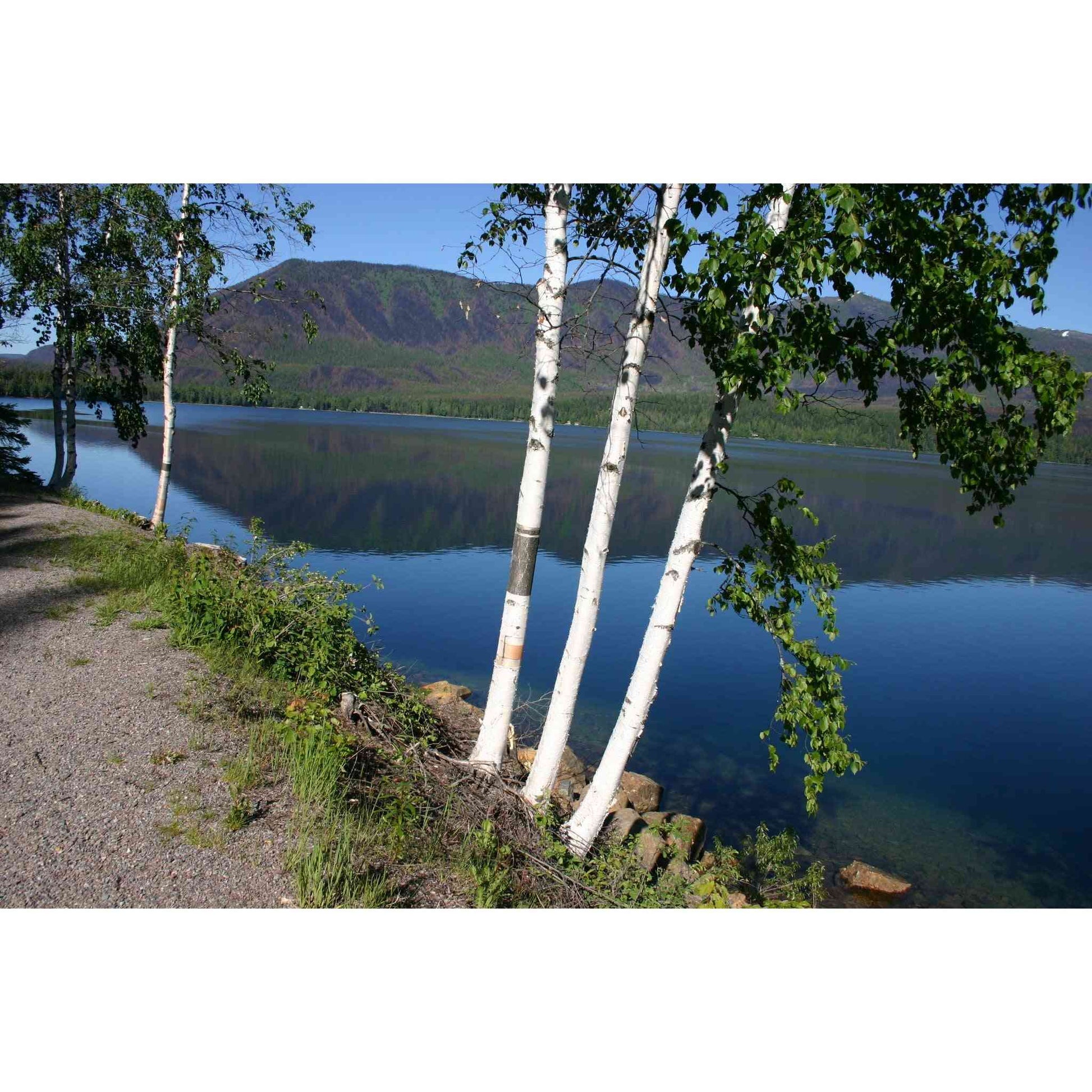
Betula papyrifera (Paper Birch)
Betula papyrifera (Paper Birch)
Subject to confirmation.
Couldn't load pickup availability
$30 minimum per species for seed.
$30 minimum per species for seed.
Each species requires a minimum of $30 of seed to proceed with checkout.
Pure Live Seed
Pure Live Seed
Seed is provided in Pure Live Seed (PLS) unless otherwise stated.
Pure Live Seed (PLS) expresses the viable seed content of a seed lot using its purity and germination or viability test results. It helps you compare seed lots and calculate how much bulk seed is needed to meet a specified PLS planting rate.
PLS weight and bag weight
PLS weight is not the same as the total weight of seed in a bag. For example, a lot with 80% purity and 75% viability contains 60% PLS: 80 × 75 ÷ 100 = 60. Supplying 10 lb PLS from that lot requires about 16.67 lb of bulk seed.
Use the current seed test and the stated basis of the mix specification. Germination calculations may include applicable hard or dormant seed. Seed-count estimates also require the number of seeds per pound; PLS alone does not provide a seed count.
What to check when buying a mix
Check whether each rate is stated in PLS pounds, bulk pounds, or a combination. A mix with both bases should not be described as having an all-PLS total.
PLS does not remove weed seeds or guarantee establishment. Review the seed label and analysis for weed content, and match site preparation, planting conditions and follow-up management to your project.
Sources: USDA NRCS, Understanding Pure Live Seed and The Importance of Seed Quality for Natural Resource Conservation.
Weight Conversions lbs. to oz.
Weight Conversions lbs. to oz.
0.01 pounds = 0.16 ounces
- 0.1 pounds = 1.6 ounces
- 0.25 pounds = 4 ounces
- 0.5 pounds = 8 ounces
- 0.75 pounds = 12 ounces
- 1.00 pounds = 16 ounces
Paper birch develops a relatively open crown on one or several trunks. Its preference for cool summers deserves attention before planting it in a warm, exposed setting.
For Betula papyrifera, choose full to partial sun and moist to dry-mesic soil. Recorded habitats include upland woods and savannas, often sandy or rocky; Open disturbed woods; Stabilized Lake Michigan dunes; Riverbanks. Reported height: 50-80 ft.
Leave room for the mature branches beside paths and nearby plantings. Growth habit: single- or multi-trunked tree with a narrow, open crown; reproduces by reseeding. Root structure: shallow, spreading roots.
Plant specifications & ecological relationships
Key growing facts
| Sunlight | Full to partial sun |
|---|---|
| Soil moisture | Moist to dry-mesic |
| Height | 50-80 ft |
| Bloom season | Spring |
Native landscape companions
For full sun and moist soil, consider these native plants alongside Betula papyrifera:
| Companion plant | Height |
|---|---|
| Yellow Birch (Betula alleghaniensis) | 60-75 ft |
| Silver Maple (Acer saccharinum) | 60-100 ft |
| Bur Oak (Quercus macrocarpa) | 80-120 ft |
| Chokecherry (Prunus virginiana) | 8-25 ft |
These landscape suggestions combine overlapping growing needs with documented plant associations. Match soil, seasonal wetness and mature spread to your site. Remnant records are described separately under Plant communities & associates.
Show / hide ▾Growing & planting details
| Growth habit | Single- or multi-trunked tree with a narrow, open crown; reproduces by reseeding |
|---|---|
| Root form | Shallow, spreading roots |
| Soil pH | Published cultivation guidance lists acidic, neutral soil conditions; no optimal numeric interval is established. |
| Cultivation hardiness zones | Zones 2a–7a (general cultivation guidance) |
| Drought tolerance | Low |
| Deer browsing | Deer resistance reported in cultivation guidance; browsing remains possible. |
| Salt tolerance | Medium |
Plant identification & seed reference
| Botanical name | Betula papyrifera |
|---|---|
| Other common names | paper birch; Canoe Birch; Kenai Birch; Mountain Paper Birch; Paperbark birch; Paper Birch; White Birch |
| Seed germination | USDA lists cold stratification as required; duration is not specified. |
| Plant family | Betulaceae |
| Seeds per pound — reference estimate | 1380800 |
Plant characteristics
Betula papyrifera (Paper Birch) is a native tree that can have single or multiple stems in its natural forms. This species is widely used in landscaping for its beautiful bark. Plus this tree supports an extensive variety of insects! And it produces an excellent yellow show in the fall!
Show / hide ▾Plant communities & associates
Other documented plant associations
These published associations show how this plant fits into natural vegetation. The region and community are identified for each list; moisture, shade and flooding can differ within a community.
Additional tree associates
Across differing habitats in the tamarack range
Other regional plant communities
These plants are named with this species in published vegetation accounts. Each list keeps its community and region; some records describe a shared vegetation type rather than neighboring plants in a measured plot. They are ecological records, not a planting recipe, and may include plants unsuitable for a particular garden.
- Forest understory (Northern Wisconsin): Corylus americana.
- Coastal dune forests (Northern Lake Michigan): Prunus virginiana.
- White-cedar forests (Lower northern Michigan): Prunus virginiana.
- Bottomland forest trees (New England and eastern Canada): Acer saccharinum.
- Open forests on ridges (Catskill Mountains, New York): Betula alleghaniensis.
- Mixed woods (Canadian boreal region): Populus tremuloides, Picea mariana, Picea glauca, Pinus banksiana.
- Mesic draws and mixed-deciduous woodlands (Northern Great Plains): Quercus macrocarpa.
Show / hide ▾Native range & C-value
State nativity describes a broad range. Use the Chicago-region assessment for local context; a state listing does not establish county nativity.
| Wetland indicator — NWPL 2022 Midwest | FACU |
|---|---|
| C-value — Chicago region, Flora 2017 | 8 |
| Chicago-region native — Flora 2017 | Yes |
| Native range — U.S. states | Alaska; Colorado; Connecticut; Idaho; Illinois; Indiana; Iowa; Maine; Massachusetts; Michigan; Minnesota; Montana; Nebraska; New Hampshire; New Jersey; New York; North Dakota; Ohio; Oregon; Pennsylvania; Rhode Island; South Dakota; Vermont; Virginia; Washington; West Virginia; Wisconsin; Wyoming |
| County nativity | Not yet verified; occurrence records do not establish nativity. |
Show / hide ▾Pollinators & wildlife
Caterpillars & other plant-feeding insects
This plant has published caterpillar host records for the butterflies and moths listed below. These are larval feeding relationships, separate from adult nectar visits. The records span a North American literature compilation and do not establish that every insect occurs locally or uses only this plant.
Moths
- Acrobasis betulella — Birch Tubemaker
- Acronicta fragilis — Fragile Dagger
- Acronicta funeralis — Funerary Dagger, Paddle Caterpillar
- Acronicta impleta — Yellow-Haired Dagger
- Acronicta impressa — Impressive Dagger, Printed Dagger
- Acronicta innotata — Unmarked Dagger
- Acronicta interrupta — Interrupted Dagger
- Acronicta lanceolaria — Narrow-Winged Dagger, Lanceolate Dagger
- Acronicta lepusculina — Cottonwood Dagger
- Acronicta radcliffei — Radcliffe's Dagger
- Acronicta superans — Splendid Dagger, Chieftain Dagger
- Acronicta vulpina — Miller Dagger
- Agonopterix argillacea — Clay-Colored Agonopterix
- Amorbia humerosana — White-Lined Leafroller Moth
- Anania extricalis
- Anavitrinella pampinaria — Common Gray, Cranberry Spanworm
- Anisota virginiensis — Pink-striped Oakworm Moth
- Antaeotricha schlaegeri — Schlaeger's Fruitworm Moth
- Apotomis albeolana
- Apotomis tertiana
- Besma endropiaria — Straw Besma
- Bibarrambla allenella — Bog Bibarrambla
- Bucculatrix canadensisella — Birch Skeletonizaer Moth
- Caloptilia invariabilis — Cherry Leaf-Cone Caterpillar Moth
- Catastega timidella — Oak Trumpet Skeletonizer Moth
- Cenopis diluticostana — Spring Dead-Leaf Roller Moth, Oak Cenopis
- Cenopis directana — Chokecherry Leafroller Moth
- Charadra deridens — The Laugher
- Choristoneura obsoletana — Obsolete Leafroller
- Cladara atroliturata — The Scribbler
- Coleophora comptoniella — Birch Casebearer Moth, Lesser Birch Casebearer
- Coleophora serratella — Birch Casebearer, Cigar Casebearer (listed as introduced in the source)
- Dichomeris ligulella — Palmerworm
- Eacles imperialis — Imperial Moth, Imperial Spiny Caterpillar
- Egira dolosa — Grieving Woodling, Cunning Woodling
- Enargia fausta — Tawny Tentmaker
- Epinotia solicitana — Birch Shoot Borer
- Euchlaena tigrinaria — Motted Euchlaena
- Euclea delphinii — Spiny Oak-Slug Moth
- Eupithecia subfuscata — Gray Pug, Subfuscate Pug, The Brown-grey Pug
- Haploa confusa — Confused Haploa
- Ianassa lignicolor — White-Streaked Prominent
- Iridopsis ephyraria — Pale-Winged Gray
- Lithophane tepida — Warm Gray Pinion, White-Eyes Pinion
- Macaria anataria
- Macaria loricaria
- Macaria ulsterata — Birch Angle, Peacock Moth
- Machimia tentoriferella — Gold-Striped Leaftier Moth
- Malacosoma disstria — Forest Tent Caterpillar
- Metarranthis pilosaria — X
- Nites betulella — Blackdotted Birch Leaftier
- Operophtera brumata — Winter Moth (listed as introduced in the source)
- Packardia ceanothi
- Phragmatobia assimilans — Large Ruby Tiger Moth
- Plagodis alcoolaria — Hollow-Spotted Plagodis
- Plagodis serinaria — Lemon Plagodis
- Pococera aplastella — Aspen Webworm Moth
- Symmerista leucitys — Orange-Humped Mapleworm
- Xylena thoracica — Acadian Swordgrass Moth
Other insect & wildlife relationships
Caterpillars this plant can feed
Eastern Tiger Swallowtail.
Additional published species records; Illinois insect occurrence is not established by this account. These records do not guarantee that every insect occurs at your planting site.
Show / hide ▾Frequently asked questions
What are the ideal growing conditions for Paper Birch?
Light: Full to partial sun. Soil moisture: Moist to dry-mesic.
How do I germinate and establish Paper Birch from seed?
USDA lists cold stratification as required; duration is not specified.
Is Paper Birch deer and herbivore resistant?
Deer resistance reported in cultivation guidance; browsing remains possible. Even plants described as resistant may be browsed. Use physical protection where deer damage is a concern.
When should I expect Paper Birch to bloom?
Typical flowering period: Spring. Timing varies with location and weather.
Show / hide ▾Sources & ecological notes
Landscape companion selection: Natural Communities compared the growing requirements shown on these species pages with selected source records: Open forests on ridges — Catskill Mountains, New York; Bottomland forest trees — New England and eastern Canada; Mesic draws and mixed-deciduous woodlands — Northern Great Plains; Coastal dune forests — Northern Lake Michigan. The shortlist is a planting-design inference. A shared record does not establish adjacency, identical soil requirements, local seed origin, or a tested planting combination. Regional synthesis records retain their documented focal-to-associate scope.
Native range & ecological ratings: Flora of the Chicago Region (2017), via Universal FQA; USACE Chicago FQA (2017); Kew WCVP / Plants of the World Online; USACE National Wetland Plant List.
Growing conditions & other references: Illinois Wildflowers, John Hilty; USDA Forest Service: tamarack; USDA Forest Service: Acer saccharinum; USDA Forest Service: Betula alleghaniensis; USDA Forest Service: Betula papyrifera; USDA Forest Service: Corylus americana; USDA Forest Service: Prunus virginiana; USDA Forest Service: Quercus macrocarpa; USDA NRCS PLANTS; NC State Extension Plant Toolbox.
Wildlife records: Shropshire & Tallamy: caterpillar hosts (2025).
Native range does not identify the origin of the seed or plants offered. Community and wildlife records apply to the locations and conditions described.
Research notes & credits
USACE/ERDC fqadata — Chicago Region FQA 2017. Herman, B., Sliwinski, R. & Whitaker, S. (2017), Chicago Region FQA Calculator; distributed by USACE/ERDC in fqadata under CC0. Values may differ from Flora of the Chicago Region (2017). CC0 dedication. Retained for comparison; the displayed C-value follows Flora database 80.
Range data: World Checklist of Vascular Plants, Royal Botanic Gardens, Kew; 4 June 2026 release, accessed 7 September 2026. © The Trustees of the Royal Botanic Gardens, Kew. CC BY 3.0; selected and reformatted. Kew cannot warrant the quality or accuracy of these data. This use has no Kew endorsement.
Caterpillar host records: Shropshire, K.J. & Tallamy, D.W. (2025), Lepidoptera of North America, Supplement 1. Contains information from this database made available under the Open Database License (ODbL 1.0). Natural Communities selected species-level records and screened source qualifications. The complete selection and transformation instructions for this page are available below under the same license.
Flora rating attribution: Kenneth Johnson (2018), Flora of the Chicago Region UFQA Database, following Gerould Wilhelm and Laura Rericha (2017), Flora of the Chicago Region: A Floristic and Ecological Synthesis. Individual rating facts are presented with original commentary; the calculator’s software license is not treated as a license for the underlying Flora publication.
Caterpillar research records
Plant: Betula papyrifera
Record scope: Host literature synthesis; no county nativity or local insect occurrence inferred.
Shropshire & Tallamy (2025) · Original research dataset · Reuse license: ODbL-1.0
| Plant names in the source | Source insect record IDs |
|---|---|
| Betula papyrifera | 200171, 200299, 200300, 200307, 200308, 200310, 200313, 200315, 200316, 200336, 200344, 200352, 200519, 200710, 200781, 200834, 200935, 201029, 201241, 201255, 201805, 201810, 201926, 202140, 202378, 202574, 202575, 202641, 202933, 203016, 203168, 203252, 204046, 204360, 204408, 204630, 204841, 205079, 205090, 205587, 206618, 207292, 207391, 207854, 208005, 208037, 208044, 208073, 208112, 208346, 208789, 209058, 209171, 209962, 210169, 210174, 210265, 211943, 212900 |
How these records were selected
To reproduce this selection, use the “UDELep May 2025” worksheet in the original research dataset.
- Match the insect record IDs above to column A (UDLepID). Within each table row, pair every listed insect ID with every listed source plant name.
- Use the first two words in column H for the insect’s scientific name, column E for its common name, and column AB for its source category.
- Treat the selected pairs as reported caterpillar host records. Keep all other source fields unchanged and outside this selected table. Include no other rows or host pairs.
- Group butterflies and skippers together, and the other categories as moths. Retain the source’s exotic-category labels and sort display names by scientific insect name.
Growing guidance: Illinois Extension — Keeping deer out of the yard and garden. Selected facts in original wording. General deer advice is not a species resistance rating.
Plant Shipping & Care
Plant Shipping & Care
We want to ensure that our customers get what they want, a native backyard oasis. To do that, we need to follow a few simple guidelines and give you some information and pointers to make sure you get your plants delivered in a healthy state.
As a reminder, you will receive an email to confirm your pickup or shipping window just before the plants are ready. See Order Fulfillment below for seasonal fulfillment windows.
Choices to Receive Your Plants & Accessories
- Website orders: Seed, plugs and bare-root plants offered for shipping are shipped to your address. Shipping charges are calculated at checkout.
- Container trees and shrubs: Some #3 and #5 container options are offered for scheduled pickup only. Check the selected product option and the cart pickup instructions before ordering. Pickup and shipped items require separate orders where indicated in the cart.
- Wholesale orders: Delivery and pickup are arranged separately according to the order, supplier yard and location. Wholesale pickup is free.
- Pickup locations and dates are confirmed by email. Please wait for confirmation before traveling to a pickup site. Our offices are not retail stores or nursery pickup locations.
Order Fulfilment - When Your Plants or Other Items Will Be Ready
We take orders all year long and seed is shipped all year, but we only provide the plants to you in certain fulfillment windows to ensure healthy plants.
Wholesale Orders
- Shipped or are Ready For Pick Up As Requested.
Retail & Website Orders
- Seed Typically Ships Out Within One Week Of Order All Year Long
- Typically, single species flats ship when ready, sometimes as soon as early to mid-April (depends on weather) through early-October.
- Mixed species kits are batched and shipped as indicated on the product page.
- If a plant order is placed while outside of the plant fulfillment window your plants will be reserved through your payment, however, the order will not be fulfilled and shipped until the following spring. We don't want to provide you plants when they won't be happy during the cold winter months.
- Early in the spring and later in the fall certain species may be dormant or partially dormant with brown leaves, however they will return to grow healthy next growing season.
- Your order may arrive in several different shipments.
- If certain plants within an order will not be available until a later date, we may choose to hold the full order until all are ready. In certain circumstances, we may choose to send them in two separate shipments
- Fulfillment is always dependent upon plant availability. We try our best but sometimes plants do not overwinter well and perish. If a plant is on back order you will receive an email indicating the estimated shipping date. If we can not provide the plant we will first notify you and give you an option of substitution or a refund of that individual species.
- Plants are typically only packaged and shipped on Mondays to ensure they do not sit in the harsh delivery facility for extended periods of time over the weekend. You will receive a confirmation email once your delivery has been shipped and to estimate your delivery date.
- Apparel & accessories are ready typically within one to two weeks. See product page for holiday shipping.
Where We Ship

What to Expect When Receiving Your Delivery
- Your plants will be packaged with the utmost care
- We will need to cut back certain plants prior to shipping. This seems counter-intuitive, however, the fewer leaves the less water the plants can lose during shipping, resulting in healthier plants for you. This also enables the plants to fit within the protective packaging and shipped safely.
Shipments
- Larger plant shipments will look similar to the picture below with a tray of your plants and a cardboard box to protect them during shipping.

What to Do With Your Plants After Receiving Your Delivery
- Unpack your order IMMEDIATELY
- Inspect for damage and report any issues immediately to Natives@NaturalCommunities.net
- Water your plants
- Install your plants as quickly as possible and water the entire garden area thoroughly
- If you cannot install your plants immediately
- Some plants may not be in a container, put them into some kind of a container such as a paper cup with loose soil until installation
- Make sure each plant is receiving the appropriate amount of light.
- Continue to water daily each morning and possibly again in the afternoon
- No additional fertilizer is needed

Seed Shipping & Care
Seed Shipping & Care
Seed ships all year and typically ships within a week of an order being placed.
We have attempted to put together some basic information regarding native seed installation, establishment, and maintenance. We hope you find it helpful. If you need further assistance on native seed establishment, please schedule a free consolation call here.
Consultation Services
Ecosystem Restoration Considerations
Native Seed Establishment Best Management Practices
Native Seed Stratification Best Management Practices
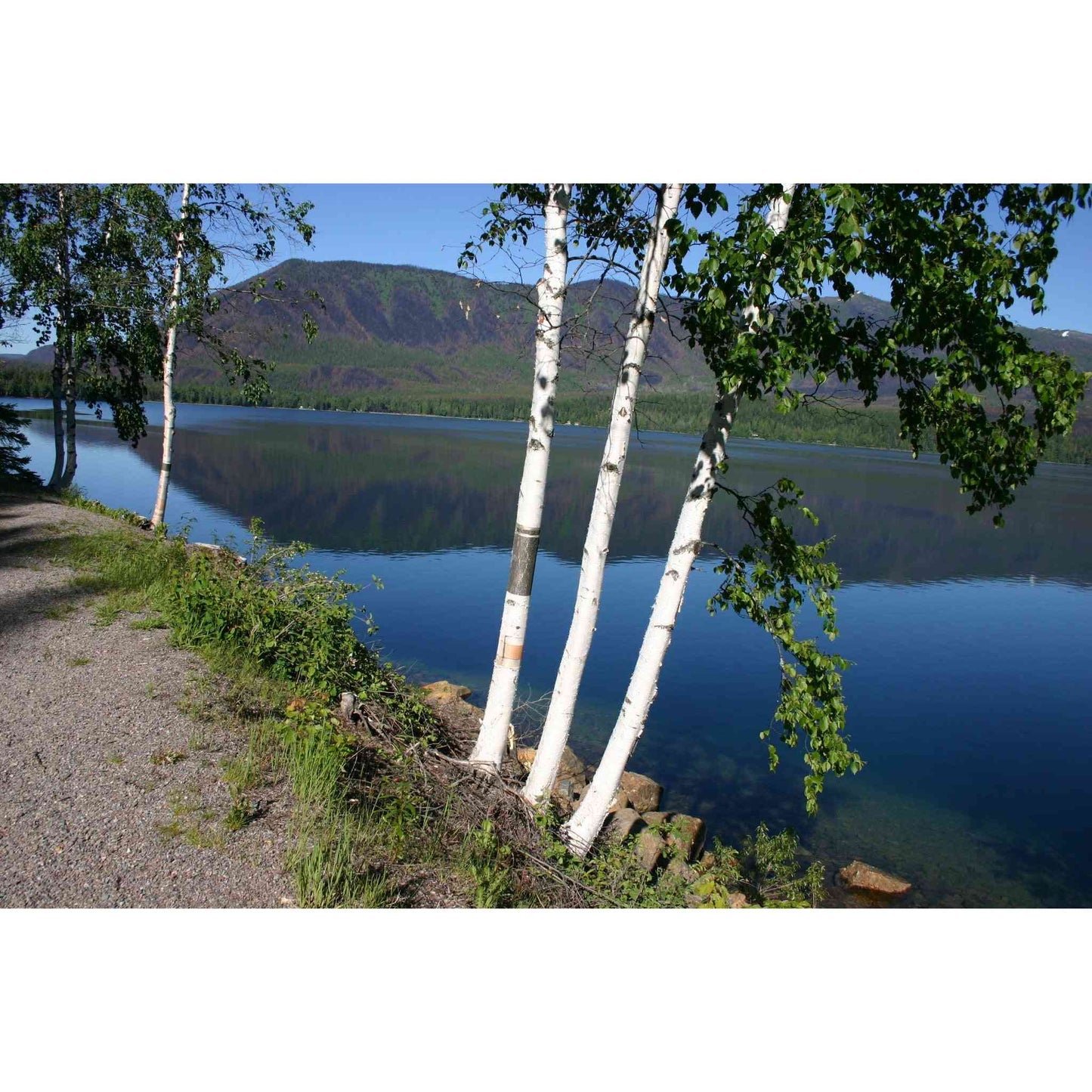
Solving a Site Problem? Get Expert Advice + Get Store Credit
Whether you're fighting severe erosion, replacing invasive species, designing a pollinator haven, or seeding large acreage, choosing the wrong species wastes time and money. Talk 1-on-1 with a restoration ecologist to map out the exact species, plug counts, or seed mixes for your soil and goals. Book a consultation and get all or a portion credited directly back to your order.