

Quercus alba (White Oak)
Quercus alba (White Oak)
How many plants do you need?
Calculate plants & flatsEstimate quantities from your planting area and species-appropriate spacing, then round up to whole flats.
Eligible choices for this product:
- 5 gal
- Bare Root
- Bare Root 25 Pack
- Bare Root 100 Pack
No projected availability.
Subject to confirmation.
Pickup in Union, IL
Tuesdays, 7 a.m.–3 p.m., by confirmed arrangement.
We confirm your pickup date and time by email after purchase. Please wait for confirmation before traveling.
Gallon sizes describe the container, not the plant’s height. Mature heights describe future growth.
Couldn't load pickup availability
How much seed do you need?
Calculate seed quantitiesEnter your planting area and the rate for this species, or add species to plan a custom mix.
Pure Live Seed
Pure Live Seed
Seed is provided in Pure Live Seed (PLS) unless otherwise stated.
Pure Live Seed (PLS) expresses the viable seed content of a seed lot using its purity and germination or viability test results. It helps you compare seed lots and calculate how much bulk seed is needed to meet a specified PLS planting rate.
PLS weight and bag weight
PLS weight is not the same as the total weight of seed in a bag. For example, a lot with 80% purity and 75% viability contains 60% PLS: 80 × 75 ÷ 100 = 60. Supplying 10 lb PLS from that lot requires about 16.67 lb of bulk seed.
Use the current seed test and the stated basis of the mix specification. Germination calculations may include applicable hard or dormant seed. Seed-count estimates also require the number of seeds per pound; PLS alone does not provide a seed count.
What to check when buying a mix
Check whether each rate is stated in PLS pounds, bulk pounds, or a combination. A mix with both bases should not be described as having an all-PLS total.
PLS does not remove weed seeds or guarantee establishment. Review the seed label and analysis for weed content, and match site preparation, planting conditions and follow-up management to your project.
Sources: USDA NRCS, Understanding Pure Live Seed and The Importance of Seed Quality for Natural Resource Conservation.
Weight Conversions lbs. to oz.
Weight Conversions lbs. to oz.
0.01 pounds = 0.16 ounces
- 0.1 pounds = 1.6 ounces
- 0.25 pounds = 4 ounces
- 0.5 pounds = 8 ounces
- 0.75 pounds = 12 ounces
- 1.00 pounds = 16 ounces
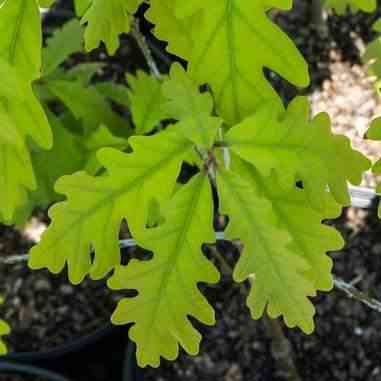
White oak (Quercus alba) is a long-lived canopy tree with a broad crown and substantial spreading branches. It needs a large planting area, well away from buildings and overhead utilities. An open-grown tree develops a much wider form than one growing among other woodland trees.
Choose full to partial sun and deep, well-drained soil. White oak tolerates dry periods once established, but persistently wet ground is a poor match. Young trees develop a strong root system and become difficult to move, so select the permanent site carefully.
The acorns provide food for birds and mammals, and the foliage supports caterpillars. Leaves often turn reddish brown in fall, with some remaining on younger trees through winter. Plant white oak where its mature canopy and roots can develop without repeated pruning or construction disturbance.
Plant specifications & ecological relationships
Key growing facts
| Sunlight | Full to partial sun |
|---|---|
| Soil moisture | Mesic to dry-mesic |
| Height | 60-100 ft |
| Bloom season | Mid- to late spring |
Show / hide ▾Growing & planting details
| Growth habit | Slow-growing tree with a broad crown, often wider than tall |
|---|---|
| Root form | Taproot |
| Soil pH | Published cultivation guidance lists acidic soil conditions; no optimal numeric interval is established. |
| Cultivation hardiness zones | Zones 3a–9b (general cultivation guidance) |
| Drought tolerance | Tolerates moderate drought |
| Deer browsing | Deer resistance reported in cultivation guidance; browsing remains possible. |
| Salt tolerance | Salt tolerance reported in cultivation guidance; dose and exposure route are not specified. |
| Plant toxicity | Poison characteristics are reported; listed parts: leaves, seeds. Pet safety is not established. |
Plant identification & seed reference
| Botanical name | Quercus alba |
|---|---|
| Other common names | white oak; American White Oak; Eastern White Oak; Forked-leaf White Oak; Northern White Oak; Oaks; Quebec Oak; White Oak |
| Plant family | Fagaceae |
| Seeds per pound — reference estimate | No verified seed-count reference is supplied. Use documented seed-lot data. |
Plant characteristics
An excellent native tree common across most of the eastern US. It supports a vast array of wildlife from many insects with its leaves and many mammals with acorns. This tree has variable fall color ranges from uninteresting browns to quality shades of dark red. This tree can produce acorns after about 30 years.
Show / hide ▾Plant communities & associates
Documented Illinois communities
Second-growth dry-mesic upland sand forest — woody layer
Lost Mound — Jo Daviess County, Illinois; 2005 survey.
Other native plants recorded in this survey area: Betula nigra, Carya cordiformis, Carya ovata, Celtis occidentalis, Corylus americana, Juniperus virginiana, Prunus serotina, Quercus rubra, Quercus velutina, Ribes missouriense, Tilia americana, Acer negundo.
Selected species from the woody layer. The survey includes disturbance and succession; these records do not specify immediate neighbors or planting proportions.
Chicago-region plant communities
Sand Ridge Savanna, Will County (2007–2009 study). Recorded in: dry-mesic sand savanna.
Dry-mesic sand savanna — selected native associates: Quercus velutina, Prunus serotina, Ribes missouriense.
These records come from sampled communities within the preserve.
Illinois woodland and stream communities
Middle Fork Woods, Vermilion County (1999–2002 survey). Recorded in: dry-mesic upland forest — mature second growth; dry-mesic savanna — old growth with canopy closure; dry upland bluff — east-facing river slope; dry upland bluff — west-facing creek slope; dry-mesic upland forest — immature second growth.
Dry-mesic upland forest — mature second growth — selected native associates: Carex pensylvanica, Carex rosea, Carex blanda.
Dry-mesic savanna — old growth with canopy closure — selected native associates: Carex pensylvanica, Bromus pubescens, Phlox divaricata.
These plants share a recorded habitat; they were not necessarily found in the same small plot.
Illinois plant communities
These regional accounts place this plant and the plants below in the same type of natural community. A community list does not mean that every species grew together in one plot. Use the habitat and location to understand the relationship; it is not a planting recipe.
- Sand flatwoods — Kankakee River sand deposits and Chicago Lake Plain, Illinois: Quercus palustris, Nyssa sylvatica, Carex cumulata, Comptonia peregrina, Drosera intermedia, Polygonum careyi, Viola primulifolia. Pin oak occupies the wetter flatwoods; white oak and black gum are recorded on slightly raised ground. (pp. 266)
Other documented plant associations
These published associations show how this plant fits into natural vegetation. The region and community are identified for each list; moisture, shade and flooding can differ within a community.
Mixed mesophytic forest canopy
Eastern United States; range-wide synthesis
Black-maple-dominated forest
Five stands summarized by the North Central Forest Experiment Station; exact localities unspecified
Lower ravine slopes
Central Kentucky
Forest overstory associates of northern red oak
Eastern North America; species-range synthesis
Central hardwood forests; different stand types
Central part of the American hornbeam range
- Carpinus caroliniana (American Hornbeam / Blue Beech / Musclewood)
Southern mixed-hardwood and loblolly-pine forests
Southern part of the American hornbeam range
- Carpinus caroliniana (American Hornbeam / Blue Beech / Musclewood)
Other regional plant communities
These plants are named with this species in published vegetation accounts. Each list keeps its community and region; some records describe a shared vegetation type rather than neighboring plants in a measured plot. They are ecological records, not a planting recipe, and may include plants unsuitable for a particular garden.
- Oak savannas (Midwestern North America): Dalea purpurea.
- Dry calcareous oak savanna (Upper Midwest and southeastern Ontario): Rhus aromatica.
- Black-oak savanna (Indiana): Rhus glabra.
- Dry alvar forests (Pelee Island, Ontario): Celtis occidentalis.
- Grassland–woodland transitions (Northern and eastern prairie range): Dalea purpurea.
- Submesic oak forest (South Carolina coastal plain): Geranium maculatum.
- Forest canopy and understory associates (Eastern North America; account synthesis): Geranium maculatum.
- Mixed pine and hardwood stands (Eastern North America): Juniperus virginiana.
- Mixed-oak valley forests (Central Pennsylvania): Prunus virginiana.
- Mixed forest canopy (Eastern and central North America): Quercus rubra, Quercus coccinea, Quercus ellipsoidalis, Fagus spp., Liquidambar styraciflua, Castanea dentata, Acer rubrum, Acer saccharum, Carya spp..
- Forest and open-woodland understory (Eastern and central North America): Vaccinium stamineum, Amorpha canescens, Epigaea repens, Gaylussacia spp., Thalictrum spp., Smilacina racemosa.
- Upland oak forests (Eastern and central North America): Quercus coccinea.
- Upland oak forest (Central and Great Lakes region): Quercus ellipsoidalis.
- Bottomland forest types (Central and eastern North America): Quercus palustris.
- Woodland edges around glades (Ozark region, Missouri and northwestern Arkansas): Rhus aromatica.
Show / hide ▾Native range & C-value
State nativity describes a broad range. Use the Chicago-region assessment for local context; a state listing does not establish county nativity.
| Wetland indicator — NWPL 2022 Midwest | FACU |
|---|---|
| C-value — Chicago region, Flora 2017 | 5 |
| Chicago-region native — Flora 2017 | Yes |
| Native range — U.S. states | Alabama; Arkansas; Connecticut; Delaware; Florida; Georgia; Illinois; Indiana; Iowa; Kansas; Kentucky; Louisiana; Maine; Maryland; Massachusetts; Michigan; Minnesota; Mississippi; Missouri; Nebraska; New Hampshire; New Jersey; New York; North Carolina; Ohio; Oklahoma; Pennsylvania; Rhode Island; South Carolina; Tennessee; Texas; Vermont; Virginia; West Virginia; Wisconsin |
| County nativity | Vermilion County, Illinois — historical remnant forest evidence (1974; resurveyed 1999–2002). County coverage is partial. |
Show / hide ▾Pollinators & wildlife
Caterpillars & other plant-feeding insects
This plant has published caterpillar host records for the butterflies and moths listed below. These are larval feeding relationships, separate from adult nectar visits. The records span a North American literature compilation and do not establish that every insect occurs locally or uses only this plant.
Butterflies & skippers
- Gesta brizo — Sleepy Duskywing
- Gesta juvenalis — Juvenal's Duskywing
- Papilio glaucus — Eastern Tiger Swallowtail
- Satyrium calanus — Banded Hairstreak, Falacer Hairstreak
Moths
- Acharia stimulea — Saddleback Caterpillar Moth
- Achatia distincta — Distinct Quaker
- Acleris semiannula — Half-Ringed Acleris
- Acleris semipurpurana — Oak Leaf Shredder, Oak Leaftier, Oak Leafshredder
- Acrobasis minimella
- Acrocercops albinatella
- Acronicta americana — American Dagger
- Acronicta exilis — Exiled Dagger, Lesser Oak Dagger
- Acronicta funeralis — Funerary Dagger, Paddle Caterpillar
- Acronicta immodica — Medium Oak Dagger, Medium Dagger
- Acronicta impleta — Yellow-Haired Dagger
- Acronicta marmorata — Marble Dagger
- Acronicta modica — Hesitant Dagger
- Acronicta ovata — Ovate Dagger, Epauleted Oak Dagger
- Acronicta tristis — Sad Dagger
- Actebia fennica — Black Army Worm, Erractic Army Worm, Finland Dart, Black Army Cutworm, Black Armyworm, Finnish Dart
- Actias luna — Luna Moth
- Adoneta spinuloides — Purple-Crested Slug
- Alsophila pometaria — Fall Cankerworm Moth
- Amphipyra pyramidoides — Miranda Underwing, Copper Underwing, Copper Amphipyra
- Ancylis divisana — Two-Toned Ancylis
- Ancylis laciniana
- Anisota senatoria — Orange-Tipped Oakworm Moth, Orangestriped Oakworm
- Anisota virginiensis — Pink-striped Oakworm Moth
- Antaeotricha humilis — Dotted Anteotricha Moth
- Antaeotricha osseella
- Antaeotricha schlaegeri — Schlaeger's Fruitworm Moth
- Apoda biguttata — Shagreened Slug Moth
- Archips fervidana — Oak Webworm Moth
- Archips semiferanus — Oak Leafroller Moth
- Argyrotaenia alisellana — White-Spotted Leaf Roller
- Argyrotaenia quercifoliana — Yellow-Winged Oak Leafroller Moth, Lined Oak Leafroller
- Arogalea cristifasciella — Stripe-Backed Moth, White Stripe-Backed Moth
- Automeris io — Io Moth
- Besma endropiaria — Straw Besma
- Besma quercivoraria — Oak Besma
- Blastobasis glandulella — Acorn Moth
- Blastobasis taurusella
- Bucculatrix ainsliella — Oak Skeletonizer Moth
- Bucculatrix luteella
- Bucculatrix ochrisuffusa
- Caloptilia alnivorella — Alder Leafminer
- Cameraria australisella
- Cameraria cincinnatiella — Gregarious Leafminer
- Cameraria fletcherella
- Cameraria hamadryadella — Solitary Oak Leafminer Moth
- Cameraria platanoidiella
- Cameraria tubiferella
- Campaea perlata — Pale Beauty, Fringed Looper
- Catastega timidella — Oak Trumpet Skeletonizer Moth
- Catocala aholibah — Aholibah Underwing Moth
- Catocala amica — Girlfriend Underwing
- Catocala ilia — Ilia Underwing
- Catocala verrilliana — Verrill's Underwing
- Cecrita guttivitta — Maple Prominent, Saddled Prominent
- Cenopis directana — Chokecherry Leafroller Moth
- Cenopis pettitana — Maple-Basswood Leafroller Moth
- Charadra deridens — The Laugher
- Chionodes adamas
- Chionodes bicostomaculella — Two-Spotted Chionodes
- Chionodes formosella — Spring Oak Leafroller
- Chionodes fuscomaculella — White-Spotted Chionodes
- Chionodes hapsus
- Chionodes pereyra
- Choristoneura fractivittana — Broken-Banded Leafroller, Lined Corn-Borer Moth
- Choristoneura rosaceana — Oblique-Banded Leafroller Moth, Rosaceous Leaf Roller
- Cissusa spadix — Black-Dotted Brown
- Cleora sublunaria — Double-Lined Gray
- Coelodasys unicornis — Unicorn Caterpillar Moth
- Coleotechnites quercivorella
- Coptotriche badiiella
- Coptotriche fuscomarginella
- Coptotriche purinosella
- Coptotriche simulata
- Coptotriche zelleriella
- Crocigrapha normani — Norman's Quaker
- Cyclophora dataria
- Cydia latiferreana — Filbertworm
- Dasychira basiflava — Yellow-Based Tussock Moth
- Dasychira dorsipennata — Sharp-Lined Tussock Moth
- Dasychira obliquata — Streaked Tussock Moth
- Dasychira tephra — Tephra Tussock Moth
- Dasychira vagans — Variable Tussock Moth
- Dichomeris ligulella — Palmerworm
- Dichomeris ventrellus
- Dyseriocrania griseocapitella — Chinquapin Leaf-Miner
- Eacles imperialis — Imperial Moth, Imperial Spiny Caterpillar
- Ectropis crepuscularia — The Small Engrailed, Saddleback Looper
- Egira alternans — Alternate Woodling
- Egira dolosa — Grieving Woodling, Cunning Woodling
- Egira februalis — Mottled Oak Woodling
- Ennomos magnaria — Maple Spanworm Moth, Notchwing Geometer
- Ennomos subsignaria — Elm Spanworm Moth
- Erannis tiliaria — Linden Looper Moth, Western Winter Moth, Lime Looper
- Euclea delphinii — Spiny Oak-Slug Moth
- Eupithecia swettii
- Euproctis chrysorrhoea — Browntail Moth (listed as introduced in the source)
- Eutrapela clemataria — Curved-Tooth Geometer, Purplish Brown Looper
- Euxoa scandens — White Cutworm
- Feralia februalis
- Halysidota tessellaris — Banded Tussock Moth, Pale Tiger Moth
- Heterocampa obliqua — Oblique Heterocampa
- Hyalophora cecropia — Cecropia Silkmoth, Cecropia Moth
- Hydriomena bistriolata
- Hydriomena transfigurata — Transfigured Hydriomena
- Hypagyrtis unipunctata — One-Spotted Variant
- Hyperstrotia pervertens — Dotted Graylet
- Hyperstrotia secta — Black-Patched Graylet
- Hyphantria cunea — Fall Webworm
- Ianassa lignicolor — White-Streaked Prominent
- Iridopsis defectaria — Brown-Shaded Gray, Willow Looper
- Isa textula — Crowned Slug
- Isochaetes beutenmuelleri — Spun Glass Slug
- Kocakina fidelis — Intractable Quaker, Green Fruitworm, Fourlined Green Fruitworm
- Lacanobia atlantica — Atlantic Arches
- Lacosoma chiridota — Scalloped Sack-Bearer
- Lambdina fervidaria — Curve-Lined Looper Moth
- Lambdina fiscellaria — Hemlock Looper, Western Oak Looper
- Lithacodes fasciola — Yellow-Shouldered Slug
- Lithophane antennata — Ashen Pinion
- Lithophane bethunei — Bethune's Pinion
- Lithophane contenta
- Lophocampa caryae — Hickory Tussock Moth, Hickory Tiger Moth
- Lycia ursaria — Stout Spanworm Moth
- Lymantria dispar — Spongy Moth, Gypsy Moth (listed as introduced in the source)
- Lytrosis permagnaria — Gray Lytrosis
- Machimia tentoriferella — Gold-Striped Leaftier Moth
- Macrurocampa dorothea
- Malacosoma disstria — Forest Tent Caterpillar
- Meganola minuscula — Confused Meganola, Confused Oak Punkie
- Meganola phylla — Two-Spotted Oak Punkie, Coastal Plain Meganola
- Melanolophia canadaria — Canadian Melanolphia, Variable Redmarked Looper
- Melanolophia signataria — Signate Melanolphia
- Menesta melanella — Black Menesta
- Mesogona olivata
- Morrisonia confusa — Confused Woodgrain
- Morrisonia latex — Fluid Arches, Fluid Mamestra
- Natada nasoni — Nason's Slug Moth
- Nemoria bistriaria — Two-Striped Emerald, Red-Fringed Emerald
- Nemoria mimosaria — White-Fringed Emerald
- Neotelphusa querciella — Oak Leafroller
- Oedemasia concinna — Red-Humped Caterpillar, Red-Humped Appleworm
- Oedemasia leptinoides — Black-Blotched Schizura
- Oedemasia semirufescens — Red-Washed Prominent
- Olethreutes atrodentana
- Olethreutes inornatana — Inornate Olethreutes
- Oneida lunulalis — Orange-Tufted Oneida
- Oreana unicolorella — Ladder-Marked Caterpillar
- Orgyia antiqua — Manto Tussock Moth, Rusty Tussock Moth, Vapourer (British)
- Orgyia definita — Definite Tussock Moth
- Orgyia leucostigma — White-Marked Tussock Moth
- Orthodes detracta — Disparaged Arches, Disparaged Groundcat
- Orthosia hibisci — Speckled Green Fruitworm Moth, Speckled Green Quaker
- Orthosia pacifica
- Orthosia revicta — Subdued Quaker
- Orthosia rubescens — Ruby Quaker
- Orthotaenia undulana — Dusky Leafroller
- Packardia geminata — Jeweled Tail Slug Moth
- Pandemis canadana — Green Aspen Leaftier
- Pandemis limitata — Three-Lined Leafroller Moth
- Paonias excaecata — Blinded Sphinx, Blind Eyed Sphinx
- Paraeschra georgica — Georgian Prominent
- Paranthrene simulans — Hornet Clearwing, Golden Oak Borer
- Parasa chloris — Smaller Parasa, Green Slug Moth
- Parasa indetermina — Stinging Rose Caterpillar Moth, Rose Slug Caterpillar
- Peridroma saucia — Variegated Cutworm, Pearly Underwing (listed as introduced in the source)
- Perigonica angulata
- Phaeoura quernaria — Oak Beauty Moth
- Phigalia strigataria — Small Phigalia, Small Oak Looper
- Phigalia titea — The Half-Wing Geometer, Spiney Looper, Eastern Oak Looper
- Phoberia atomaris — Common Oak Moth
- Phobetron pithecium — Hag Moth, Monkey Slug
- Phyllodesma americana — Lappet Moth, American Lappet Moth, Southern Lappet Moth
- Phyllonorycter aeriferella
- Phyllonorycter albanotella
- Phyllonorycter argentifimbriella
- Phyllonorycter quercialbella
- Plagodis alcoolaria — Hollow-Spotted Plagodis
- Plagodis serinaria — Lemon Plagodis
- Platynota idaeusalis — Tufted Apple-Bud Moth
- Pococera asperatella — Maple Webworm
- Pococera expandens — Striped Oak Webworm, Double-Humped Pococera
- Prionoxystus robiniae — Carpenterworm Moth, Black Locust Borer, Cottonwood Borer
- Prolimacodes badia — Skiff Moth, Skiff Caterpillar
- Protoboarmia porcelaria — Porcelain Gray, Dashedlined Looper
- Psaphida resumens — Figure-Eight Sallow
- Psaphida styracis — Fawn Sallow
- Psaphida thaxterianus — Thaxter's Sallow
- Pseudexentera haracana
- Pseudexentera hodsoni
- Pseudexentera spoliana — Bare-Patched Leafroller
- Pseudotelphusa ontariensis
- Pseudotelphusa quercinigracella
- Psilocorsis cryptolechiella — Black-Fringed Leaftier
- Psilocorsis quercicella — Oak Leaftier
- Quasisalebria atratella
- Quasisalebria fructetella
- Rectiostoma xanthobasis — Yellow-Vested Moth
- Salebriaria carolynae
- Salebriaria engeli — Engel's Salebriaria
- Salebriaria fasciata
- Salebriaria integra
- Salebriaria rufimaculatella — White-Banded Salebriaria
- Salebriaria simpliciella
- Salebriaria tenebrosella
- Salebriaria turpidella
- Schizura ipomaeae — Morning-Glory Prominent, Checkered-Fringe Prominent
- Selenia kentaria — Kent's Geometer
- Sereda tautana — Speckled Sereda
- Stigmella castaneaefoliella
- Stigmella quercipulchella
- Stigmella sclerostylota
- Symmerista albifrons — White-Headed Prominent
- Symmerista canicosta — Red-Humped Oakworm
- Synanthedon scitula — Dogwood Borer, Pecan Borer
- Tolype velleda — Large Tolype, Large Lappet Moth, Vellada Lappet Moth
- Trypanisma prudens
- Ypsolopha cervella
- Zale aeruginosa — Green-Dusted Zale
- Zale lunata — Lunate Zale
- Zale minerea — Colorful Zale
- Zeuzera pyrina — Leopard Moth, Wood Leopard (listed as introduced in the source)
Leafhopper hosts
The INHS revision lists this plant as a host for the following Eratoneura leafhoppers. These plant-feeding insects are distinct from caterpillars and flower visitors.
- Eratoneura abjecta
- Eratoneura acantha
- Eratoneura cristata
- Eratoneura curta
- Eratoneura dumosa
- Eratoneura forfex
- Eratoneura levecki
- Eratoneura ligata
- Eratoneura lunata
- Eratoneura manus
- Eratoneura mensa
- Eratoneura mira
- Eratoneura protuma
- Eratoneura restricta
- Eratoneura stephensoni
- Eratoneura unica
Host names follow the 2010 taxonomic revision. Its distribution records do not establish a host observation at your planting site.
Show / hide ▾Frequently asked questions
What are the ideal growing conditions for White Oak?
Light: Full to partial sun. Soil moisture: Mesic to dry-mesic.
Is White Oak deer and herbivore resistant?
Deer resistance reported in cultivation guidance; browsing remains possible. Even plants described as resistant may be browsed. Use physical protection where deer damage is a concern.
When should I expect White Oak to bloom?
Typical flowering period: Mid- to late spring. Timing varies with location and weather.
Show / hide ▾Sources & ecological notes
Will County community records: Phillippe, Marcum & Ebinger (2012), Sand Ridge Savanna vegetation, Tables 1–5. Selected species and habitat facts independently organized; no open license is asserted for the article. Sampled communities are kept separate from the preserve’s seeded field.
Illinois woodland records: Larimore, Phillippe & Ebinger (2008), Middle Fork Woods flora, Appendix I. © 2008 University of Illinois Board of Trustees, CC BY 4.0. Habitat records transcribed, selected and linked to catalog names by Natural Communities. Survey: 1999–2002.
Illinois communities & local records: INHS: Illinois sand-area plant communities.
Native range & ecological ratings: Flora of the Chicago Region (2017), via Universal FQA; USACE Chicago FQA (2017); Kew WCVP / Plants of the World Online; USACE National Wetland Plant List.
Growing conditions & other references: Illinois Wildflowers, John Hilty; USDA Forest Service: querub; USDA Forest Service: american hornbeam; USDA Forest Service: black maple; USDA Forest Service: Celtis occidentalis; USDA Forest Service: Dalea purpurea; USDA Forest Service: Geranium maculatum; USDA Forest Service: Juniperus virginiana; USDA Forest Service: Prunus virginiana; USDA Forest Service: Quercus alba; USDA Forest Service: Quercus coccinea; USDA Forest Service: Quercus ellipsoidalis; USDA Forest Service: Quercus palustris; USDA Forest Service: Rhus aromatica; USDA Forest Service: Rhus glabra; Patrick Goggin: Wisconsin native plant guide, p. 75; USDA Forest Service: species review; USDA NRCS PLANTS; USDA Forest Service: species review; USDA Forest Service: species review; NC State Extension Plant Toolbox.
Wildlife records: Shropshire & Tallamy: caterpillar hosts (2025); INHS: Eratoneura leafhopper host records.
Native range does not identify the origin of the seed or plants offered. Community and wildlife records apply to the locations and conditions described.
Research notes & credits
USACE/ERDC fqadata — Chicago Region FQA 2017. Herman, B., Sliwinski, R. & Whitaker, S. (2017), Chicago Region FQA Calculator; distributed by USACE/ERDC in fqadata under CC0. Values may differ from Flora of the Chicago Region (2017). CC0 dedication. Retained for comparison; the displayed C-value follows Flora database 80.
Range data: World Checklist of Vascular Plants, Royal Botanic Gardens, Kew; 4 June 2026 release, accessed 7 September 2026. © The Trustees of the Royal Botanic Gardens, Kew. CC BY 3.0; selected and reformatted. Kew cannot warrant the quality or accuracy of these data. This use has no Kew endorsement.
Caterpillar host records: Shropshire, K.J. & Tallamy, D.W. (2025), Lepidoptera of North America, Supplement 1. Contains information from this database made available under the Open Database License (ODbL 1.0). Natural Communities selected species-level records and screened source qualifications. The complete selection and transformation instructions for this page are available below under the same license.
Illinois Natural History Survey Bulletin — Eratoneura paper. Dietrich, C.H. & Dmitriev, D.A. (2010), Review of the Species of New World Erythroneurini, IV. Genus Eratoneura. Copyright University of Illinois Board of Trustees. CC BY 4.0; selected host records summarized and reformatted. No endorsement implied. CC BY 4.0.
Flora rating attribution: Kenneth Johnson (2018), Flora of the Chicago Region UFQA Database, following Gerould Wilhelm and Laura Rericha (2017), Flora of the Chicago Region: A Floristic and Ecological Synthesis. Individual rating facts are presented with original commentary; the calculator’s software license is not treated as a license for the underlying Flora publication.
Detailed record links: Eratoneura abjecta; Eratoneura acantha; Eratoneura cristata; Eratoneura curta; Eratoneura dumosa; Eratoneura forfex; Eratoneura levecki; Eratoneura ligata; Eratoneura lunata; Eratoneura manus; Eratoneura mensa; Eratoneura mira; Eratoneura protuma; Eratoneura restricta; Eratoneura stephensoni; Eratoneura unica; Illinois Natural History Survey Bulletin — Eratoneura paper.
Caterpillar research records
Plant: Quercus alba
Record scope: Host literature synthesis; no county nativity or local insect occurrence inferred.
Shropshire & Tallamy (2025) · Original research dataset · Reuse license: ODbL-1.0
| Plant names in the source | Source insect record IDs |
|---|---|
| Quercus alba | 200078, 200079, 200140, 200141, 200195, 200209, 200282, 200295, 200300, 200306, 200307, 200323, 200325, 200331, 200348, 200358, 200359, 200402, 200654, 200728, 200845, 200851, 200933, 200935, 201023, 201028, 201029, 201213, 201286, 201302, 201427, 201457, 201532, 201682, 201805, 201806, 201819, 201828, 201913, 201967, 201975, 202117, 202214, 202221, 202229, 202232, 202247, 202257, 202262, 202378, 202387, 202391, 202431, 202486, 202524, 202575, 202582, 202641, 202688, 202700, 202738, 202743, 202750, 202812, 202929, 202939, 202988, 203022, 203103, 203321, 203466, 203476, 203482, 203484, 203487, 203616, 203703, 203741, 203799, 203802, 203809, 203812, 203813, 204046, 204071, 204331, 204360, 204397, 204403, 204408, 204409, 204654, 204655, 204889, 205090, 205590, 205611, 205675, 205821, 205959, 206183, 206189, 206607, 206881, 207034, 207063, 207114, 207133, 207215, 207216, 207218, 207292, 207389, 207406, 207408, 207476, 207482, 207549, 207561, 207562, 207799, 207813, 207816, 207818, 207899, 207963, 207979, 207993, 208073, 208098, 208112, 208213, 208214, 208236, 208240, 208272, 208305, 208511, 208513, 208557, 208604, 208618, 208726, 208899, 208900, 208902, 208959, 208995, 209056, 209070, 209079, 209081, 209084, 209096, 209121, 209123, 209126, 209127, 209133, 209173, 209217, 209222, 209248, 209314, 209344, 209408, 209453, 209454, 209743, 209749, 209861, 209903, 209904, 209923, 209926, 210025, 210029, 210031, 210039, 210093, 210169, 210174, 210197, 210267, 210272, 210412, 210452, 210527, 210586, 210588, 210589, 210627, 210628, 210637, 210701, 210703, 210709, 210711, 210892, 210893, 210901, 211077, 211079, 211081, 211085, 211093, 211094, 211096, 211097, 211142, 211299, 211450, 211469, 211808, 211840, 211848, 211941, 211942, 212179, 212512, 212643, 212928, 212951, 212971, 212975, 213041 |
How these records were selected
To reproduce this selection, use the “UDELep May 2025” worksheet in the original research dataset.
- Match the insect record IDs above to column A (UDLepID). Within each table row, pair every listed insect ID with every listed source plant name.
- Use the first two words in column H for the insect’s scientific name, column E for its common name, and column AB for its source category.
- Treat the selected pairs as reported caterpillar host records. Keep all other source fields unchanged and outside this selected table. Include no other rows or host pairs.
- Group butterflies and skippers together, and the other categories as moths. Retain the source’s exotic-category labels and sort display names by scientific insect name.
County evidence: historical forest stands described in Larimore, Phillippe & Ebinger (2008), p. 182, with IDNR remnant-site context. The 1974 survey is reported by the 2008 paper; remnant origin is inferred from documented stand continuity.
Survey communities: Ebinger et al. (2006), Tables 1–12, Illinois Natural History Survey Bulletin. CC BY 4.0; adapted as dated presence lists, with the source’s non-native records excluded from the displayed native lists.
Growing guidance: Illinois Extension — Keeping deer out of the yard and garden. Selected facts in original wording. General deer advice is not a species resistance rating.
Planting references and review
Reviewed: 2026-09-26
Plant spacing:Select a spacing suited to your site and planting design.
Seeding rate: Use a site- and method-specific specification. No verified automatic species rate is supplied.
Seed preparation: A species-specific preparation method and named code system need confirmation for the supplied seed lot.
Plant Shipping & Care
Plant Shipping & Care
We want to ensure that our customers get what they want, a native backyard oasis. To do that, we need to follow a few simple guidelines and give you some information and pointers to make sure you get your plants delivered in a healthy state.
As a reminder, you will receive an email to confirm your pickup or shipping window just before the plants are ready. See Order Fulfillment below for seasonal fulfillment windows.
Choices to Receive Your Plants & Accessories
- Retail online orders: Plant and seed orders ship only, except eligible trees and shrubs offered for pickup. Shipping charges are calculated at checkout.
- Retail pickup — trees and shrubs only: Pickup is available by prior arrangement for eligible woody plants. Some container options are offered for scheduled pickup only. Check the selected product option and the cart pickup instructions before ordering. Pickup and shipped items require separate orders.
- Wholesale orders: Plants, trees and shrubs are available for pickup by arrangement. Delivery can also be arranged for your order. Wholesale pickup is free. All seed orders ship, including wholesale seed.
- Pickup locations and dates are confirmed by email. Please wait for confirmation before traveling to a pickup site. Our offices are not retail stores or nursery pickup locations.
Order Fulfilment - When Your Plants or Other Items Will Be Ready
We take orders all year long and seed is shipped all year, but we only provide the plants to you in certain fulfillment windows to ensure healthy plants.
Wholesale Orders
- Plant pickup and delivery are arranged for your order. Seed ships only.
Retail & Website Orders
- Seed Typically Ships Out Within One Week Of Order All Year Long
- Typically, single species flats ship when ready, sometimes as soon as early to mid-April (depends on weather) through early-October.
- Mixed species kits are batched and shipped as indicated on the product page.
- If a plant order is placed while outside of the plant fulfillment window your plants will be reserved through your payment, however, the order will not be fulfilled and shipped until the following spring. We don't want to provide you plants when they won't be happy during the cold winter months.
- Early in the spring and later in the fall certain species may be dormant or partially dormant with brown leaves, however they will return to grow healthy next growing season.
- Your order may arrive in several different shipments.
- If certain plants within an order will not be available until a later date, we may choose to hold the full order until all are ready. In certain circumstances, we may choose to send them in two separate shipments
- Fulfillment is always dependent upon plant availability. We try our best but sometimes plants do not overwinter well and perish. If a plant is on back order you will receive an email indicating the estimated shipping date. If we can not provide the plant we will first notify you and give you an option of substitution or a refund of that individual species.
- Plants are typically only packaged and shipped on Mondays to ensure they do not sit in the harsh delivery facility for extended periods of time over the weekend. You will receive a confirmation email once your delivery has been shipped and to estimate your delivery date.
- Apparel & accessories are ready typically within one to two weeks. See product page for holiday shipping.
Where We Ship
Natural Communities ships native plants and seed from multiple supplier locations across the Midwest. Shipping coverage extends beyond our local consultation area; see the shipping map below. Availability and delivery options depend on the product and destination. Check the product details and shipping options at checkout, or contact us before ordering if you need help confirming coverage.
Our on-site ecological consulting serves the greater Chicago region and southeastern Wisconsin, including the Milwaukee area. Consultations take place at your property by appointment. Our offices are not walk-in retail stores or plant pickup sites.

What to Expect When Receiving Your Delivery
- Your plants will be packaged with the utmost care
- We will need to cut back certain plants prior to shipping. This seems counter-intuitive, however, the fewer leaves the less water the plants can lose during shipping, resulting in healthier plants for you. This also enables the plants to fit within the protective packaging and shipped safely.
Shipments
- Larger plant shipments will look similar to the picture below with a tray of your plants and a cardboard box to protect them during shipping.

What to Do With Your Plants After Receiving Your Delivery
- Unpack your order IMMEDIATELY
- Inspect for damage and report any issues immediately to Natives@NaturalCommunities.net
- Water your plants
- Install your plants as quickly as possible and water the entire garden area thoroughly
- If you cannot install your plants immediately
- Some plants may not be in a container, put them into some kind of a container such as a paper cup with loose soil until installation
- Make sure each plant is receiving the appropriate amount of light.
- Continue to water daily each morning and possibly again in the afternoon
- No additional fertilizer is needed

Seed Shipping & Care
Seed Shipping & Care
Seed ships all year and typically ships within a week of an order being placed.
We have attempted to put together some basic information regarding native seed installation, establishment, and maintenance. We hope you find it helpful. If you need further assistance on native seed establishment, please schedule a free consolation call here.
Consultation Services
Ecosystem Restoration Considerations
Native Seed Establishment Best Management Practices
Native Seed Stratification Best Management Practices
Solving a Site Problem? Get Expert Advice + Get Store Credit
Whether you're fighting severe erosion, replacing invasive species, designing a pollinator haven, or seeding large acreage, choosing the wrong species wastes time and money. Talk 1-on-1 with a restoration ecologist to map out the exact species, plug counts, or seed mixes for your soil and goals. Book a consultation and get all or a portion credited directly back to your order.