
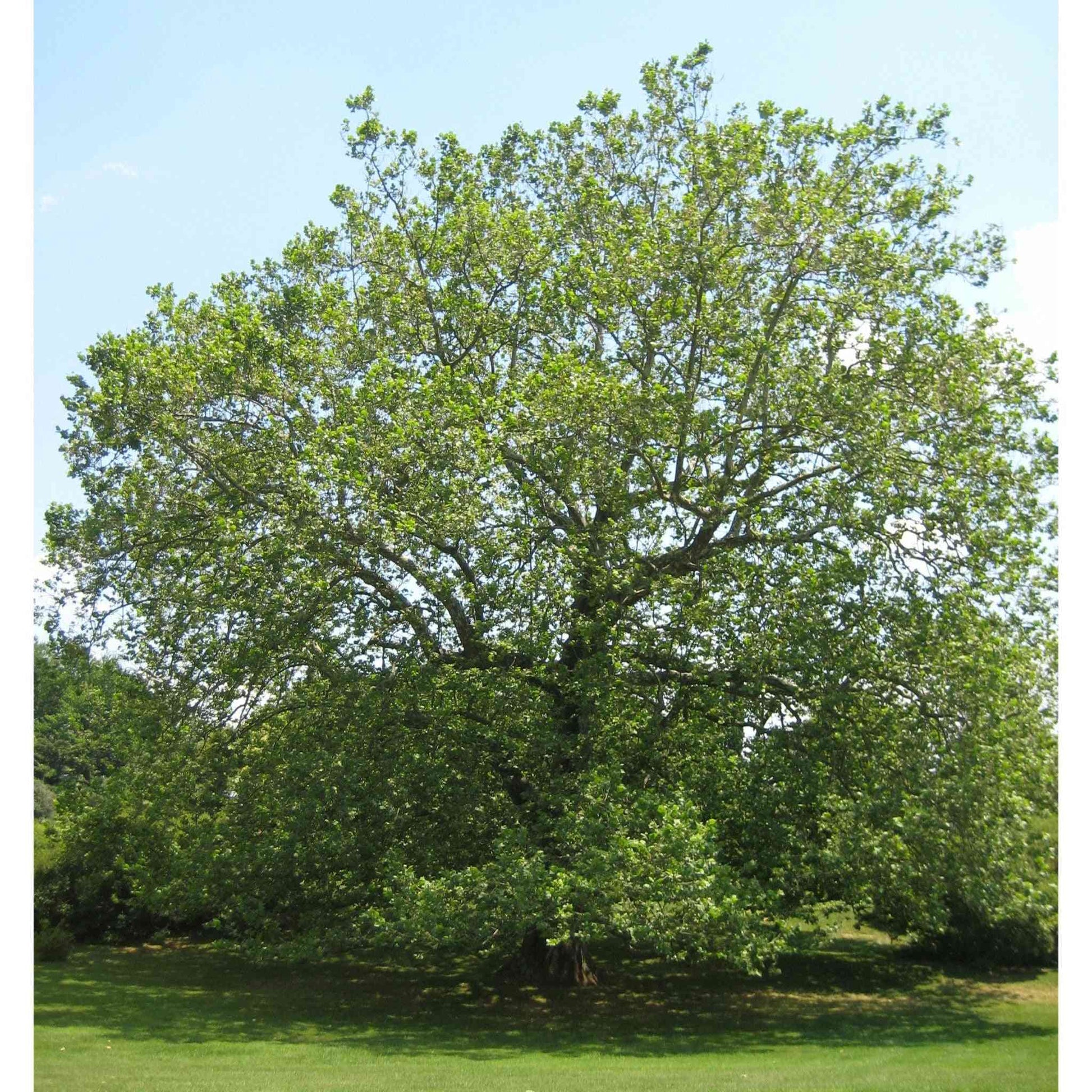
Platanus occidentalis (Sycamore)
Platanus occidentalis (Sycamore)
Mix and match eligible native plants and seed mixes. The discount applies automatically in your cart.
Subject to confirmation.
Couldn't load pickup availability
Pure Live Seed
Pure Live Seed
Seed is provided in Pure Live Seed (PLS) unless otherwise stated.
Pure Live Seed (PLS) expresses the viable seed content of a seed lot using its purity and germination or viability test results. It helps you compare seed lots and calculate how much bulk seed is needed to meet a specified PLS planting rate.
PLS weight and bag weight
PLS weight is not the same as the total weight of seed in a bag. For example, a lot with 80% purity and 75% viability contains 60% PLS: 80 × 75 ÷ 100 = 60. Supplying 10 lb PLS from that lot requires about 16.67 lb of bulk seed.
Use the current seed test and the stated basis of the mix specification. Germination calculations may include applicable hard or dormant seed. Seed-count estimates also require the number of seeds per pound; PLS alone does not provide a seed count.
What to check when buying a mix
Check whether each rate is stated in PLS pounds, bulk pounds, or a combination. A mix with both bases should not be described as having an all-PLS total.
PLS does not remove weed seeds or guarantee establishment. Review the seed label and analysis for weed content, and match site preparation, planting conditions and follow-up management to your project.
Sources: USDA NRCS, Understanding Pure Live Seed and The Importance of Seed Quality for Natural Resource Conservation.
Weight Conversions lbs. to oz.
Weight Conversions lbs. to oz.
0.01 pounds = 0.16 ounces
- 0.1 pounds = 1.6 ounces
- 0.25 pounds = 4 ounces
- 0.5 pounds = 8 ounces
- 0.75 pounds = 12 ounces
- 1.00 pounds = 16 ounces
American sycamore grows fairly quickly into a very large tree with an irregular crown. Moist ground and ample space are more important than a particular soil texture.
For Platanus occidentalis, choose full to partial sun and moist to mesic soil. Recorded habitats include bottomland woods; Mesic woods; Wooded stream and river banks; Higher swamp ground; Shaded seeps. Reported height: 60-140 ft.
Leave room for the mature branches beside paths and nearby plantings. Growth habit: broad, irregular crown in open sites; smaller, narrower crown in woods. Root structure: widely spreading, branched woody roots.
Plant specifications & ecological relationships
Key growing facts
| Sunlight | Full to partial sun |
|---|---|
| Soil moisture | Moist to mesic |
| Height | 60-140 ft |
| Bloom season | Spring |
Native landscape companions
For partial sun / light shade and mesic soil, consider these native plants alongside Platanus occidentalis:
| Companion plant | Height |
|---|---|
| Bitternut Hickory (Carya cordiformis) | 60-100 ft |
| Purple Meadow Rue (Thalictrum dasycarpum) | 3-7 ft |
| Curly-styled Wood Sedge (Carex rosea) | 8 to 36 inches |
| Northern Maidenhair Fern (Adiantum pedatum) | 1–3 ft |
These landscape suggestions combine overlapping growing needs with documented plant associations. Match soil, seasonal wetness and mature spread to your site. Remnant records are described separately under Plant communities & associates.
Show / hide ▾Growing & planting details
| Growth habit | Broad, irregular crown in open sites; smaller, narrower crown in woods |
|---|---|
| Root form | Widely spreading, branched woody roots |
| Soil pH | Published cultivation guidance lists acidic, alkaline, neutral soil conditions; no optimal numeric interval is established. |
| Cultivation hardiness zones | Zones 4a–9b (general cultivation guidance) |
| Drought tolerance | Drought tolerance reported in cultivation guidance; establishment needs and duration are not specified. |
| Deer browsing | White-tailed deer browse leaves and twigs to a limited extent. |
| Salt tolerance | None |
Plant identification & seed reference
| Botanical name | Platanus occidentalis |
|---|---|
| Other common names | sycamore; American Plane Tree; American Sycamore; Buttonball Tree; Buttonwood; Eastern Sycamore; Sycamore |
| Seed germination | USDA lists cold stratification as not required; seed-lot response may vary. |
| Plant family | Platanaceae |
| Seeds per pound — reference estimate | 192000 |
Plant characteristics
Platanus occidentalis (Sycamore) is a charming tree with its huge leaves and its brown bark giving way to a white mottled bark towards the top. An excellent tree for medium to wet soils that grow fast and lives to be up to 250 years! A common landscaping tree of parks it also works well in yards where you have the room to let this tree thrive. Commonly found in wet floodplains, swamps, and wet forests in natural areas in Illinois.
Show / hide ▾Plant communities & associates
Illinois woodland and stream communities
Middle Fork Woods, Vermilion County (1999–2002 survey). Recorded in: mesic ravine forest; perennial stream corridor.
Mesic ravine forest — selected native associates: Geranium maculatum, Phlox divaricata, Asarum canadense.
Perennial stream corridor — selected native associates: Phlox divaricata, Sorghastrum nutans, Acer saccharinum.
These plants share a recorded habitat; they were not necessarily found in the same small plot.
Other regional plant communities
These plants are named with this species in published vegetation accounts. Each list keeps its community and region; some records describe a shared vegetation type rather than neighboring plants in a measured plot. They are ecological records, not a planting recipe, and may include plants unsuitable for a particular garden.
- Floodplain forest across different flooding elevations (Illinois): Acer saccharinum.
- Mesic hardwood and bottomland forest communities (Midwestern and northern Mississippi Valley): Celtis occidentalis.
- Bottomland forest trees (Northern Forest Region): Acer saccharinum.
- Bottomland forest trees (New York): Acer saccharinum.
- Bottomland forest (Eastern North America): Ulmus spp., Fraxinus spp., Populus deltoides, Salix spp..
- Riparian trees and shrubs (Eastern North America; account synthesis): Salix nigra.
Spring Bay Fen Nature Preserve — wet-mesic floodplain forest
Surveyed in 2007, 2008 and 2011. Wet-mesic floodplain forest recorded separately from the adjoining fen. These dated records do not establish presence today.
Other native plants recorded in this surveyed community: Acer nigrum, Acer saccharinum, Agastache nepetoides, Amorpha fruticosa, Anemone canadensis, Arisaema dracontium, Arisaema triphyllum, Blephilia hirsuta, Carex blanda, Carex emoryi.
Murphy, Phillippe & Ebinger 2021, Appendix 1. Selected associates from the same community; records do not show immediate neighbors or prescribe planting ratios.
Show / hide ▾Native range & C-value
State nativity describes a broad range. Use the Chicago-region assessment for local context; a state listing does not establish county nativity.
| Wetland indicator — NWPL 2022 Midwest | FACW |
|---|---|
| C-value — Chicago region, Flora 2017 | 5 |
| Chicago-region native — Flora 2017 | Yes |
| Native range — U.S. states | Alabama; Arkansas; Connecticut; Delaware; Florida; Georgia; Illinois; Indiana; Iowa; Kansas; Kentucky; Louisiana; Maine; Maryland; Massachusetts; Michigan; Mississippi; Missouri; Nebraska; New Hampshire; New Jersey; New York; North Carolina; Ohio; Oklahoma; Pennsylvania; Rhode Island; South Carolina; Tennessee; Texas; Vermont; Virginia; West Virginia; Wisconsin |
| County nativity | Not yet verified; occurrence records do not establish nativity. |
Show / hide ▾Pollinators & wildlife
Caterpillars & other plant-feeding insects
This plant has published caterpillar host records for the butterflies and moths listed below. These are larval feeding relationships, separate from adult nectar visits. The records span a North American literature compilation and do not establish that every insect occurs locally or uses only this plant.
Butterflies & skippers
- Papilio glaucus — Eastern Tiger Swallowtail
Moths
- Ancylis divisana — Two-Toned Ancylis
- Ancylis platanana — Sycamore Leafroller
- Citheronia regalis — Royal Walnut Moth, Hickory Horned Devil
- Eacles imperialis — Imperial Moth, Imperial Spiny Caterpillar
- Ectoedemia clemensella
- Ectoedemia platanella
- Euzophera semifuneralis — American Plum Borer
- Halysidota harrisii — Harris's Tussock Moth, Sycamore Tussock Moth
- Misogada unicolor — Drab Prominent
- Pococera militella — Sycamore Webworm
- Synanthedon resplendens — Sycamore Borer Moth
Leafhopper hosts
The INHS revision lists this plant as a host for the following Eratoneura leafhoppers. These plant-feeding insects are distinct from caterpillars and flower visitors.
- Eratoneura arta
- Eratoneura bella
- Eratoneura hymettana
- Eratoneura ingrata
- Eratoneura lawsoni
- Eratoneura morgani
- Eratoneura torella
- Eratoneura usitata
Host names follow the 2010 taxonomic revision. Its distribution records do not establish a host observation at your planting site.
Show / hide ▾Frequently asked questions
What are the ideal growing conditions for Sycamore?
Light: Full to partial sun. Soil moisture: Moist to mesic.
How do I germinate and establish Sycamore from seed?
USDA lists cold stratification as not required; seed-lot response may vary.
Is Sycamore deer and herbivore resistant?
White-tailed deer browse leaves and twigs to a limited extent. Even plants described as resistant may be browsed. Use physical protection where deer damage is a concern.
When should I expect Sycamore to bloom?
Typical flowering period: Spring. Timing varies with location and weather.
Show / hide ▾Sources & ecological notes
Landscape companion selection: Natural Communities compared the growing requirements shown on these species pages with selected source records: Mesic ravine forest — East-central Illinois; Wet-mesic floodplain forest — Illinois River valley. The shortlist is a planting-design inference. A shared record does not establish adjacency, identical soil requirements, local seed origin, or a tested planting combination. Regional synthesis records retain their documented focal-to-associate scope.
Illinois woodland records: Larimore, Phillippe & Ebinger (2008), Middle Fork Woods flora, Appendix I. © 2008 University of Illinois Board of Trustees, CC BY 4.0. Habitat records transcribed, selected and linked to catalog names by Natural Communities. Survey: 1999–2002.
Native range & ecological ratings: Flora of the Chicago Region (2017), via Universal FQA; USACE Chicago FQA (2017); Kew WCVP / Plants of the World Online; USACE National Wetland Plant List.
Growing conditions & other references: Illinois Wildflowers, John Hilty; USDA Forest Service: Acer saccharinum; USDA Forest Service: Celtis occidentalis; USDA Forest Service: Platanus occidentalis; USDA Forest Service: Salix nigra; USDA NRCS PLANTS; USDA Forest Service: species review; NC State Extension Plant Toolbox.
Wildlife records: Shropshire & Tallamy: caterpillar hosts (2025); INHS: Eratoneura leafhopper host records.
Native range does not identify the origin of the seed or plants offered. Community and wildlife records apply to the locations and conditions described.
Research notes & credits
USACE/ERDC fqadata — Chicago Region FQA 2017. Herman, B., Sliwinski, R. & Whitaker, S. (2017), Chicago Region FQA Calculator; distributed by USACE/ERDC in fqadata under CC0. Values may differ from Flora of the Chicago Region (2017). CC0 dedication. Retained for comparison; the displayed C-value follows Flora database 80.
Range data: World Checklist of Vascular Plants, Royal Botanic Gardens, Kew; 4 June 2026 release, accessed 7 September 2026. © The Trustees of the Royal Botanic Gardens, Kew. CC BY 3.0; selected and reformatted. Kew cannot warrant the quality or accuracy of these data. This use has no Kew endorsement.
Caterpillar host records: Shropshire, K.J. & Tallamy, D.W. (2025), Lepidoptera of North America, Supplement 1. Contains information from this database made available under the Open Database License (ODbL 1.0). Natural Communities selected species-level records and screened source qualifications. The complete selection and transformation instructions for this page are available below under the same license.
Illinois Natural History Survey Bulletin — Eratoneura paper. Dietrich, C.H. & Dmitriev, D.A. (2010), Review of the Species of New World Erythroneurini, IV. Genus Eratoneura. Copyright University of Illinois Board of Trustees. CC BY 4.0; selected host records summarized and reformatted. No endorsement implied. CC BY 4.0.
Flora rating attribution: Kenneth Johnson (2018), Flora of the Chicago Region UFQA Database, following Gerould Wilhelm and Laura Rericha (2017), Flora of the Chicago Region: A Floristic and Ecological Synthesis. Individual rating facts are presented with original commentary; the calculator’s software license is not treated as a license for the underlying Flora publication.
Detailed record links: Eratoneura arta; Eratoneura bella; Eratoneura hymettana; Eratoneura ingrata; Eratoneura lawsoni; Eratoneura morgani; Eratoneura torella; Eratoneura usitata; Illinois Natural History Survey Bulletin — Eratoneura paper.
Caterpillar research records
Plant: Platanus occidentalis
Record scope: Host literature synthesis; no county nativity or local insect occurrence inferred.
Shropshire & Tallamy (2025) · Original research dataset · Reuse license: ODbL-1.0
| Plant names in the source | Source insect record IDs |
|---|---|
| Platanus occidentalis | 200845, 200861, 203012, 204360, 204381, 204386, 205865, 206605, 208416, 209314, 210280, 212172 |
How these records were selected
To reproduce this selection, use the “UDELep May 2025” worksheet in the original research dataset.
- Match the insect record IDs above to column A (UDLepID). Within each table row, pair every listed insect ID with every listed source plant name.
- Use the first two words in column H for the insect’s scientific name, column E for its common name, and column AB for its source category.
- Treat the selected pairs as reported caterpillar host records. Keep all other source fields unchanged and outside this selected table. Include no other rows or host pairs.
- Group butterflies and skippers together, and the other categories as moths. Retain the source’s exotic-category labels and sort display names by scientific insect name.
Growing guidance: Illinois Extension — Keeping deer out of the yard and garden. Selected facts in original wording. General deer advice is not a species resistance rating.
Additional community records: Murphy, Phillippe & Ebinger (2021), Spring Bay Fen flora and vegetation. Selected facts and taxonomic links; source spellings and historical survey dates retained.
Plant Shipping & Care
Plant Shipping & Care
We want to ensure that our customers get what they want, a native backyard oasis. To do that, we need to follow a few simple guidelines and give you some information and pointers to make sure you get your plants delivered in a healthy state.
As a reminder, you will receive an email to confirm your pickup or shipping window just before the plants are ready. See Order Fulfillment below for seasonal fulfillment windows.
Choices to Receive Your Plants & Accessories
- Website orders: Seed, plugs and bare-root plants offered for shipping are shipped to your address. Shipping charges are calculated at checkout.
- Container trees and shrubs: Some #3 and #5 container options are offered for scheduled pickup only. Check the selected product option and the cart pickup instructions before ordering. Pickup and shipped items require separate orders where indicated in the cart.
- Wholesale orders: Delivery and pickup are arranged separately according to the order, supplier yard and location. Wholesale pickup is free.
- Pickup locations and dates are confirmed by email. Please wait for confirmation before traveling to a pickup site. Our offices are not retail stores or nursery pickup locations.
Order Fulfilment - When Your Plants or Other Items Will Be Ready
We take orders all year long and seed is shipped all year, but we only provide the plants to you in certain fulfillment windows to ensure healthy plants.
Wholesale Orders
- Shipped or are Ready For Pick Up As Requested.
Retail & Website Orders
- Seed Typically Ships Out Within One Week Of Order All Year Long
- Typically, single species flats ship when ready, sometimes as soon as early to mid-April (depends on weather) through early-October.
- Mixed species kits are batched and shipped as indicated on the product page.
- If a plant order is placed while outside of the plant fulfillment window your plants will be reserved through your payment, however, the order will not be fulfilled and shipped until the following spring. We don't want to provide you plants when they won't be happy during the cold winter months.
- Early in the spring and later in the fall certain species may be dormant or partially dormant with brown leaves, however they will return to grow healthy next growing season.
- Your order may arrive in several different shipments.
- If certain plants within an order will not be available until a later date, we may choose to hold the full order until all are ready. In certain circumstances, we may choose to send them in two separate shipments
- Fulfillment is always dependent upon plant availability. We try our best but sometimes plants do not overwinter well and perish. If a plant is on back order you will receive an email indicating the estimated shipping date. If we can not provide the plant we will first notify you and give you an option of substitution or a refund of that individual species.
- Plants are typically only packaged and shipped on Mondays to ensure they do not sit in the harsh delivery facility for extended periods of time over the weekend. You will receive a confirmation email once your delivery has been shipped and to estimate your delivery date.
- Apparel & accessories are ready typically within one to two weeks. See product page for holiday shipping.
Where We Ship

What to Expect When Receiving Your Delivery
- Your plants will be packaged with the utmost care
- We will need to cut back certain plants prior to shipping. This seems counter-intuitive, however, the fewer leaves the less water the plants can lose during shipping, resulting in healthier plants for you. This also enables the plants to fit within the protective packaging and shipped safely.
Shipments
- Larger plant shipments will look similar to the picture below with a tray of your plants and a cardboard box to protect them during shipping.

What to Do With Your Plants After Receiving Your Delivery
- Unpack your order IMMEDIATELY
- Inspect for damage and report any issues immediately to Natives@NaturalCommunities.net
- Water your plants
- Install your plants as quickly as possible and water the entire garden area thoroughly
- If you cannot install your plants immediately
- Some plants may not be in a container, put them into some kind of a container such as a paper cup with loose soil until installation
- Make sure each plant is receiving the appropriate amount of light.
- Continue to water daily each morning and possibly again in the afternoon
- No additional fertilizer is needed

Seed Shipping & Care
Seed Shipping & Care
Seed ships all year and typically ships within a week of an order being placed.
We have attempted to put together some basic information regarding native seed installation, establishment, and maintenance. We hope you find it helpful. If you need further assistance on native seed establishment, please schedule a free consolation call here.
Consultation Services
Ecosystem Restoration Considerations
Native Seed Establishment Best Management Practices
Native Seed Stratification Best Management Practices
Solving a Site Problem? Get Expert Advice + Get Store Credit
Whether you're fighting severe erosion, replacing invasive species, designing a pollinator haven, or seeding large acreage, choosing the wrong species wastes time and money. Talk 1-on-1 with a restoration ecologist to map out the exact species, plug counts, or seed mixes for your soil and goals. Book a consultation and get all or a portion credited directly back to your order.