


Savanna & Woodland Native Seed Mix
Savanna & Woodland Native Seed Mix
Subject to confirmation.
Couldn't load pickup availability
Quick View - Seed Mix Specifications
Quick View - Seed Mix Specifications
Seeding Rate: 14.1 lb/acre (81.5 seeds/square foot)
| Common Name | Scientific Name | % of Mix | Seeds/ft2 | Total | ||||||||||
|
Grasses Sideoats Grama |
Bouteloua curtipendula | 15.07% | 4.7 | 2.125 PLS lb | ||||||||||
| Canada Wild Rye | Elymus canadensis | 21.28% | 5.7 | 3.000 PLS lb | ||||||||||
| Silky Wild Rye | Elymus villosus | 7.09% | 2.0 | 1.000 PLS lb | ||||||||||
| Virginia Wild Rye | Elymus virginicus | 21.28% | 4.6 | 3.000 PLS lb | ||||||||||
| Fowl Manna Grass | Glyceria striata | 0.60% | 5.0 | 0.084 PLS lb | ||||||||||
| Bottlebrush Grass | Elymus hystrix | 3.55% | 0.6 | 0.500 PLS lb | ||||||||||
| Path Rush | Juncus tenuis | 0.11% | 5.7 | 0.016 PLS lb | ||||||||||
| Little Bluestem | Schizachyrium scoparium | 2.66% | 2.1 | 0.375 PLS lb | ||||||||||
|
Sedges & Rushes Plains Oval Sedge |
Carex brevior | 3.97% | 6.0 | 0.560 PLS lb | ||||||||||
| Long-beaked Sedge | Carex sprengelii | 3.12% | 1.6 | 0.440 PLS lb | ||||||||||
|
Forbs Common Yarrow |
Achillea millefolium | 0.28% | 2.6 | 0.040 PLS lb | ||||||||||
| Anise Hyssop | Agastache foeniculum | 0.99% | 4.6 | 0.140 PLS lb | ||||||||||
| Wild Garlic | Allium canadense | 0.85% | 0.0 | 0.120 PLS lb | ||||||||||
| Nodding Onion | Allium cernuum | 0.71% | 0.3 | 0.100 PLS lb | ||||||||||
| Tall Thimbleweed | Anemone virginiana | 0.14% | 0.2 | 0.020 PLS lb | ||||||||||
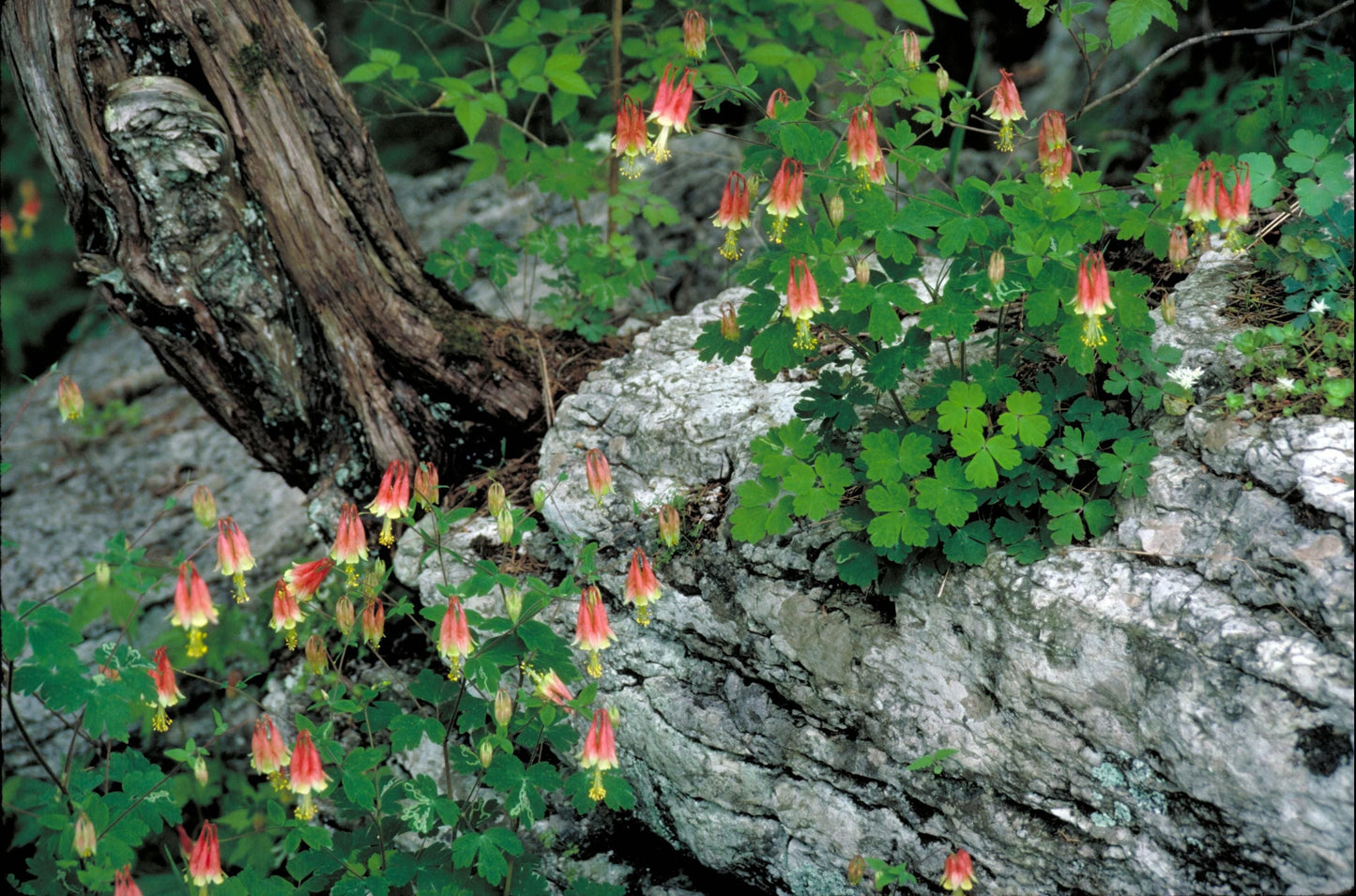
| Wild Columbine | Aquilegia canadensis | 0.28% | 0.6 | 0.040 PLS lb | ||||||||||
| Common Milkweed | Asclepias syriaca | 1.13% | 0.2 | 0.160 PLS lb | ||||||||||
| Calico Aster | Symphyotrichum lateriflorum | 0.07% | 0.9 | 0.010 PLS lb | ||||||||||
| Panicled Aster | Symphyotrichum lanceolatum | 0.07% | 0.6 | 0.010 PLS lb | ||||||||||
| Tall Bellflower | Campanula americana | 0.07% | 0.6 | 0.010 PLS lb | ||||||||||
| Tall Coreopsis | Coreopsis tripteris | 0.57% | 0.4 | 0.080 PLS lb | ||||||||||
| Purple Coneflower | Echinacea purpurea | 3.40% | 1.2 | 0.480 PLS lb | ||||||||||
| Sweet Joe Pye Weed | Eutrochium purpureum | 1.13% | 2.5 | 0.160 PLS lb | ||||||||||
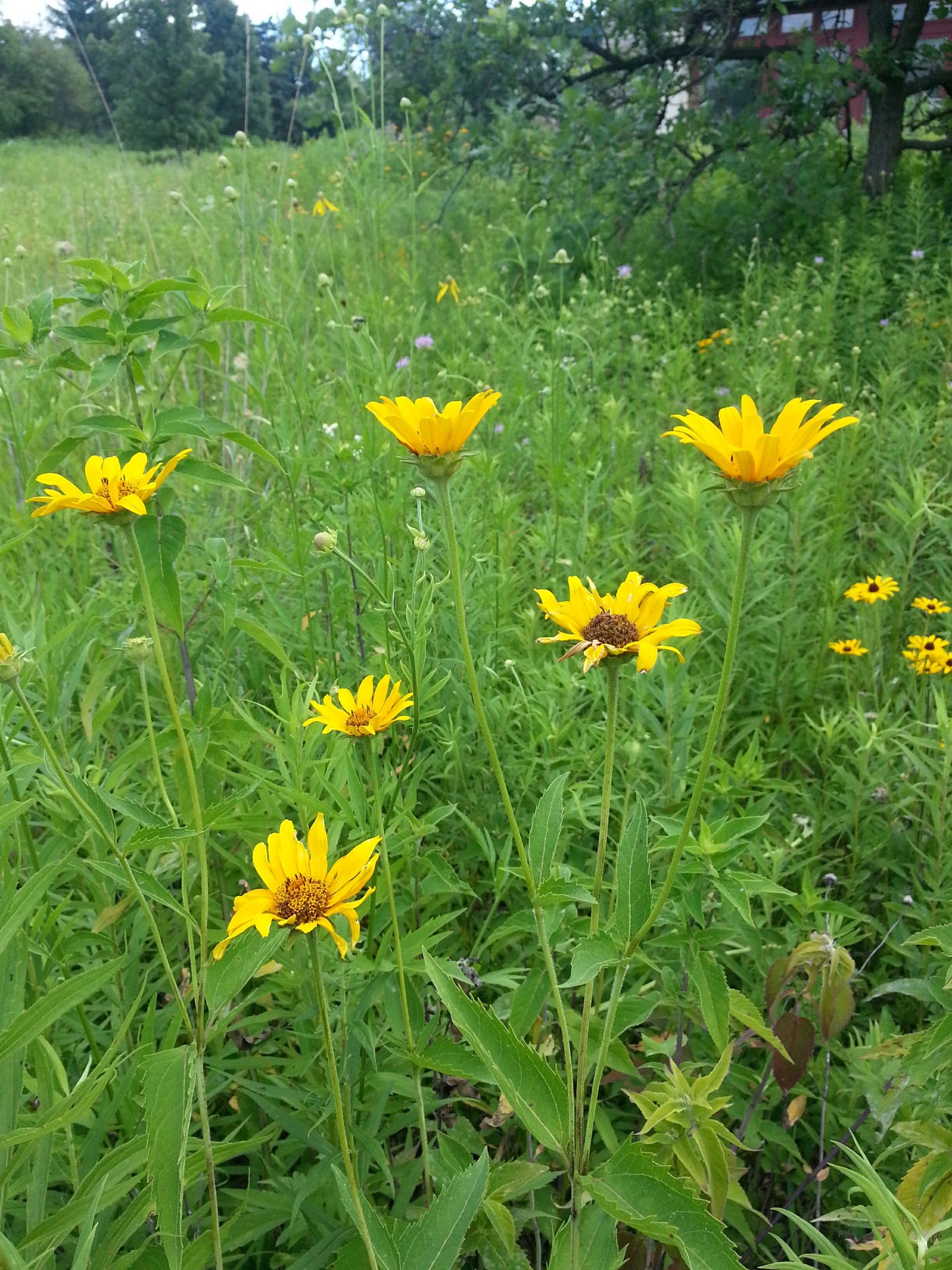
| Ox-eye Sunflower | Heliopsis helianthoides | 3.55% | 1.2 | 0.500 PLS lb | ||||||||||
| Stiff Sunflower | Helianthus pauciflorus | 0.07% | 0.0 | 0.010 PLS lb | ||||||||||
| False Boneset | Brickellia eupatorioides | 0.28% | 0.5 | 0.040 PLS lb | ||||||||||
| Wild Bergamot | Monarda fistulosa | 1.42% | 5.1 | 0.200 PLS lb | ||||||||||
| Sweet Cicely | Osmorhiza claytonii | 0.28% | 0.0 | 0.040 PLS lb | ||||||||||
| Foxglove Beardtongue | Penstemon digitalis | 0.85% | 5.7 | 0.120 PLS lb | ||||||||||
| Solomon's Seal | Polygonatum biflorum | 0.28% | 0.0 | 0.040 PLS lb | ||||||||||
| Black-eyed Susan | Rudbeckia hirta | 1.12% | 5.3 | 0.158 PLS lb | ||||||||||
| Late Figwort | Scrophularia marilandica | 0.43% | 3.7 | 0.060 PLS lb | ||||||||||
| Solomon's Plume | Maianthemum racemosum | 0.85% | 0.0 | 0.120 PLS lb | ||||||||||
| Ohio Spiderwort | Tradescantia ohiensis | 0.85% | 0.4 | 0.120 PLS lb | ||||||||||
| Culver's Root | Veronicastrum virginicum | 0.14% | 5.9 | 0.020 PLS lb | ||||||||||
|
Substitutions may be made based on availability at the time of order. |
||||||||||||||
Pure Live Seed
Pure Live Seed
Seed is provided in Pure Live Seed (PLS) unless otherwise stated.
Pure Live Seed (PLS) expresses the viable seed content of a seed lot using its purity and germination or viability test results. It helps you compare seed lots and calculate how much bulk seed is needed to meet a specified PLS planting rate.
PLS weight and bag weight
PLS weight is not the same as the total weight of seed in a bag. For example, a lot with 80% purity and 75% viability contains 60% PLS: 80 × 75 ÷ 100 = 60. Supplying 10 lb PLS from that lot requires about 16.67 lb of bulk seed.
Use the current seed test and the stated basis of the mix specification. Germination calculations may include applicable hard or dormant seed. Seed-count estimates also require the number of seeds per pound; PLS alone does not provide a seed count.
What to check when buying a mix
Check whether each rate is stated in PLS pounds, bulk pounds, or a combination. A mix with both bases should not be described as having an all-PLS total.
PLS does not remove weed seeds or guarantee establishment. Review the seed label and analysis for weed content, and match site preparation, planting conditions and follow-up management to your project.
Sources: USDA NRCS, Understanding Pure Live Seed and The Importance of Seed Quality for Natural Resource Conservation.
Begin restoring an open oak savanna or sunny woodland with a native mix selected for partial-sun conditions. It can provide a foundation after invasive brush removal or add diversity where enough light reaches the ground for seedlings to establish.
Assess canopy shade and moisture before ordering. More seed alone does not replace buckthorn control or follow-up stewardship. Some woodland plants are difficult to establish from seed, so supplementing with suitable sedges and woodland flower plugs can broaden the planting. Pennsylvania sedge is one option to consider where site conditions fit.
Site conditions
Light: Mostly sunny to partly shaded open woodland.
Soil moisture: Wet-mesic to dry-mesic conditions, matched to the chosen species.
Coverage sizes and 1,000 sq ft specifications
Choose a 1,000 sq ft seed packet for a small-area planting, or select 1/4 Acre, 1/2 Acre or 1 Acre for a larger project. All four sizes use this same published mix formula—not a separate packet recipe.
The 1,000 sq ft package covers, for example, a 20 ft × 50 ft prepared planting area at the published rate of 14.1 lb pure live seed (PLS) per acre. Its calculated allocation is approximately 5.18 oz PLS (146.82 g PLS). The published specification lists 35 species and estimates 81.5 seeds per square foot at that rate.
| Package size | Planting area | PLS equivalent |
|---|---|---|
| 1,000 sq ft | 1,000 sq ft | Approx. 5.18 oz PLS |
| 1/4 Acre | 10,890 sq ft | 3.525 lb PLS |
| 1/2 Acre | 21,780 sq ft | 7.050 lb PLS |
| 1 Acre | 43,560 sq ft | 14.10 lb PLS |
PLS expresses viable seed content, not the gross weight of a bag or its shipping weight. Actual packaged seed weight depends on the seed lot's purity and germination. Coverage is calculated from the published seeding rate; it is not a guarantee of establishment. Species and proportions may change with availability; consult the current lot label and mix specification.
Compare site conditions in our Small-Area Native Seed Mixes collection.
Blend ingredients
The following ingredients are listed in the published mix specification. Confirm the current formulation before ordering. Listed proportions follow the source and are not a claim about percentage by seed count.
| Species | Published proportion |
|---|---|
| Bouteloua curtipendula | 15.07% |
| Elymus canadensis | 21.28% |
| Elymus villosus | 7.09% |
| Elymus virginicus | 21.28% |
| Glyceria striata | 0.60% |
| Elymus hystrix | 3.55% |
| Juncus tenuis | 0.11% |
| Schizachyrium scoparium | 2.66% |
| Carex brevior | 3.97% |
| Carex sprengelii | 3.12% |
| Achillea millefolium | 0.28% |
| Agastache foeniculum | 0.99% |
| Allium canadense | 0.85% |
| Allium cernuum | 0.71% |
| Anemone virginiana | 0.14% |
| Aquilegia canadensis | 0.28% |
| Asclepias syriaca | 1.13% |
| Symphyotrichum lateriflorum | 0.07% |
| Symphyotrichum lanceolatum | 0.07% |
| Campanula americana | 0.07% |
| Coreopsis tripteris | 0.57% |
| Echinacea purpurea | 3.40% |
| Eutrochium purpureum | 1.13% |
| Heliopsis helianthoides | 3.55% |
| Helianthus pauciflorus | 0.07% |
| Brickellia eupatorioides | 0.28% |
| Monarda fistulosa | 1.42% |
| Osmorhiza claytonii | 0.28% |
| Penstemon digitalis | 0.85% |
| Polygonatum biflorum | 0.28% |
| Rudbeckia hirta | 1.12% |
| Scrophularia marilandica | 0.43% |
| Maianthemum racemosum | 0.85% |
| Tradescantia ohiensis | 0.85% |
| Veronicastrum virginicum | 0.14% |
Planting and establishment
Prepare the site and manage existing weeds before seeding. Germination requirements vary among the ingredients. Some native species benefit from cold, moist conditions; follow the mix-specific sowing guidance rather than treating every ingredient the same. For background, read native seed stratification guidance.
Explore Pennsylvania sedge and plants for shaded areas for appropriate supplemental plantings.
Ordering details
Available sizes: 1,000 sq ft; 1/4 Acre; 1/2 Acre; 1 Acre. Select your coverage size above.
Species substitutions may be made based on availability. Confirm the current formulation and seed-quality basis if your project requires an exact specification. All seed sales are final and cannot be returned.
Shipping & Care
Shipping & Care
Seed ships all year and typically ships within a week of an order being placed.
We have attempted to put together some basic information regarding native seed installation, establishment, and maintenance. We hope you find it helpful. If you need further assistance on native seed establishment, please schedule a free consolation call here.
Consultation Services
Ecosystem Restoration Considerations
Native Seed Establishment Best Management Practices
Native Seed Stratification Best Management Practices
Solving a Site Problem? Get Expert Advice + Get Store Credit
Whether you're fighting severe erosion, replacing invasive species, designing a pollinator haven, or seeding large acreage, choosing the wrong species wastes time and money. Talk 1-on-1 with a restoration ecologist to map out the exact species, plug counts, or seed mixes for your soil and goals. Book a consultation and get all or a portion credited directly back to your order.