
-

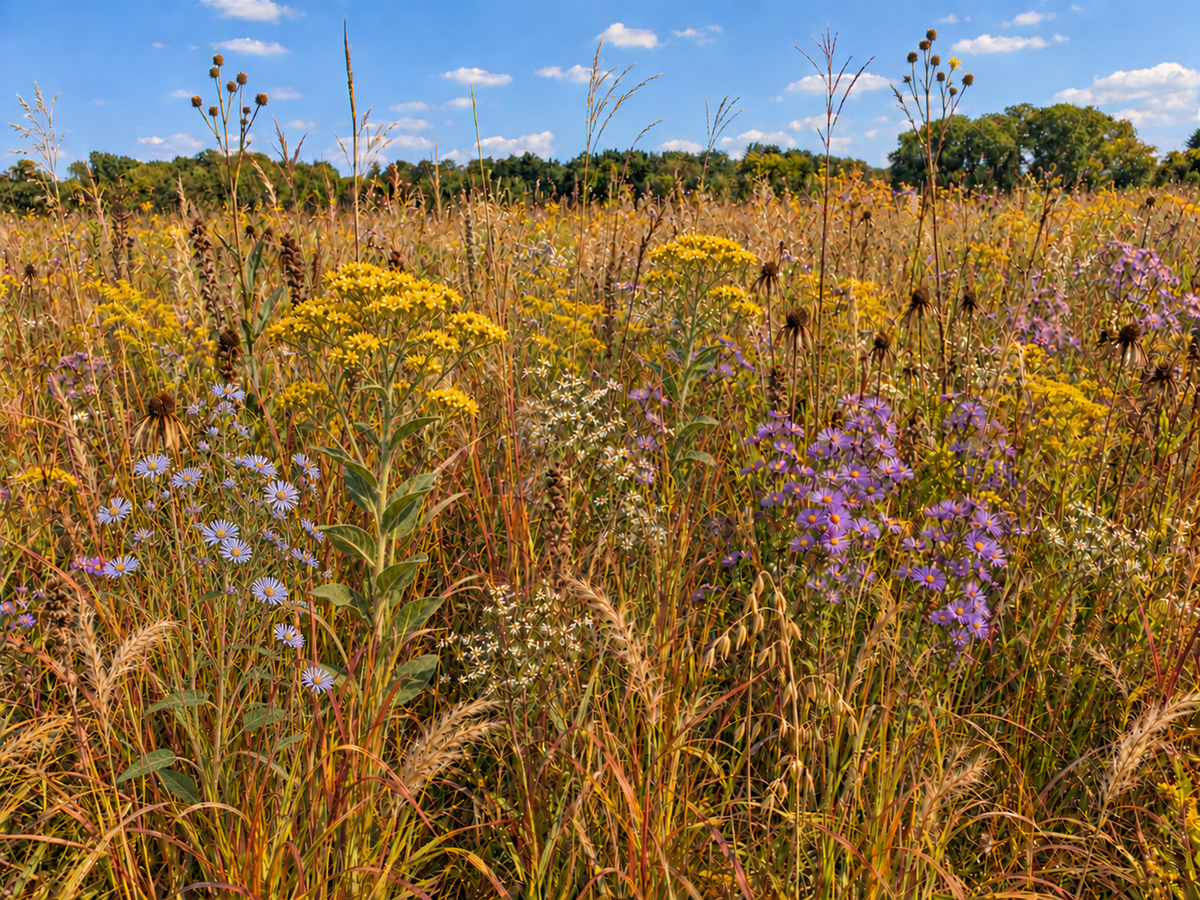
Core + Expanded + Maximum Diversity: representative late-summer view of all three components. Add-ons are sold separately.
-

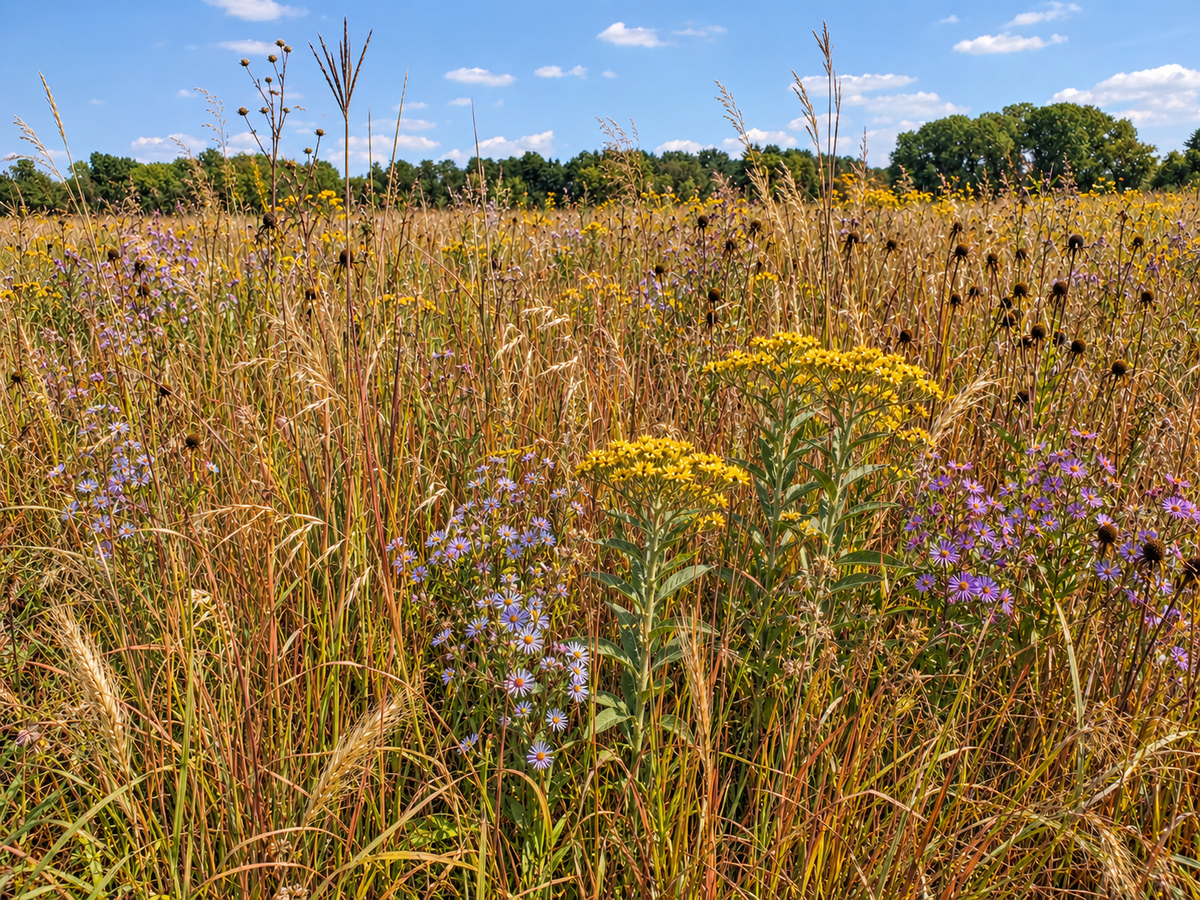
Core foundation: representative late-summer view.
-

Core + Expanded Diversity: representative late-summer view. Expanded is a separate add-on.
-

Core foundation: representative fall view.
-

Core + Expanded Diversity: representative fall view. Expanded is a separate add-on.
-

Core + Expanded + Maximum Diversity: representative fall view of all three components. Add-ons are sold separately.


Images are representative of seasonal appearance. Actual results vary with site conditions, establishment and management.
Mixed-Height Native Prairie Seed Mix
Mixed-Height Native Prairie Seed Mix
For sunny sites with average soil moisture, including somewhat dry areas and pockets that stay slightly moist.
Your selection: species & seed quantities
Your selection: species & seed quantities
Your selected mix:
Combined specification per acre*:
Total PLS seed for your selected coverage and package quantity:
Species rows show the selected components only. Values are rounded supplier figures per acre; combined headline totals may differ slightly from summed rows. PLS is viable seed content, not gross bag weight.
Seed + Warrior project planner
Seed + Warrior project planner
Choose a seed mix on its product page to use its saved recommendations.
Edit these two numbers, then calculate.
Open a seed mix to start with its product and coverage selection.
Recommendation alignment is an editorial planning guide, not a success probability or a scientific seed-to-plug equivalence.
Plant roles, quantities & planning details
The seed mix supplies broad base coverage. Place Warrior plugs intentionally in suitable microsites; the per-acre density applies only to the targeted treatment area, not an instruction to space plants evenly across the site.
Below 50% seed stays red; 50% to below 100% stays yellow. Extra diversity or plugs never offsets underseeding. For a tiered mix, full-rate Core starts light green, Core + Expanded reaches its upper end, and Core + both add-ons starts the dark-green optimal zone. Verified, appropriate Warrior density raises alignment smoothly within the applicable diversity band. Extra seed above 100% adds no rating credit.
Flywheel Ecology: site investigation through ongoing monitoring
Read the current mix specification
Detailed seed quantities & custom-quote calculator
Quick View: Mixed-Height Native Prairie Seed Mix specifications*
Quick View: Mixed-Height Native Prairie Seed Mix specifications*
Mixed-Height Native Prairie Seed Mix Specifications
Seeding rate: 12.569 PLS lb/acre (110.71 seeds/square foot). This component contains 30 species.
| Common name | Scientific name | % of mix by PLS weight | Seeds/ft² | PLS lb/acre |
|---|---|---|---|---|
| Big Bluestem | Andropogon gerardii | 1.989% | 0.92 | 0.250 |
| Sideoats Grama | Bouteloua curtipendula | 5.967% | 1.65 | 0.750 |
| Canada Wild Rye | Elymus canadensis | 15.912% | 3.82 | 2.000 |
| Virginia Wild Rye | Elymus virginicus | 15.912% | 3.09 | 2.000 |
| Switchgrass | Panicum virgatum | 1.989% | 1.29 | 0.250 |
| Little Bluestem | Schizachyrium scoparium | 27.847% | 19.28 | 3.500 |
| Indiangrass | Sorghastrum nutans | 0.398% | 0.22 | 0.050 |
| Prairie Wedgegrass | Sphenopholis obtusata | 1.825% | 11.96 | 0.229 |
| Path Rush | Juncus tenuis | 0.433% | 20.00 | 0.054 |
| Common Yarrow | Achillea millefolium | 0.040% | 0.33 | 0.005 |
| Common Milkweed | Asclepias syriaca | 0.080% | 0.01 | 0.010 |
| Butterfly Milkweed | Asclepias tuberosa | 0.199% | 0.04 | 0.025 |
| Canada Milkvetch | Astragalus canadensis | 1.989% | 1.56 | 0.250 |
| Partridge Pea | Chamaecrista fasciculata | 1.989% | 0.25 | 0.250 |
| Tall Coreopsis | Coreopsis tripteris | 0.080% | 0.05 | 0.010 |
| Purple Prairie Clover | Dalea purpurea | 7.956% | 6.61 | 1.000 |
| Showy Tick Trefoil | Desmodium canadense | 0.636% | 0.16 | 0.080 |
| Pale Purple Coneflower | Echinacea pallida | 1.193% | 0.29 | 0.150 |
| Rattlesnake Master | Eryngium yuccifolium | 0.477% | 0.17 | 0.060 |
| Cream Gentian | Gentiana flavida | 0.080% | 0.51 | 0.010 |
| Ox-eye Sunflower | Heliopsis helianthoides | 0.995% | 0.29 | 0.125 |
| Wild Bergamot | Monarda fistulosa | 2.387% | 7.71 | 0.300 |
| Foxglove Beardtongue | Penstemon digitalis | 1.392% | 8.36 | 0.175 |
| Slender Mountain Mint | Pycnanthemum tenuifolium | 0.119% | 2.08 | 0.015 |
| Yellow Coneflower | Ratibida pinnata | 3.182% | 4.41 | 0.400 |
| Black-eyed Susan | Rudbeckia hirta | 2.984% | 12.67 | 0.375 |
| Stiff Goldenrod | Solidago rigida | 0.278% | 0.53 | 0.035 |
| New England Aster | Symphyotrichum novae-angliae | 0.159% | 0.48 | 0.020 |
| Blue Vervain | Verbena hastata | 0.318% | 1.37 | 0.040 |
| Golden Alexanders | Zizia aurea | 1.193% | 0.61 | 0.150 |
Supplier quote NATUR26145, received October 6, 2026. Rates are PLS weights, not physical bulk packet weights. Displayed rows are rounded. Availability and substitutions are reviewed at order time; this is not a current stock guarantee.
Pure Live Seed
Pure Live Seed
Seed is provided in Pure Live Seed (PLS) unless otherwise stated.
Pure Live Seed (PLS) expresses the viable seed content of a seed lot using its purity and germination or viability test results. It helps you compare seed lots and calculate how much bulk seed is needed to meet a specified PLS planting rate.
PLS weight and bag weight
PLS weight is not the same as the total weight of seed in a bag. For example, a lot with 80% purity and 75% viability contains 60% PLS: 80 × 75 ÷ 100 = 60. Supplying 10 lb PLS from that lot requires about 16.67 lb of bulk seed.
Use the current seed test and the stated basis of the mix specification. Germination calculations may include applicable hard or dormant seed. Seed-count estimates also require the number of seeds per pound; PLS alone does not provide a seed count.
What to check when buying a mix
Check whether each rate is stated in PLS pounds, bulk pounds, or a combination. A mix with both bases should not be described as having an all-PLS total.
PLS does not remove weed seeds or guarantee establishment. Review the seed label and analysis for weed content, and match site preparation, planting conditions and follow-up management to your project.
Sources: USDA NRCS, Understanding Pure Live Seed and The Importance of Seed Quality for Natural Resource Conservation.
A 30-species foundation for a layered native prairie. For sunny sites with average soil moisture, including somewhat dry areas and pockets that stay slightly moist. The canopy varies in height. Choose the foundation alone or add the separate Expanded and Maximum components for up to 73 species.
Images are representative of seasonal appearance. Actual results vary with site conditions, establishment and management.
Wild ryes and sideoats grama can provide early cover while slower prairie plants establish. Little bluestem forms the intended long-term grass foundation, with accents of taller grasses.
Choose the diversity that fits your project
| Selection | What you receive | Species included |
|---|---|---|
| Foundation only | The 30-species Mixed-Height foundation | 30 |
| Foundation + Expanded | Foundation plus 21 additional species | 51 |
| Foundation + Maximum | Foundation plus the separate 22-species Maximum component | 52 |
| Foundation + Expanded + Maximum | Foundation and both distinct add-ons | 73 |
| Expanded only | The separate 21-species supplement | 21 |
| Maximum only | The separate 22-species supplement | 22 |
| Expanded + Maximum | Both supplements, without the foundation | 43 |
Expanded and Maximum are independently selectable, additional seed components. Maximum contains its own 22 species; Expanded and the foundation remain separate components. Match coverage areas when ordering together. The complete three-component formula totals 14.469 PLS lb/acre and 138.40 seeds/sq ft.
Expanded Diversity Add-On · Maximum Diversity Add-On
Site conditions
Light and setting: Plan for an open, sunny prairie site. Evaluate shade, drainage and existing vegetation before choosing the mix.
Soil moisture: The recipe brings together plants with different moisture preferences. Match the overall plan to mesic or dry-mesic prairie conditions, and assess wetter or very dry areas separately. Some ingredients favor moister pockets; others favor lean, well-drained ground.
Height: A variable canopy with lower layers and taller accents. Neither the Mixed-Height foundation nor the shared add-ons has a fixed height ceiling.
Coverage sizes and 1,000 sq ft specifications
Choose a 1,000-sq-ft packet, a 1/4-acre package, or one complete package from 0.5 to 5.0 acres in 0.1-acre steps. For example, choose 0.7 acre for a 30,492-sq-ft planting. Match coverage areas when combining components. One acre equals 43,560 sq ft; 1,000 sq ft is approximately 0.02296 acre. The table below shows reference quantities for this component. Request a quote for a larger project.
The recipe is scaled by planting area. The 1,000-sq-ft packet covers an area such as 20 by 50 feet at the published rate. The reference sizes below show the PLS quantity for this component only; adding diversity components adds their separate seed quantities.
| Package size | Planting area (sq ft) | PLS equivalent (lb) |
|---|---|---|
| 1,000 sq ft | 1,000 | 0.2885 |
| 1/4 Acre | 10,890 | 3.1423 |
| 0.5 Acre | 21,780 | 6.2845 |
| 1.0 Acre | 43,560 | 12.5690 |
PLS expresses viable seed content, not gross bag or shipping weight. Actual bulk weight depends on lot purity and germination. Seed counts and PLS weights do not predict mature plant cover. Rounded rows may not add precisely to the stated component total.
Blend ingredients
30 species; 12.569 PLS lb/acre; 110.71 seeds/sq ft. Quoted proportions are by PLS weight, not mature cover.
Meet the standout plants in Core
Meet the standout plants in Core
Nature thrives on diversity. These foundation species bring changing color, different flower forms and food for wildlife as the planting develops.
Showy flowers with a purpose
- Butterfly Milkweed brings bright orange summer flowers and leaves that feed monarch caterpillars.
- Purple Prairie Clover adds purple flower spikes for bees. This native legume partners with bacteria in its root nodules to fix nitrogen.
- Foxglove Beardtongue offers white tubular flowers visited by bees and hummingbirds.
Early color, summer fragrance and late detail
- Black-eyed Susan can bring showy yellow flowers early in a planting's establishment, sometimes in the first year, while longer-lived prairie plants develop.
- Wild Bergamot and Slender Mountain Mint bring aromatic foliage and flowers for pollinators. Their leaves have been used in herbal teas; this seed mix is sold for planting.
- Cream Gentian adds a compact plant with cream-colored, tubular flowers in late summer.
Autumn nectar and winter texture
- Stiff Goldenrod and New England Aster offer late-season nectar for monarchs during their autumn migration toward Mexico.
- Little Bluestem carries blue-green summer foliage into copper and bronze autumn color. Standing stems add winter texture and wildlife cover when retained.
Flowering, establishment and wildlife use vary with site, weather and management. Milkweed host plants are one part of monarch habitat, alongside nectar flowers and other habitat needs.
Additional references: beardtongue · wild bergamot · slender mountain mint · legumes and nitrogen fixation · monarch nectar plants · little bluestem.
Why these species belong in the planting
Each species contributes a different combination of growth form, season or habitat value. The notes below describe established plants on suitable sites; they do not guarantee germination, abundance or wildlife visits.
Core: 30 species for the foundation
- Big Bluestem (Andropogon gerardii): Adds a tall, warm-season framework and foliage that feeds skipper caterpillars and other prairie insects. Species reference
- Sideoats Grama (Bouteloua curtipendula): Distinctive, one-sided seed spikes bring drought-tolerant grass structure to sunny uplands, with foliage used by skippers and other prairie insects. Species reference
- Canada Wild Rye (Elymus canadensis): A quick-establishing, cool-season bunchgrass that provides early cover while slower prairie perennials develop. Species reference
- Virginia Wild Rye (Elymus virginicus): Builds a leafy, fibrous-rooted grass layer in moister soils and light shade, with basal foliage that can remain green beyond summer. Species reference
- Switchgrass (Panicum virgatum): A deep-rooted, warm-season grass that adds airy summer seedheads and host foliage for several skipper species. Species reference
- Little Bluestem (Schizachyrium scoparium): Forms drought-tolerant bunches with warm autumn color and upright winter stems, while feeding skipper caterpillars and seed-eating songbirds. Species reference
- Indiangrass (Sorghastrum nutans): Golden late-season plumes add tall prairie structure, with foliage supporting insects and standing stems providing protective cover for birds. Species reference
- Prairie Wedgegrass (Sphenopholis obtusata): Adds a fine, tufted grass layer that grows mainly in spring and early summer, complementing the later growth of warm-season grasses. Species reference
- Path Rush (Juncus tenuis): Small, fibrous-rooted tufts add ground-level diversity in compacted or disturbed patches where many prairie plants struggle. Species reference
- Common Yarrow (Achillea millefolium): Fine, fernlike foliage and flat summer flower clusters add texture and provide nectar and pollen for a wide variety of insects. Species reference
- Common Milkweed (Asclepias syriaca): Fragrant summer flowers supply nectar to many pollinators, and the leaves provide food for monarch caterpillars. Species reference
- Butterfly Milkweed (Asclepias tuberosa): Orange summer flowers draw bees and butterflies to well-drained ground, while its leaves also serve as monarch caterpillar food. Species reference
- Canada Milkvetch (Astragalus canadensis): Cream-colored summer flower spikes offer nectar to bumblebees and other long-tongued bees, adding a different flower shape to the prairie. Species reference
- Partridge Pea (Chamaecrista fasciculata): This annual can bring early planting-year color, with pollen-rich yellow flowers for bees and foliage for sulphur butterfly caterpillars. Species reference
- Tall Coreopsis (Coreopsis tripteris): Lifts yellow flowers above surrounding vegetation from midsummer into early autumn, offering nectar and pollen to bees, butterflies and other insects. Species reference
- Purple Prairie Clover (Dalea purpurea): Purple summer flower spikes feed a wide range of bees, including prairie-clover specialists, while this deep-rooted legume contributes nitrogen to the soil. Species reference
- Showy Tick Trefoil (Desmodium canadense): Rosy summer blooms provide pollen for bumblebees and other long-tongued bees, while its foliage and seeds support additional wildlife. Species reference
- Pale Purple Coneflower (Echinacea pallida): Drooping pale-purple petals bring early-summer color to drier prairie ground, with flowers for bees and butterflies and occasional seed for goldfinches. Species reference
- Rattlesnake Master (Eryngium yuccifolium): Straplike leaves and rounded white summer flowerheads add distinctive structure while supplying nectar to bees, wasps, flies and butterflies. Species reference
- Cream Gentian (Gentiana flavida): Creamy late-summer flowers add a subtle seasonal accent and a nectar source for bumblebees in mesic prairie conditions. Species reference
- Ox-eye Sunflower (Heliopsis helianthoides): A long summer display of golden flowers supplies nectar and pollen to diverse bees, butterflies and other flower-visiting insects. Species reference
- Wild Bergamot (Monarda fistulosa): Lavender midsummer flowers offer nectar to bumblebees, butterflies and hummingbird moths, above aromatic foliage. Species reference
- Foxglove Beardtongue (Penstemon digitalis): White tubular flowers help carry the bloom season through late spring and early summer, offering forage to bumblebees and other long-tongued bees. Species reference
- Slender Mountain Mint (Pycnanthemum tenuifolium): Fine-textured foliage and small summer flower clusters add airy structure and nectar for a broad range of bees, wasps and butterflies. Species reference
- Yellow Coneflower (Ratibida pinnata): Nodding yellow petals bring movement and a long summer bloom, providing nectar and pollen for bees and occasional seed for goldfinches. Species reference
- Black-eyed Susan (Rudbeckia hirta): A fast-maturing, short-lived wildflower that can bloom in the first year, adding early color and food for bees while longer-lived perennials establish. Species reference
- Stiff Goldenrod (Solidago rigida): Upright clusters of yellow flowers extend pollinator forage into late summer and fall, attracting bees and butterflies, including monarchs. Species reference
- New England Aster (Symphyotrichum novae-angliae): Purple and pink late-season flowers keep bees and butterflies visiting into fall, especially in the moister portions of a prairie planting. Species reference
- Blue Vervain (Verbena hastata): Slender blue-violet summer flower spikes offer nectar to many bees and butterflies, adding vertical accents in moister planting areas. Species reference
- Golden Alexanders (Zizia aurea): Yellow late-spring flowers provide accessible nectar and pollen for small insects, while the foliage supports Black Swallowtail caterpillars. Species reference
Expanded: what 21 additional species contribute
- June Grass (Koeleria macrantha): Adds a fine-textured, spring-growing bunchgrass with early seedheads, complementing the later growth of Core's warm-season prairie grasses. Species reference
- Prairie Dropseed (Sporobolus heterolepis): Builds fine-leaved, rounded clumps with airy summer seedheads, bronze fall foliage and seed for birds as this slower-developing prairie grass matures. Species reference
- Bicknell's Sedge (Carex bicknellii): Adds a spring-active sedge layer with slender foliage and early seedheads, bringing a characteristic of higher-quality prairie into suitable sunny, mesic-to-dry ground. Species reference
- Plains Oval Sedge (Carex brevior): Adds spring-growing leafy tufts and textured seedheads, extending the sedge component across suitable moist-to-moderately-dry patches within the planting. Species reference
- Troublesome Sedge (Carex molesta): Contributes slender-leaved tufts and late-spring seedhead texture in the moister parts of the site, broadening the planting's ground-layer structure. Species reference
- Nodding Onion (Allium cernuum): Adds a lower layer of nodding pink-to-white summer flowers that offer nectar and pollen to bees among the taller prairie plants. Species reference
- Lead Plant (Amorpha canescens): Brings silver-gray foliage, deep-rooted shrubby structure and summer flowers for bees, including a specialist visitor, with patience needed as young plants develop. Species reference
- White Wild Indigo (Baptisia alba): Adds bold, shrub-like form, early-summer white flower spikes pollinated by bumblebees, and distinctive dark seedpods for another layer of prairie structure. Species reference
- Pale Indian Plantain (Cacalia atriplicifolia): Adds broad, pale-backed leaves and tall, airy clusters of summer flowers visited by small bees, flies and wasps, enriching the mix's leafy architecture. Species reference
- White Prairie Clover (Dalea candida): Usually begins flowering ahead of Core's Purple Prairie Clover, adding earlier white flower spikes and nectar and pollen for a varied group of insects. Species reference
- Illinois Bundleflower (Desmanthus illinoensis): Adds fern-like foliage, rounded summer flowerheads and clustered pods, with seeds eaten by birds and a perennial legume's contribution to the planting. Species reference
- Illinois Tick Trefoil (Desmodium illinoense): Adds a prairie-associated legume with midsummer pollen for bees and a more scattered growth pattern than Core's colony-forming Showy Tick Trefoil. Species reference
- Rough Blazing Star (Liatris aspera): Adds purple late-summer-to-early-fall flowers for butterflies and long-tongued bees, especially in well-drained, mesic-to-dry parts of the prairie. Species reference
- Prairie Blazing Star (Liatris pycnostachya): Adds dense purple flower spikes for butterflies, skippers and bees in late summer, complementing Rough Blazing Star in suitable moister prairie ground. Species reference
- Wild Quinine (Parthenium integrifolium): Adds sturdy clusters of small white flowers from late spring into summer, offering nectar and pollen to bees, wasps, flies and beetles. Species reference
- Virginia Mountain Mint (Pycnanthemum virginianum): Adds branching, mint-scented foliage and small summer flowers that offer nectar to many bees, wasps, flies and small butterflies in mesic-to-moist areas. Species reference
- Rosinweed (Silphium integrifolium): Adds upright, yellow-flowered summer structure, nectar and pollen for bees, and seeds occasionally eaten by goldfinches in sunny mesic-to-dry prairie. Species reference
- Compass Plant (Silphium laciniatum): Adds a tall, deep-rooted prairie perennial with large lobed leaves and summer flowers for bees, developing its impressive structure over several years. Species reference
- Smooth Blue Aster (Symphyotrichum laeve): Adds blue-violet flowers in late summer and early fall, reinforcing late-season nectar and pollen alongside Core's New England Aster and goldenrod. Species reference
- Ohio Spiderwort (Tradescantia ohiensis): Adds blue-violet flowers from late spring into summer, giving pollen-collecting bees another food source before many later prairie flowers reach their peak. Species reference
- Culver's Root (Veronicastrum virginicum): Adds elegant white summer flower spires above whorled foliage, with nectar and pollen for bees in the planting's average-to-moist soil areas. Species reference
Maximum: what 22 additional species contribute
- Prairie Brome (Bromus kalmii): Adds cool-season growth and fine-textured, knee-high foliage, bringing spring structure before the warm-season grasses reach their full height. Species reference
- Canada Anemone (Anemone canadensis): Adds a spreading, low leafy layer in moister pockets, with white late-spring flowers that offer pollen to small native bees. Species reference
- Thimbleweed (Anemone cylindrica): Contributes early-summer flowers for pollen-seeking bees and distinctive seedheads that turn cottony in fall and can remain through winter. Species reference
- Whorled Milkweed (Asclepias verticillata): Adds slender, fine-textured foliage and summer nectar for bees, wasps and butterflies, especially in sunny, lean-soil portions of the planting. Species reference
- Cream Wild Indigo (Baptisia bracteata): Broadens the spring display with a low-growing prairie legume whose creamy flowers provide food for emerging queen bumblebees. Species reference
- False Boneset (Brickellia eupatorioides): Extends nectar and pollen availability into late summer and early fall, with drought-tolerant plants and fluffy seedheads suited to lean, well-drained ground. Species reference
- Prairie Coreopsis (Coreopsis palmata): Creates sunny patches of early-summer yellow flowers with accessible nectar and pollen, adding color before the taller warm-season grasses fill out. Species reference
- Midland Shooting Star (Dodecatheon meadia): Brings late-spring color and pollen for buzz-pollinating bees, then enters summer dormancy, adding a different seasonal rhythm to the planting. Species reference
- Flowering Spurge (Euphorbia corollata): Adds an airy layer of small white blooms visited by bees, wasps and flies, with strong drought tolerance on sunny, well-drained ground. Species reference
- Grass-leaved Goldenrod (Euthamia graminifolia): Adds fine foliage and flat clusters of late-summer flowers for diverse pollinators, with a preference for the planting's moister, sunny areas. Species reference
- Round-headed Bush Clover (Lespedeza capitata): Adds a drought-tolerant native legume with late-season flowers for bees, foliage for skipper caterpillars and seeds eaten by upland birds. Species reference
- Northern Blazing Star (Liatris scariosa): Adds large, purple flowerheads and upright summer-to-fall accents that offer another feeding stop for bees and butterflies on well-drained sites. Species reference
- Wood Betony (Pedicularis canadensis): Adds fernlike low foliage and spring flowers for long-tongued bees, plus the distinctive root connections of a native hemiparasitic wildflower. Species reference
- Wild Petunia (Ruellia humilis): Tucks lavender summer flowers into the lower layer of the prairie, offering nectar to long-tongued bees in open, sunny patches. Species reference
- Prairie Dock (Silphium terebinthinaceum): Adds bold basal leaves and tall, late-season yellow flower stalks, with bee forage above the grasses and seeds eaten by goldfinches. Species reference
- Stout Blue-eyed Grass (Sisyrinchium angustifolium): Adds small blue-violet flowers and tidy, grasslike clumps close to the ground, enriching late-spring bloom in average to moist portions of the planting. Species reference
- Early Goldenrod (Solidago juncea): Starts the goldenrod display in mid- to late summer, adding yellow plumes and food for flower-visiting insects before many other goldenrods bloom. Species reference
- Gray Goldenrod (Solidago nemoralis): Brings compact, late-season golden flowers to dry, lean ground, supplying nectar and pollen where taller, moisture-loving wildflowers may be less suited. Species reference
- Showy Goldenrod (Solidago speciosa): Adds upright golden plumes from late summer into early fall, increasing the variety of late-season flowers available to bees and other insects. Species reference
- Heath Aster (Symphyotrichum ericoides): Finishes the season with clouds of small white flowers, offering fall forage for many insects and foliage for several butterfly caterpillars. Species reference
- Sky Blue Aster (Symphyotrichum oolentangiense): Extends the flower palette with airy blue-lavender blooms in late summer and fall, providing nectar and pollen on average to dry sites. Species reference
- Heartleaf Alexanders (Zizia aptera): Adds yellow spring flower clusters for small bees and flies, with foliage that can host black swallowtail caterpillars in average to drier prairie ground. Species reference
Informed by established ecological restoration practice
Research supports starting with a diverse, site-appropriate native seed mix to help build lasting diversity. You can also enrich an existing planting over time with diversity add-ons and targeted management.
Research on starting diversity: Larson et al. (2017) · Barak et al. (2023).
Species diversity works best alongside thoughtful proportions and ongoing stewardship. A varied grass framework, seasonal flowers and attention to vigorous species help guide a planting as it develops. Monitor establishment and adjust management to your site's conditions. Showy Tick Trefoil can become abundant on suitable sites.
Make your restoration budget go further
Approved Stewardship Circle participants receive 25% off retail native plants and seed. Conservation professionals, volunteers, and members or supporters of qualifying conservation organizations can apply. There is no program membership fee.
Already supporting a land trust or conservation organization? Your involvement may qualify you. If you are considering joining an organization, check eligibility and submit proof with your application. This connects support for conservation with savings on your own planting. Approval is required; organization membership does not automatically activate the discount.
Apply for the Stewardship Circle
Planting and establishment
Prepare suitable seed-to-soil contact and address competing vegetation before sowing. Review our native seed establishment guide and stratification guidance. For established plantings, assess openings and competition before adding seed; broadcasting alone does not assure establishment.
Restoration changes with the seasons, and questions come with it. Book an Introductory Stewardship Consultation for practical guidance on site preparation, installation, species selection and maintenance during years 1–3. You’ll receive written notes and a summary of the discussion to refer back to.
Sessions are approximately one hour, virtual and audio-only. The $25 booking fee returns as $25 Natural Communities store credit after payment is confirmed, which you can use toward native plants and seed.
Explore our planning tools as you prepare. When new challenges arise, you can return for additional consultation; each additional session is booked separately for $25.
Ordering details
Shipping charges are calculated at checkout. Seed ships all year and typically ships within a week of an order being placed.
The add-ons are additional seed only and are shared across the two prairie families.
Availability changes with the crop and season. Species substitutions are reviewed at order time. Regional native suitability does not establish local seed origin: verify lot provenance if your project requires it. Common Yarrow has native and introduced lineages, so its supplied lineage also needs confirmation before a site-specific native-origin claim.
For a truly Short Prairie blend, ask about the separate custom option with a minimum half-acre order.
Mix specifications
| Common name | Scientific name | PLS weight % | Seeds/ft² | PLS lb/acre |
|---|---|---|---|---|
| Big Bluestem | Andropogon gerardii | 1.989% | 0.92 | 0.250 |
| Sideoats Grama | Bouteloua curtipendula | 5.967% | 1.65 | 0.750 |
| Canada Wild Rye | Elymus canadensis | 15.912% | 3.82 | 2.000 |
| Virginia Wild Rye | Elymus virginicus | 15.912% | 3.09 | 2.000 |
| Switchgrass | Panicum virgatum | 1.989% | 1.29 | 0.250 |
| Little Bluestem | Schizachyrium scoparium | 27.847% | 19.28 | 3.500 |
| Indiangrass | Sorghastrum nutans | 0.398% | 0.22 | 0.050 |
| Prairie Wedgegrass | Sphenopholis obtusata | 1.825% | 11.96 | 0.229 |
| Path Rush | Juncus tenuis | 0.433% | 20.00 | 0.054 |
| Common Yarrow | Achillea millefolium | 0.040% | 0.33 | 0.005 |
| Common Milkweed | Asclepias syriaca | 0.080% | 0.01 | 0.010 |
| Butterfly Milkweed | Asclepias tuberosa | 0.199% | 0.04 | 0.025 |
| Canada Milkvetch | Astragalus canadensis | 1.989% | 1.56 | 0.250 |
| Partridge Pea | Chamaecrista fasciculata | 1.989% | 0.25 | 0.250 |
| Tall Coreopsis | Coreopsis tripteris | 0.080% | 0.05 | 0.010 |
| Purple Prairie Clover | Dalea purpurea | 7.956% | 6.61 | 1.000 |
| Showy Tick Trefoil | Desmodium canadense | 0.636% | 0.16 | 0.080 |
| Pale Purple Coneflower | Echinacea pallida | 1.193% | 0.29 | 0.150 |
| Rattlesnake Master | Eryngium yuccifolium | 0.477% | 0.17 | 0.060 |
| Cream Gentian | Gentiana flavida | 0.080% | 0.51 | 0.010 |
| Ox-eye Sunflower | Heliopsis helianthoides | 0.995% | 0.29 | 0.125 |
| Wild Bergamot | Monarda fistulosa | 2.387% | 7.71 | 0.300 |
| Foxglove Beardtongue | Penstemon digitalis | 1.392% | 8.36 | 0.175 |
| Slender Mountain Mint | Pycnanthemum tenuifolium | 0.119% | 2.08 | 0.015 |
| Yellow Coneflower | Ratibida pinnata | 3.182% | 4.41 | 0.400 |
| Black-eyed Susan | Rudbeckia hirta | 2.984% | 12.67 | 0.375 |
| Stiff Goldenrod | Solidago rigida | 0.278% | 0.53 | 0.035 |
| New England Aster | Symphyotrichum novae-angliae | 0.159% | 0.48 | 0.020 |
| Blue Vervain | Verbena hastata | 0.318% | 1.37 | 0.040 |
| Golden Alexanders | Zizia aurea | 1.193% | 0.61 | 0.150 |
Rates shown are unchanged from the verified recipe.
Shipping & Care
Shipping & Care
Shipping charges are calculated at checkout. Seed ships all year and typically ships within a week of an order being placed.
Review the native seed installation, establishment and maintenance guidance below.
- Ecosystem restoration considerations
- Native seed establishment best management practices
- Native seed stratification guidance
For project-specific help, book an approximately one-hour, virtual, audio-only Introductory Stewardship Consultation. The $25 reservation fee returns as $25 Natural Communities store credit after payment is confirmed.


Solving a Site Problem? Get Expert Advice + Get Store Credit
Whether you're fighting severe erosion, replacing invasive species, designing a pollinator haven, or seeding large acreage, choosing the wrong species wastes time and money. Talk 1-on-1 with a restoration ecologist to map out the exact species, plug counts, or seed mixes for your soil and goals. Book a consultation and get all or a portion credited directly back to your order.